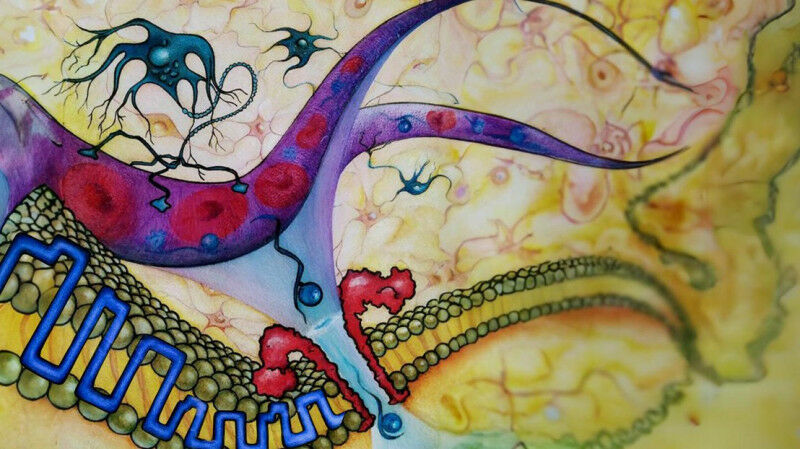
Deep learning assisted single-molecule detection of protein post-translational modifications with a biological nanopore. Credit: EPFL
Deep learning assisted single-molecule detection of protein post-translational modifications with a biological nanopore. Credit: EPFL Scientists unveil a groundbreaking method using biological nanopores and deep learning to detect protein modifications, offering new avenues in disease diagnostics. Proteins, the workhorses of the cell, undergo various modifications after their synthesis. Because they can profoundly affect how a protein operates in the cell, these "post-translational modifications", or PTMs, are key in numerous biological processes. PTMs also serve as biomarkers for several diseases, which means that it is crucial that we can detect and analyze them accurately to avoid mistaken diagnoses. But traditional methods, however, are limited in sensitivity and specificity, especially when dealing with low concentrations of proteins and complex PTM patterns. Now, scientists at EPFL have developed a novel method that combines the sensitivity of biological nanopores with the precision of deep learning.
TO READ THIS ARTICLE, CREATE YOUR ACCOUNT
And extend your reading, free of charge and with no commitment.