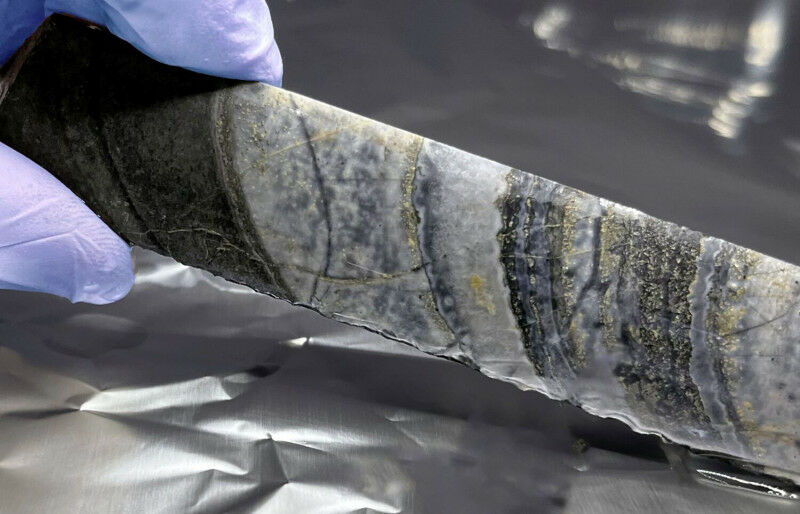
A drill core sample from the Barberton greenstone belt used in the study. The dark layers contain particles of carbonaceous matter, the altered remains from Palaeoarchaean microorganisms. Photo: Manuel Reinhardt
A drill core sample from the Barberton greenstone belt used in the study. The dark layers contain particles of carbonaceous matter, the altered remains from Palaeoarchaean microorganisms. Photo: Manuel Reinhardt Research team discovers complex microbial communities in ecosystems over 3 billion years ago. Microorganisms were the first forms of life on our planet. The clues are written in 3.5 billion-year-old rocks by geochemical and morphological traces, such as chemical compounds or structures that these organisms left behind. However, it is still not clear when and where life originated on Earth and when a diversity of species developed in these early microbial communities. Evidence is scarce and often disputed.
TO READ THIS ARTICLE, CREATE YOUR ACCOUNT
And extend your reading, free of charge and with no commitment.