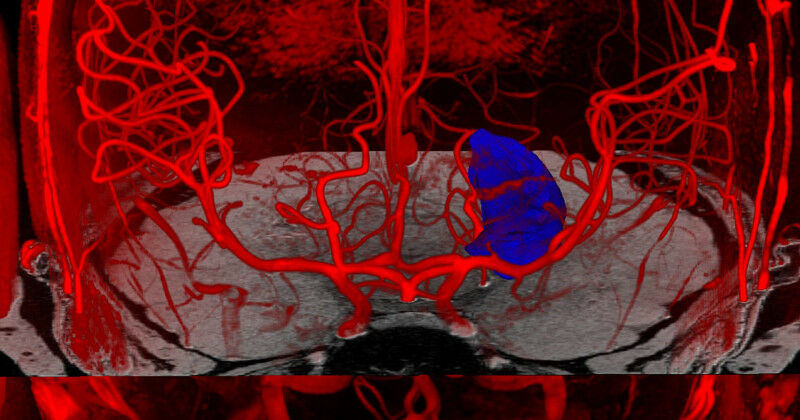
Researchers developed an efficient, non-invasive method to get clearer picture of the structure and function of the hippocampus, a crucial region in our brain. (Roy Haast/BrainsCAN image)
Researchers developed an efficient, non-invasive method to get clearer picture of the structure and function of the hippocampus, a crucial region in our brain. (Roy Haast/BrainsCAN image) The hippocampus - a seahorse-shaped region of the brain which plays a particularly important role in cognitive aging and memory function - has been studied as a singular region for several years. However, there remains a gap in understanding the factors underlying ageor disease-related changes between the different regions of the hippocampus, or subfields, until now. A study by researchers from Western and Maastricht University in the Netherlands published in the high impact journal PNAS , provides new insight into what perfusion, the flow of blood to tissues, looks like in a healthy brain. The study explains how the subsequent hippocampal perfusion map, a map displaying the distribution and amount of blood in the tissue, can serve as a baseline to compare with a hippocampus that has signs of damage. The team of researchers developed an efficient, non-invasive method to better understand perfusion in various regions of the hippocampus which could aid in the diagnosis of neurological diseases such as Alzheimer's, epilepsy and schizophrenia, as well as help promote healthy aging. Roy Haast To get a clearer picture of the structure and function of this crucial region in our brain, the team, involving Schulich School of Medicine & Dentistry professor Ali Khan and co-led by BrainsCAN postdoctoral associate Roy Haast, developed a process called high-resolution 7 tesla (7T) arterial spin labeling (ASL), a non-invasive magnetic resonance imaging (MRI) method that facilitates measurements of blood flow in the hippocampus.
TO READ THIS ARTICLE, CREATE YOUR ACCOUNT
And extend your reading, free of charge and with no commitment.