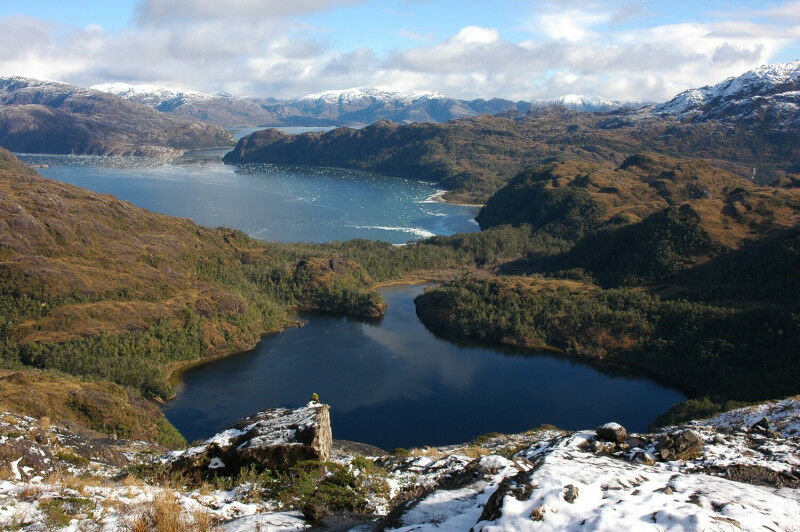
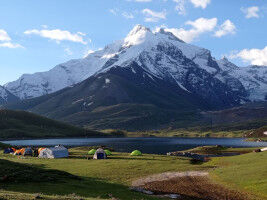
The researchers’ study area: fjords, glaciers and nature undisturbed by people Photo: Björn Klaes
The researchers' study area: fjords, glaciers and nature undisturbed by people Photo: Björn Klaes Research team including Göttingen University studies volcanic impact on ecosystems in Patagonia The soils and vegetation of Patagonia's fjord regions form a unique and highly sensitive ecosystem that is closely linked to marine ecosystems, sediment deposition and carbon storage in the ocean. A research team, including the University of Göttingen, has been working on reconstructing the climate history of this region in this extremely wet, rainy and inaccessible fjord and island zone of the Patagonian Andes in southern Chile. Due to its location, the area is a key region for understanding the history of the southern westerly wind belt within the global climate system. The research, in collaboration with the University of Trier, is based on extensive soil analyses and, above all, the detailed geochemical analyses of a stalagmite that is around 4,500 years old, which was recovered from an almost inaccessible cave. "This stalagmite is the southernmost limestone deposit of its kind ever found," says Professor Gerhard Wörner of the Geoscience Center at Göttingen University. "Its fine and detailed stratification enables us to document the chemical composition of the stalagmite at high temporal resolution. Since the stalagmite formed over a long time from surface waters that seeped into the cave, this geological -archive- makes it possible to reconstruct the climate-driven chemical processes in the peaty soils at the Earth's surface above the cave.
TO READ THIS ARTICLE, CREATE YOUR ACCOUNT
And extend your reading, free of charge and with no commitment.