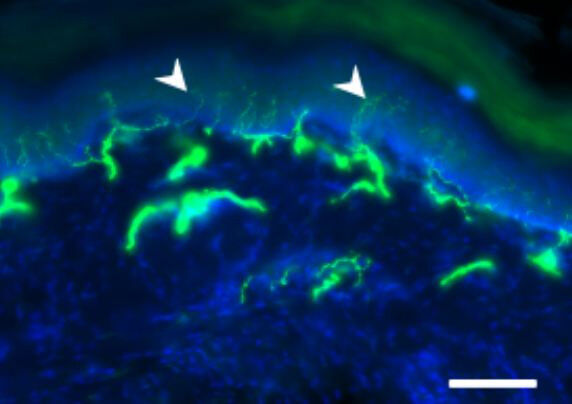
Currently incurable, peripheral neuropathies 1 are common neurological complications of chemotherapy, causing persistent pain, tingling and burning sensations in the feet and hands, sometimes even after treatment has ended. In the hope of offering a therapeutic option to affected patients, a research team led by a CNRS 2 researcher has identified a molecule capable of preventing the onset of such side effects.
This molecule stimulates the production of a compound essential for cellular energy production, on which the survival of all’our cells depends, and promotes the resilience of nerve cells to damage caused by chemotherapy treatments, such as paclitaxel. This mechanism is described in a study due to be published on the 29th of October in Science Advances .
Tested on cell cultures and on rodents, this newly discovered molecule has been shown to limit the degradation of nerve cells usually affected in the extremities, thereby reducing painful symptoms without altering the anti-tumour action.
At a time when chemotherapy-related neuropathies affect 80% of patients and persist in nearly a quarter of them - often forcing a reduction in cancer treatment - this discovery offers real hope. Within a few years, the molecule will undergo clinical trials, the first step towards possible therapeutic application, once the regulatory preclinical stages have been validated 3 .
1 Peripheral neuropathies result from nerve damage to the peripheral nervous system connecting the brain and spinal cord to the rest of the body.
Preventing neuropathy and improving anti-cancer chemotherapy with a carbazolebased compound. Lauriane Bosc, Maria Elena Pero, David Balayssac, Nathalie Jacquemot, Jordan Allard, Peggy Suzanne, Julien Vollaire, Cécile Cottet-Rousselle, Sophie Michallet, Joran Villaret, Sakina Torch, Sumari Marais, Bénédicte Elena-Herrmann, Uwe Schlattner, Anne Mercier, Véronique Josserand, Chantal Thibert, Patrick Dallemagne, Francesca Bartolini, Laurence Lafanechère. Science Advances , 29 October 2025.