An international study using a new type of global vegetation model provides a new perspective on vegetation: it measures the extent to which climate, fire and herbivores shape natural landscapes. The researchers - including Prof. Claude Garcia from the BFH-HAFL School of Agricultural, Forest and Food Sciences - are calling for a rethink of ecological restoration.
In recent decades, planetary boundaries have been exceeded - for example in terms of climate change and biodiversity loss. The UN has therefore declared the years 2021 to 2030 the ’Decade for Ecosystem Restoration’. To date, the main focus has been on reforestation - even in areas that are not naturally forests. This has led to numerous failures of planting programs, which are well documented in the scientific literature.
In the study now published in Nature Communications, the researchers propose a paradigm shift. Using a novel global model, they present the first comprehensive map showing the Earth’s natural vegetation potential - including trees, grasses, shrubs and even naturally vegetation-free areas.
Nature could be different
Led by Jean-François Bastin of the University of Liège, Gembloux Agro-Bio Tech and co-authored by experts from 17 countries - including from BFH-HAFL - the study shows what terrestrial ecosystems could look like under different ecological influences; not what should be, but what could be.
’Our models show that nature can look very different from what we see today - and to what extent,’ says co-author Claude Garcia, Professor of Forest Landscape Governance at BFH-HAFL. ’With this map, we can now show how unlikely a forest or savannah is in a given location. We show how difficult it will be to restore or preserve an ecosystem - and how nature is likely to evolve.
thinking beyond the forest
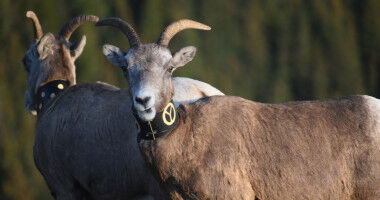
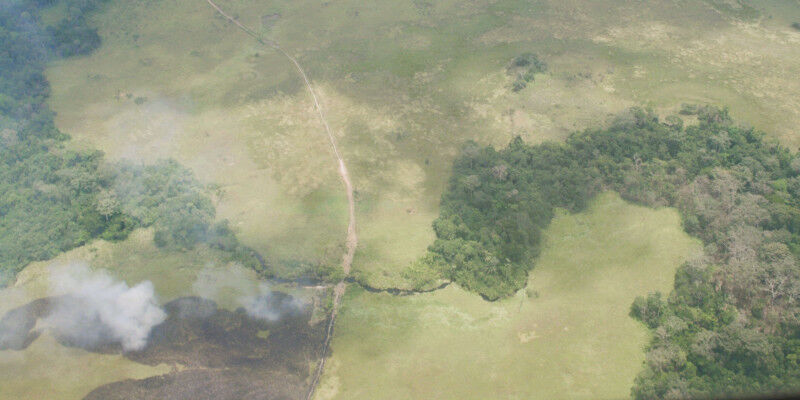
The model shows that 43 percent of the land area could be naturally covered by trees, 39 percent by grasses and shrubs and 18 percent of the land would be naturally free of vegetation - apart from lichens, mosses and annual plants. With the help of scenarios on fire, wildlife browsing and climate change up to 2050, the researchers show how strongly decisions in landscape management influence land cover; many herbivores can massively reduce the proportion of forest - for example from 55 to 11 percent in the Dinaric Alps. Controlled fire can change tree cover by over 20 percent, depending on its intensity. Fire and herbivory are crucial factors for the protection and restoration of ecosystems - and

The study used data from over 17,000 strictly protected areas to model natural vegetation patterns. The model is based on over 40,000 test plots and six large climate datasets that were merged using AI (neural network) modeling. Claude Garcia contributed to the theoretical foundations and their translation into ’what-if’ scenarios.
Authors warn against blanket solutions
Study leader Jean-François Bastin makes it clear that recovery outcomes are not fixed. They need to be carefully thought through for each landscape together with local stakeholders, because ’if our decisions are not informed, failure is the norm’. Claude Garcia emphasizes: ’Oilscapes don’t just happen - we design them together with nature.
The model is openly accessible and user-friendly. It allows conservation actors to examine for each region how fire frequency and wildlife presence might affect the balance of trees, grasses and open spaces.