Laboratory experiments: Chlorine shapes the chemistry of the earth-facing side of the moon - new clues about formation
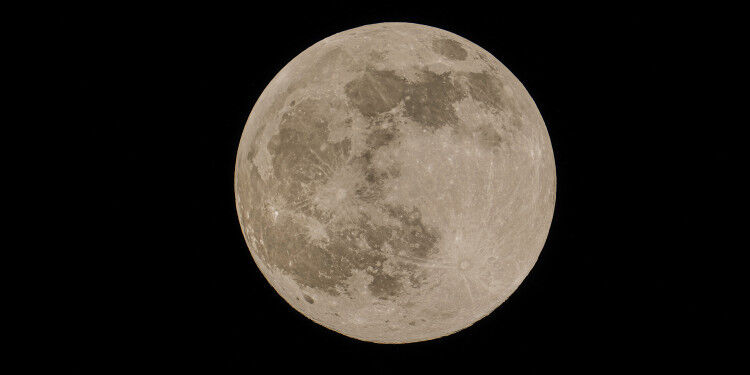
The uppermost layer of the Moon is called the lunar crust. It consists mainly of two types of rocks: the light highland rocks and the dark basaltic rocks, which are especially common in the Moon’s lowlands. On the Earth-facing side, both types are roughly equally abundant. It’s quite a different story on the far side - only very little of the dark rock is found there. Analyses of Apollo rock samples have also shown that the bright highland rocks, so-called anorthosites, are many millions of years older than the dark basalts. To this day, it is not definitively clear why the two rock types are distributed so differently on the Moon.
Now, there is a new clue: "Our results show that chlorine is distributed in a very unusual way when lunar rocks melt," explains Stephan Klemme from the Institute of Mineralogy at the University of Münster. "It has been shown that rocks from the near-side of the Moon surprisingly contain a lot of chlorine, most likely as a result of volcanic eruptions, and chlorine-containing gases." An exception are rocks from outside the so-called KREEP area, a region of the Moon particularly rich in rare elements. These samples do not show increased chlorine concentrations. "Analyses suggest that these rocks originate from a special part of the Moon that still preserves traces from the time of the Moon’s formation," adds Dr. Jasper Berndt, also from the Institute of Mineralogy.
Methodology
For their study, the researchers simulated the origin of the different lunar rocks in the laboratory. These experimental investigations focused on the so-called lunar magma ocean-a phase at the very beginning of lunar history when the Moon was almost completely molten. In the laboratory, they used especially pure chemicals matching the Moon’s composition to which they added chlorine. They then produced lunar minerals and melts in a high-pressure press at extremely high temperatures and pressures-conditions similar to those deep inside the Moon. The scientists tracked how chlorine and other chemical elements were distributed in the artificial lunar rock. In this way, they were able to reconstruct how the lunar crustal rocks could have developed from the melts of the deep lunar magma ocean.
Future analyses of rock samples brought back from the far side of the Moon by China’s Chang’e-6 mission in June 2024 may provide important clues as to whether and how such chemical changes occur across the entire Moon.
Original Publication
Jing, JJ., Berndt, J., Kuwahara, H. et al. Halogen abundance evidence for the formation and metasomatism of the primary lunar crust. Nat Commun 16, 5337 (2025). DOI: 10.1038/s41467-025-60849-4