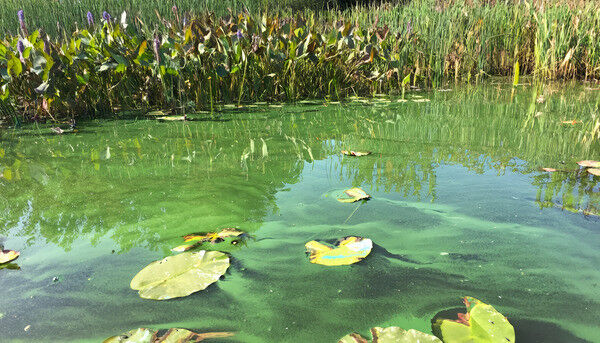
A study conducted by Université Laval highlights the effects of global warming on freshwater reserves and underscores the urgent need for action to preserve them
Algae growth has been accelerating in Canadian lakes since the 1960s. A research team co-led by Université Laval and McGill University reveals that this proliferation is 7 times faster than in previous decades. Their study, published in the journal Communications Earth & Environment, shows that global warming is the main driver of this trend.
Whereas previous studies on a limited number of lakes or over shorter periods associated algae growth with local pollution, such as fertilizer runoff, this new research highlights a wider dynamic. To the scientists’ surprise, even lakes far removed from human activity are not spared.
To identify the causes, the team analyzed sediment cores dating back to the 1800s, taken from 80 lakes as part of the NSERC State of Canada’s Lakes Network, and used machine learning techniques to detect long-term trends. These data were then compared with historical records of air temperature, sunshine and human activity near the lakes.
"Our results clearly indicate that global warming is the main driver of the algal dynamics we observed," says Dermot Antoniades, professor in the Faculty of Forestry, Geography and Geomatics and one of the study’s co-authors. "As the climate warms, so do the lakes, creating ideal conditions for the growth of these aquatic microorganisms."
Other factors, such as solar radiation and land use, have also had an effect, but rising temperatures remain the most marked influence.
A shared ecological responsibility
The research team stresses the importance of this problem and the need for concerted action on a global scale. "Our work shows that local solutions, such as reducing fertilizer runoff, are no longer enough. It is imperative to act on the climate to protect our lakes in the long term", says Hamid Ghanbari, postdoctoral researcher at Université Laval and lead author of the study.
According to the scientists, water quality is intimately linked to community well-being. lakes," reminds Dermot Antoniades, "are places where we swim, where we fish, where we draw our drinking water and where many businesses operate. An uncontrolled algal bloom can damage health, kill fish, release unpleasant odors on beaches and incur economic costs."
"To ignore these issues is to expose ourselves to increased risks to our water, wildlife and economy. It’s a collective challenge that requires the commitment of everyone - citizens, governments, organizations and businesses - to reduce our carbon footprint," concludes Hamid Ghanbari.
The study’s signatories are Hamid Ghanbari and Dermot Antoniades of Université Laval, Irene Gregory-Eaves of McGill University, and scientists from other Canadian universities.