This receptor is involved in communication between the brain and liver cells
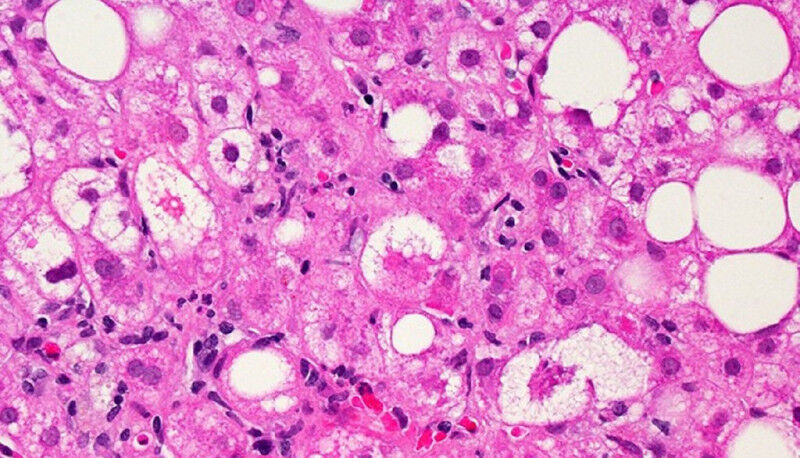
Fatty liver disease, a condition that affects around 20% of adult Canadians, begins with a simple accumulation of fat in the liver. This condition may remain asymptomatic or, for unknown reasons, evolve into an inflammatory state that may lead to fibrosis, cirrhosis or liver cancer.
A team from Université Laval has demonstrated, in an animal model of the disease, that a cellular receptor that ensures communication between the brain and liver cells plays a key role in the aggravation of fatty liver disease. The team’s work has just been published in theAmerican Journal of Physiology-Gastrointestinal and Liver Physiology.
The scientists were able to pinpoint the role of this receptor, called ADRA1B, by developing a transgenic mouse that cannot produce it in its liver cells. "Our previous research has shown that this receptor is present and abundant in a large proportion of hepatocytes, the functional cells of the liver. These receptors respond to noradrenaline, one of the neurotransmitters that ensure communication between the brain and the liver. This prompted us to study the role of this receptor in the development of this disease," explains Alexandre Caron, who is a professor in the Faculty of Pharmacy at Université Laval, and a researcher at the Centre de recherche de l’Institut universitaire de cardiologie et de pneumologie de Québec-Université Laval.
The research team subjected mice lacking the ADRA1B receptor and normal mice to a diet rich in fats and sugars, particularly palm oil, cholesterol and fructose, for 32 weeks, in order to induce fatty liver disease in these animals. "In humans, overweight and type 2 diabetes are risk factors for this disease", reminds Professor Caron.
At the end of the experiment, the scientists found no difference between the two groups of mice in terms of body weight, fat accumulation in liver cells, glucose tolerance or insulin sensitivity.
"On the other hand, we observed that mice lacking the ADRA1B receptor showed much more severe inflammation of the liver. They also showed an increase in certain inflammatory molecules known to aggravate the disease", summarizes Alexandre Caron.
The ADRA1B receptor is present in several human organs, including the liver, suggesting that its dysfunction may be involved in the progression of fatty liver disease," he continues. "Our results pave the way for new therapeutic approaches that target this receptor. However, it will first be necessary to clarify the exact nature of this dysfunction and find a way to intervene in a targeted way on the ADRA1B receptors found in the liver."
The study, published in theAmerican Journal of Physiology-Gastrointestinal and Liver Physiology, is authored by Bernie Efole, Sarra Beji, Mathilde Mouchiroud, Yves Gélinas, Coraline Cavinet, Jocelyn Trottier, Jessica Deslauriers, Olivier Barbier and Alexandre Caron , Université Laval, Cindy Serdjebi, Biocellvia, France, and Joel Elmquist, UT Southwestern Medical Center.