


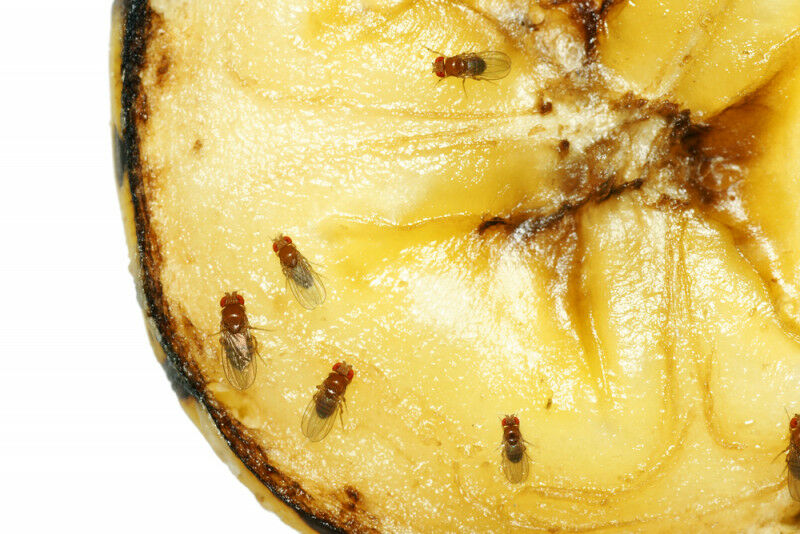
Thanks to taste cells called mechanoreceptors, fly larvae can not only taste food, but also appreciate its consistency. This is the finding of a study by Professor Simon G. Sprecher and PhD student Nikita Komarov of the University of Freiburg, just published in the open-access journal PLOS Biology.
Taste and texture must be tasty
Much research into food perception focuses on flavors, such as sweet or salty. However, food preferences often also depend on food texture: some people like the taste of mushrooms, for example, but not the rubbery sensation in the mouth when chewed. Whereas the taste of aromas requires chemical perception, the perception of textures requires mechanical perception. Until now, however, it was not known whether taste organs such as the tongue had the capacity to capture both. The present study investigated this very question using fruit fly larvae - commonly known as maggots - because of the simplicity of their nervous system and the availability of numerous genetic tools.Preferably really rotten
The researchers found that maggots do not eat food that is too hard or too soft, but only when it is ripe - in other words, when the fruit has already been rotten for a few days. Assuming that this ability to perceive the structure of food lies in the peripheral taste organs, i.e. in the taste buds of the tongue, the scientists specifically deactivated certain neurons responsible for this perception. As a result, the maggots became insensitive to food texture, and tried to eat softer or harder foods that they would normally have avoided.Further experiments showed that the mechanoreceptor gene known as ’painless’ was necessary for this sensitivity. The researchers also discovered that a specific nerve cell - called C6 - located in the taste organ of the fruit fly larva perceives both chemical stimuli, such as sugar, and mechanical stimuli, such as the hardness of an apple. This nerve cell can therefore recognize both chemical and mechanical information.
According to Professor Simon G. Sprecher, it has not yet been possible to determine whether taste buds have the same capabilities in humans. The biologist is convinced that further research would be of interest, particularly in the field of food science.
