From illegal trade to responsible medicine
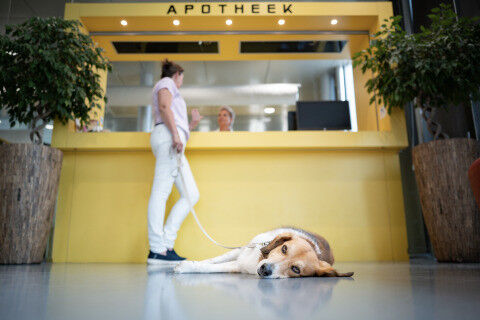
A cat is not a small dog and a sheep works differently than a goat. At the Pharmacy of the Faculty of Veterinary Medicine, they know that no animal is the same and therefore every animal reacts differently to medication. The pharmacy provides customization, but the future lies with personalized medicine. To get there, the pharmacy works closely with researchers.
Customized medication
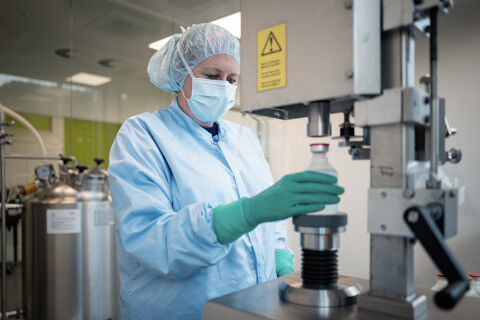
The Pharmacy of the Faculty of Veterinary Medicine is unique in the Netherlands: it is the only pharmacy that is allowed to prepare veterinary medicines itself, if necessary. They make medications that are not available anywhere, because they have to be specially tailored to a particular animal or because they are not financially interesting enough for large-scale production by the pharmaceutical industry. They also supply zoos throughout Europe and assist when standard medication is not available. "That requires a flexible attitude while meeting the strict requirements for medicines," says pharmacist Sietske Mesu. The pharmacy’s compounding department is also indispensable in the faculty’s scientific research.
An example of the pharmacy’s contribution is the treatment of cats with Feline Infectious Peritonitis (FIP), a serious viral disease. Unfortunately, there are no registered drugs available for this life-threatening disease. This led to illegal trade in medicines for FIP. Now the drug is prepared safely and responsibly by pharmacies. Veterinarians, pharmacists and researchers work closely together to further optimize the treatment against FIP. They are looking at what works in which cat and why.
Personalized medicine
Ronette Gehring is Professor of Veterinary Pharmacotherapy and Pharmacy and happy that her research group is literally housed in the pharmacy. "There is a nice cross-pollination," she says. "We work with the Department of Clinical Sciences on leukemia in dogs and with Royal GD on antibiotic research in chickens. We also contribute to innovative methods and AI to reduce the use of laboratory animals."
A central question in the work of Gehring’s research group is: How can we better tailor drugs to the individual animal to increase efficacy and minimize undesirable effects, such as side effects, residues and antibiotic resistance? "The differences between animal species, and even between breeds, make it necessary to specifically tailor doses," she explains. "But generating the necessary experimental data is often ethically and financially infeasible. This limits not only our knowledge, but also the availability of suitable drugs to veterinarians."

Therefore, her group is developing methods to make predictions via laboratory models and computer simulations. "This allows us to combine data into knowledge and thus predict what an animal needs." However, measurable data, such as blood values, remain essential. Gehring: "We use techniques such as dried blood spotting , in which one drop of blood from a small prick is already sufficient for analysis. This is much less stressful than traditional blood sampling."