A new interdisciplinary study published in Nature Communications provides the first detailed insights from a biomolecular and archaeological perspective into the lives of people in Central Europe during the Late Bronze Age (ca. 1300-800 BC), also known as the Urnfield Period. This period was characterised by cultural changes, such as the widespread and eponymous introduction of cremation burial.
As biological material is destroyed during cremation burial, this period has long been a blind spot for genetic and isotopic research. However, an international team of archaeogeneticists, archaeologists and other biomolecular research scientists have succeeded in gaining new insights into the ancestry patterns, mobility, diet, physiological stress and burial practices of Late Bronze Age communities by focusing on cremation burials in Germany, the Czech Republic and Poland, which were rare at the time.
An internationally networked research group involving scientists from the Max Planck Institutes in Leipzig and Jena, the Friedrich Schiller University Jena and the Saxony-Anhalt State Office for Monument Preservation and Archaeology has now analysed some of these skeletons.
The study analysed age-related DNA as well as stable oxygen and strontium isotopes and osteoarchaeological data from individuals who were not buried in cremations. These data were compared with strontium isotope data from cremations buried at the Kuckenburg and Esperstedt archaeological sites in central Germany. The excavations were carried out by the State Office for Monument Preservation and Archaeology of Saxony-Anhalt and the Department of Archaeology to the Middle Ages of the Friedrich Schiller University Jena. The results were placed in a broader supra-regional context by comparing them with contemporary genetic data from neighbouring regions.
Life in times of change
»This study allows us to understand how people experienced change«, says Eleftheria Orfanou, a doctoral candidate at the Max Planck Institute for Evolutionary Anthropology and first author of the study. »The Late Bronze Age was not experienced as a single moment of change, but as a series of decision judgements about diet and subsistence strategies, burials and social relationships. These communities were closely connected to their landscape, but also networked across regions.«
The genetic evidence in this study shows gradual, regionally distinct changes in ancestry that paralleled established local traditions. In central Germany, these changes only became visible in later phases of the Late Bronze Age. This illustrates how communities participated in larger networks of interaction, increasingly forging links with the Middle Danubian area.
With the help of strontium and oxygen isotope analyses, chemical profiles can be created that show where people grew up and lived. This allows researchers to judge whether they were natives or migrants. Most individuals from central Germany-both inhumated and cremated-have local isotope signatures. This suggests that new ideas and burial practices were spread primarily through contact and exchange rather than immigration of population groups.
Introduction of millet in Europe
The findings on diet also emphasise the flexibility of Late Bronze Age societies. In the early phase of this period, people began to consume millet-a cereal that had recently arrived in Europe from north-east China-presumably in response to environmental or economic pressures. This dietary shift was also not accompanied by demographic or genetic changes, suggesting that millet was introduced within existing communities. In the later phase of the Late Bronze Age, however, millet consumption declined sharply and people returned to the more traditional grains of wheat and barley. This pattern suggests experimentation, adaptability, resilience and cultural preferences rather than an intensification of millet cultivation.
The researchers also searched for traces of age-old illnesses and correlated this information with the findings from human skeletons. Although they found DNA from bacteria often associated with oral hygiene and dental diseases, they found no evidence of widespread epidemic infections. Evidence of childhood stress, degenerative joint disease and occasional trauma point to a physically demanding life. Nevertheless, most people appear to have been in good health overall.
Diverse burial culture
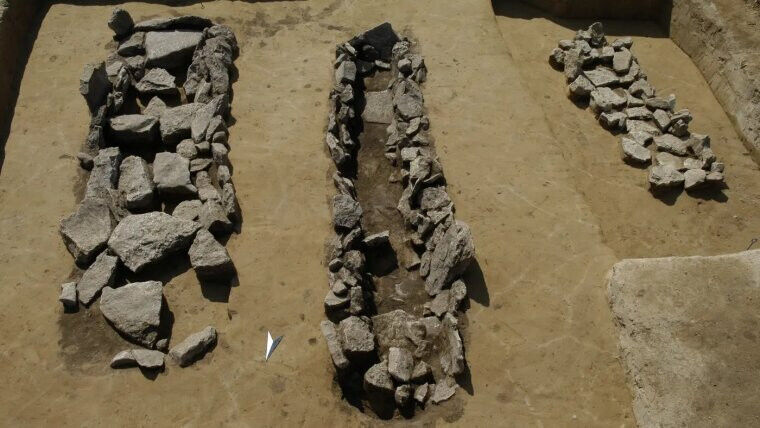
The study also provides insights into a diverse burial culture that may seem unusual from a modern, Western perspective. These include cremation, earth burial, the sole burial of skulls and multi-stage rites, all’of which co-existed within the same communities. »These practices do not appear to have been marginal or exceptional«, Orfanou declares, »but part of a broader repertoire from which people could choose during the Urnfield period. This repertoire was linked to the creation of memory, identity and ideas about what it meant to be human in the Late Bronze Age.«
Drawing on archaeological, anthropological, genetic and isotopic evidence, the study reconstructs Late Bronze Age societies as dynamic social worlds. »Change and innovation were integrated into existing traditions. These communities actively shaped their ways of life and created hybrid practices that were locally relevant in an increasingly interconnected world«, concludes Wolfgang Haak, head of