

Computer Science - Mar 20
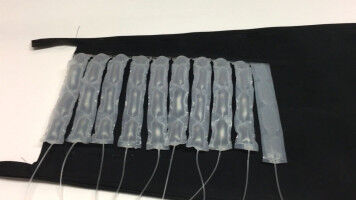
New computer chip material inspired by the human brain could slash AI energy use
New computer chip material inspired by the human brain could slash AI energy use
Politics - Mar 20
Argentina 50 years on from start of dictatorship - is it forgetting the disappeared?
Argentina 50 years on from start of dictatorship - is it forgetting the disappeared?
Life Sciences - Mar 20
Courting the Competition: Some Male Fruit Flies Serenade Each Other Rather Than Fight
Courting the Competition: Some Male Fruit Flies Serenade Each Other Rather Than Fight
Social Sciences - Mar 20
Louis Theroux's manosphere documentary shows some of the subtle ways we can undermine online misogyny
Louis Theroux's manosphere documentary shows some of the subtle ways we can undermine online misogyny
Life Sciences - Mar 20
Hidden Helpers: Pittsburgh's Industrial Past Might Hold the Key to a Cleaner Future
Hidden Helpers: Pittsburgh's Industrial Past Might Hold the Key to a Cleaner Future
Pharmacology - Mar 19
GSK, University of Oxford and Imperial College London launch centre to create computer models of lungs, liver, kidneys and cartilage
GSK, University of Oxford and Imperial College London launch centre to create computer models of lungs, liver, kidneys and cartilage
Innovation - Mar 19
India's new wave of Hindu Religious Entrepreneurship is reshaping our interpretation of success
India's new wave of Hindu Religious Entrepreneurship is reshaping our interpretation of success


Pharmacology - Mar 19
Oxford University spinout Dark Blue Therapeutics acquired to advance leukaemia treatment
Oxford University spinout Dark Blue Therapeutics acquired to advance leukaemia treatment

Veterinary - Mar 19
New RVC study challenges common beliefs on desirable behaviours in designer 'Doodle' crossbreeds
New RVC study challenges common beliefs on desirable behaviours in designer 'Doodle' crossbreeds
Agronomy & Food Science - Mar 19
Bird Flu Risk to Danish Cattle - New Tool Can Warn Farmers Before Infection Spreads
Bird Flu Risk to Danish Cattle - New Tool Can Warn Farmers Before Infection Spreads

news
Australian National University
Results 441 - 460 of 669.
Health - Career - 02.02.2017
A healthy work limit is 39 hours per week
Long work hours erode a person's mental and physical health, because it leaves less time to eat well and look after themselves properly. People who work more than 39 hours a week are putting their health at risk, new research from The Australian National University (ANU) has found. The research shows the work limit for a healthy life should be set at 39 hours a week instead of the 48-hour-week limit set internationally about 80 years ago.
Environment - Sport - 25.01.2017
Game of thrones in crab world
Crabs that invade smaller crab species' habitat overpower and evict incumbents from their burrows, but the two species ultimately co-exist and join forces against other invading crabs in a game of thrones once they establish territorial boundaries, new research finds. Lead researcher Huon Clark from ANU said the finding overturns the theory that interactions between species of fiddler crabs result in the dominant species pushing the weaker ones out of a habitat.
Life Sciences - Social Sciences - 18.01.2017
ANU helps identify new species of ‘Skywalker’ gibbon
An Australian National University (ANU) researcher has helped identify a new species of primate which has been named the 'Skywalker Hoolock gibbon' - partly because the scientists that made the discovery are Star Wars fans. Renowned biological anthropologist Emeritus Professor Colin Groves of the ANU School of Archaeology and Anthropology has been working in the field of species classification for more than 50 years.
Health - 12.01.2017
Gastric acid suppressants linked to hospitalisation
We found that taking PPIs increased the risk of hospitalisation with infectious gastroenteritis by up to 70 per cent. New research has found a link between popular heartburn drugs and an increase in the risk of infectious gastroenteritis - an illness that results in 13.1 million lost days of work in Australia a year.
Astronomy & Space - 21.12.2016
ANU helps find supercluster of galaxies near Milky Way
This is one of the biggest concentrations of galaxies in the Universe - possibly the biggest in the neighbourhood of our Galaxy. ANU Professor Matthew Colless is part of an international team of astronomers that found one of the Universe's biggest superclusters of galaxies near the Milky Way. Professor Colless said the Vela supercluster, which had previously gone undetected as it was hidden by stars and dust in the Milky Way, was a huge mass that influenced the motion of our Galaxy.
Agronomy & Food Science - Health - 14.12.2016
GPs can and must do more to tackle obesity crisis
More and more patients are coming to GPs with obesity problems, and we want to give GPs the tools to assist their patients. General practitioners (GPs) can and should do more to tackle the obesity epidemic in Australia, a new study from The Australian National University (ANU) has found. Two in three Australians are overweight or obese but half of patients in obesity programs drop out before achieving any results.
Health - 13.12.2016
Worm treatment strategy could benefit millions of kids
About 880 million children around the world are exposed to intestinal worms. Children with intestinal worms may not develop to their full physical and intellectual capacity. This makes it harder to break the poverty cycle. A landmark new study shows the benefits of an expanded treatment strategy for intestinal worms - treating adults as well as children - that could improve the health of millions of children in Southeast Asia, the Pacific and Africa.
Environment - Life Sciences - 01.12.2016
Fairy-wrens vary egg size to increase survival rates
We were worried that the projected temperature extremes in Australia could lead to high chick mortality or poorer long-term survival. But we found that these birds have a surprising way to deal with this. A new study has shown that the female Superb Fairy-Wren has the ability to change the size of the eggs it lays in a biological feat which could buffer against the effects of climate change.
Physics - 01.12.2016
ANU demonstrates ’ghost imaging’ with atoms
A team of physicists at ANU have used a technique known as 'ghost imaging' to create an image of an object from atoms that never interact with it. This is the first time that ghost imaging has been achieved using atoms, although it has previously been demonstrated with light, leading to applications being developed for imaging and remote sensing through turbulent environments.
Earth Sciences - 28.11.2016
Biggest exposed fault on Earth
Geologists have for the first time seen and documented the Banda Detachment fault in eastern Indonesia and worked out how it formed. Lead researcher Dr Jonathan Pownall from The Australian National University (ANU) said the find will help researchers assess dangers of future tsunamis in the area, which is part of the Ring of Fire - an area around the Pacific Ocean basin known for earthquakes and volcanic eruptions.
Environment - 21.11.2016
Glowing geckos show trees vital to farm biodiversity
Researchers at ANU have used glow-in-the-dark geckos to help shed light on the mysteries of animal navigation and to help improve biodiversity in farming landscapes. The study reveals the small navigating reptiles rely on certain cues to find their way, and can benefit from easy and cost-effective changes in landscape management, such as leaving isolated trees and planning the direction of sown crops.
Environment - 18.11.2016
Critically endangered honeyeater population discovered
Researchers at The Australian National University (ANU) have found a new breeding population of the critically endangered regent honeyeater. The regent honeyeater used to be one of the most abundant birds in south-eastern Australia but there are now fewer than 400 in the wild. Lead researcher Dr Laura Rayner said it was exciting to find more than 20 previously unrecorded birds in the chronically under-surveyed New England Tablelands bioregion in New South Wales.
Life Sciences - 14.11.2016
New way to make low-cost solar cell technology
Researchers at ANU have found a new way to fabricate high efficiency semi-transparent perovskite solar cells in a breakthrough that could lead to more efficient and cheaper solar electricity. Dr Tom White from the ANU Research School of Engineering said the new fabrication method significantly improved the performance of perovskite solar cells, which can combine with conventional silicon solar cells to produce more efficient solar electricity.
Life Sciences - Health - 31.10.2016
Enzymes essential for DNA repair
Scientists at ANU and Heidelberg University in Germany have found an essential component in the DNA repair process which could open the door to the development of new cancer drugs. Lead researcher Associate Professor Tamás Fischer from ANU said the research found hybrid structures composed of DNA and RNA play an important role in restoring the genetic information after the DNA is damaged.
Health - Life Sciences - 31.10.2016
No Lyme disease in Australia, new research finds
Lyme disease cannot be contracted in Australia and patients should not be treated with antibiotics for so-called Lyme-like diseases, new medical research has found. Professor Peter Collignon AM from The Australian National University (ANU) and colleagues dispute well-publicised claims by some people and advocacy groups that the disease can be transmitted by ticks in Australia.
Health - Administration - 24.10.2016
Avoidable hospitalisations in Aboriginal children too high
It doesn't matter if children live in a poor area or a wealthy area, in the city or remote communities, there is a big gap. New research from The Australian National University (ANU) and UNSW has revealed rates of avoidable hospitalisations among Aboriginal children are almost double those of non-Aboriginal children.
Health - Psychology - 20.10.2016
Researchers seek young people for body image trial
After the initial testing, we're hoping to roll out ProYouth OZ across Australia so that other young people as well as carers, peers and family members can also learn more about eating disorders and pathways for seeking help. ANU researchers are looking for participants to take part in an online program designed to help young people improve their body image.
Life Sciences - History & Archeology - 04.10.2016
Origins of Vanuatu and Tonga’s first people revealed
The people of Vanuatu today are descended from Asia first of all. Their original base population is Asian. They were straight out of Taiwan and perhaps the northern Philippines. The origins of Vanuatu and Tonga's first inhabitants has been revealed in a surprise discovery made by ANU archaeologists in the first major study of ancient DNA (aDNA) from the Pacific Islands.
Life Sciences - Earth Sciences - 30.09.2016
3D printed fish fossil may reveal origin of human teeth
We have used CT scanning facilities at ANU to investigate the internal structure of very fragile fossil skulls and braincases that have been acid-etched from limestone rock. Three-dimensional prints of a 400 million year old fish fossil from around Lake Burrinjuck in southeast Australia reveal the possible evolutionary origins of human teeth, according to new research by The Australian National University (ANU) and Queensland Museum.
Health - 28.09.2016
Scientists developing new test for breast cancer
A blood test for breast cancer is several years away from being used in hospitals, but we think we have discovered a new way of detecting breast cancer in the first instance as well as ongoing monitoring. Scientists at The Australian National University (ANU) are working with researchers in France to develop a new potential way to detect and monitor breast cancer that could involve a simple blood test.


Computer Science - Mar 20
New computer chip material inspired by the human brain could slash AI energy use
New computer chip material inspired by the human brain could slash AI energy use
Politics - Mar 20
Argentina 50 years on from start of dictatorship - is it forgetting the disappeared?
Argentina 50 years on from start of dictatorship - is it forgetting the disappeared?
Life Sciences - Mar 20
Courting the Competition: Some Male Fruit Flies Serenade Each Other Rather Than Fight
Courting the Competition: Some Male Fruit Flies Serenade Each Other Rather Than Fight
Social Sciences - Mar 20
Louis Theroux's manosphere documentary shows some of the subtle ways we can undermine online misogyny
Louis Theroux's manosphere documentary shows some of the subtle ways we can undermine online misogyny
Life Sciences - Mar 20
Hidden Helpers: Pittsburgh's Industrial Past Might Hold the Key to a Cleaner Future
Hidden Helpers: Pittsburgh's Industrial Past Might Hold the Key to a Cleaner Future
Pharmacology - Mar 19
GSK, University of Oxford and Imperial College London launch centre to create computer models of lungs, liver, kidneys and cartilage
GSK, University of Oxford and Imperial College London launch centre to create computer models of lungs, liver, kidneys and cartilage
Innovation - Mar 19
India's new wave of Hindu Religious Entrepreneurship is reshaping our interpretation of success
India's new wave of Hindu Religious Entrepreneurship is reshaping our interpretation of success
Pharmacology - Mar 19
Oxford University spinout Dark Blue Therapeutics acquired to advance leukaemia treatment
Oxford University spinout Dark Blue Therapeutics acquired to advance leukaemia treatment
Veterinary - Mar 19
New RVC study challenges common beliefs on desirable behaviours in designer 'Doodle' crossbreeds
New RVC study challenges common beliefs on desirable behaviours in designer 'Doodle' crossbreeds
Agronomy & Food Science - Mar 19
Bird Flu Risk to Danish Cattle - New Tool Can Warn Farmers Before Infection Spreads
Bird Flu Risk to Danish Cattle - New Tool Can Warn Farmers Before Infection Spreads