



Life Sciences - Today
Understanding the Brain - TU Ilmenau's EU EMBRACE Project Nominated for European Excellence Award
Understanding the Brain - TU Ilmenau's EU EMBRACE Project Nominated for European Excellence Award
Social Sciences - Today
A manual addresses, for the first time in Spain, child and adolescent sexual exploitation
A manual addresses, for the first time in Spain, child and adolescent sexual exploitation


Environment - Mar 26
Changing vegetation in thawing permafrost increases emissions of greenhouse gases
Changing vegetation in thawing permafrost increases emissions of greenhouse gases
Environment - Mar 26
University of Manchester hits major sustainability milestone, with Main Campus becoming 100% 'Zero Landfill'
University of Manchester hits major sustainability milestone, with Main Campus becoming 100% 'Zero Landfill'
Social Sciences - Mar 26
"It would be naive to believe that a social media ban will solve all problems"
"It would be naive to believe that a social media ban will solve all problems"


Health - Mar 26
Earlier detection, better outcomes: Irish researchers target rising bowel cancer rates with new blood test
Earlier detection, better outcomes: Irish researchers target rising bowel cancer rates with new blood test

Environment - Mar 26
UK must improve energy efficiency to end 50 years of policy failure and prevent future energy crises, study argues
UK must improve energy efficiency to end 50 years of policy failure and prevent future energy crises, study argues
Mathematics - Mar 26
From Materials to Medical Imaging, Fonseca's Work Shapes the Future of Innovation
From Materials to Medical Imaging, Fonseca's Work Shapes the Future of Innovation


news
Chemistry
Results 2681 - 2700 of 3958.
Astronomy & Space - Chemistry - 15.06.2016
Detection of Methanol Shows Comets are Forming in Distant Solar System
Astronomers announced today that they have found the organic molecule methyl alcohol, or methanol, in the TW Hydrae protoplanetary disk. This is the first such detection of this chemical compound in a young planet-forming disk. Because methanol forms on the icy coatings of small dust grains, this discovery provides a window into the region where comets likely are forming.
Life Sciences - Chemistry - 15.06.2016
Genetic secrets of algae provide vital insight into coral bleaching
A team of researchers has identified genes that allow some algae living in corals to tolerate higher ocean temperatures than others. The genes could act as markers to understand the risk of coral bleaching in different areas of tropical coral reefs including the Great Barrier Reef. The study is published in the high impact journal Molecular Biology and Evolution.
Life Sciences - Chemistry - 14.06.2016

A UK research team has discovered that a cell's protective layer acts like a turnstile, allowing proteins to be exported while preventing them from moving back in. All cells are surrounded by a protective layer - a membrane - which keeps the contents of the cell together and protects it from damage.
Physics - Chemistry - 13.06.2016
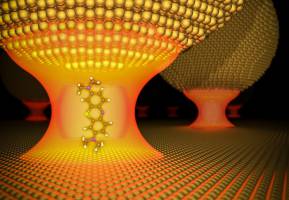
Scientists have mixed a molecule with light between gold particles, creating a new way to manipulate the physical and chemical properties of matter. Light and matter are usually separate and have distinct properties. However, molecules of matter can emit particles of light called photons. Normally, emitted photons leave the molecule and the two do not mix again.
Health - Chemistry - 13.06.2016

In the ongoing hustle and bustle of our intestines, where bacteria and food regularly intermingle, there is another substance that, to the surprise of researchers, has been found to rapidly change: the gel that lines the gut. A new Caltech study is the first to show how the structure of this gut gel, or mucus, can change in the presence of certain substances, such as bacteria and polymers-a class of long-chained molecules that includes dietary fiber.
Physics - Chemistry - 09.06.2016
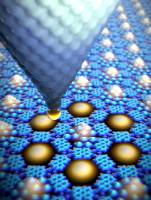
An international consortium led by researchers at the University of Basel has developed a method to precisely alter the quantum mechanical states of electrons within an array of quantum boxes. The method can be used to investigate the interactions between various types of atoms and electrons, which is essential for future quantum technologies, as the group reports in the journal Small.
Life Sciences - Chemistry - 09.06.2016
Cellulose: new understanding could lead to tailored biofuels
In the search for low emission plant-based fuels, new research may help avoid having to choose between growing crops for food or fuel. By using cellulosic plant materials we get around the problem of food-versus-fuel scenario that is problematic when using corn as a basis for bioethanol Paul Dupree Scientists have identified new steps in the way plants produce cellulose, the component of plant cell walls that provides strength, and forms insoluble fibre in the human diet.
Health - Chemistry - 07.06.2016
Are my cosmetics a health risk? Seeking straight answers to tricky questions
Lessons from the field of medicine could help provide clearer answers to questions about chemical safety, according to researchers. Are the chemicals in my baby's plastic bottle harmful? Can cosmetics cause cancer? Which pesticides are safe? The aim of scientific research is to answer questions like these, but what happens when two or more studies produce conflicting results? Since the 1990s medical science has relied upon a process called 'systematic review' as a means of weighing up the available evidence and coming up with a reliable answer.
Health - Chemistry - 07.06.2016
Spiders put the bite on irritable bowel syndrome pain
Spiders have helped researchers from Australia and the US discover a new target for irritable bowel syndrome pain. The international research team - involving researchers from The University of Queensland (UQ) and the University of Adelaide - used spider venom to identify a specific protein involved in transmitting mechanical pain, which is the type of pain experienced by patients with irritable bowel syndrome.
Life Sciences - Chemistry - 06.06.2016
The biological clock gets a time stamp
Yale School of Medicine researchers have identified the molecular pathways involved in the aging of human eggs. This research could eventually lead to treatments to correct age-related damage and improve fertility in women age 40 and older. Published in the June 6 issue of the journal Molecular Human Reproduction, the study examined the sharp decline in egg quality in women 40 and older and found that egg damage is linked to oxygen-deprived cells.
Physics - Chemistry - 06.06.2016
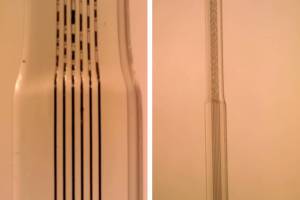
An interdisciplinary team of researchers enabled by the National Science Foundation-funded Materials Research Science and Engineering Centers (MRSEC) program has developed a way to break fibers or sheets of material into many tiny, almost perfectly uniform segments or strips. The method can work on plastics, metals, glasses, and even natural materials such as silk or hair, producing sectioned particles ranging in size from nanoparticles to ones that can be handled and easily seen with the naked eye.
Life Sciences - Chemistry - 02.06.2016
Reading between the genes
Research news For a long time dismissed as "junk DNA", we now know that also the regions between the genes fulfil vital functions. Mutations in those DNA regions can severely impair development in humans and may lead to serious diseases later in life. Until now, however, regulatory DNA regions have been hard to find.
Physics - Chemistry - 30.05.2016
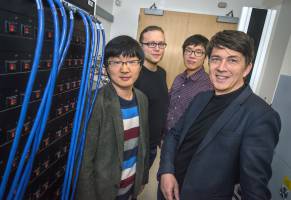
Berkeley Lab researchers shed light on how lithium-rich cathodes work, opening the door to higher capacity batteries. In the quest for a radically better lithium-ion battery, a promising direction is the so-called "lithium-rich" cathode, in which the cathode contains a higher proportion of lithium than normal.
Environment - Chemistry - 27.05.2016
Clouds Provide Clue to Better Climate Predictions
A research group from the CERN Cloud experiment, including scientists from Carnegie Mellon University's College of Engineering and Mellon College of Science , have uncovered the processes behind the formation and evolution of small atmospheric particles free from the influence of pollution. Their findings are key to creating accurate models to understand and predict global climate change.
Astronomy & Space - Chemistry - 27.05.2016

Media releases, information for representatives of the media Media Relations (E) Ingredients crucial for the origin of life on Earth, including the simple amino acid glycine and phosphorus, key components of DNA and cell membranes, have been discovered at Comet 67P/Churyumov-Gerasimenko. The possibility that water and organic molecules were brought to the early Earth through impacts of objects like asteroids and comets have long been the subject of important debate.
Chemistry - Life Sciences - 27.05.2016
No 182 from May 27, 2016 German Research Foundation Awards Freie Universität Berlin Two New Collaborative Research Centers Approval for Two New Ones and Extension for Two Others
The German Research Foundation (DFG) has approved funding for two new Collaborative Research Centers (CRC) at Freie Universität Berlin, as well as funding extensions for two others already established at Freie Universität. The new CRCs, to be funded for four years, are "Entangled States of Matter," Transregio (TRR) 183, in cooperation with the University of Cologne, and CRC/TRR 186, "Molecular Switches: Spatio-Temporal Control of Cellular Signal Transmission," in cooperation with the University of Heidelberg.
Physics - Chemistry - 26.05.2016
Lancaster chemist shines light on new DNA technique for drug development
A Lancaster University scientist has successfully tested a new analytical approach that will help advance our understanding of molecules used in the biopharmaceutical sector. Dr Lorna Ashton , of Lancaster University's Chemistry department, has used Ramen spectroscopy to determine the topology, or shape, of plasmid DNA (small DNA molecules).
Chemistry - Environment - 25.05.2016

A new study finds that oil sands operations, a major source of oil production in the last several years, emit very high levels of a critical class of air pollutants and pose risks to health and climate. Working with scientists from Canada, a team of researchers in Yale's Department of Chemical & Environmental Engineering found that oil sands operations in Alberta, Canada are among North America's biggest producers of human-caused secondary organic aerosols (SOA).
Physics - Chemistry - 24.05.2016
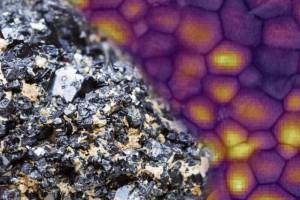
A family of compounds known as perovskites, which can be made into thin films with many promising electronic and optical properties, has been a hot research topic in recent years. But although these materials could potentially be highly useful in applications such as solar cells, some limitations still hamper their efficiency and consistency.
Chemistry - Life Sciences - 23.05.2016
Making Virus Sensors Cheap and Simple
Researchers at The University of Texas at Austin demonstrated the ability to detect single viruses in a solution containing murine cytomegalovirus (MCMV). The single virus in this image is a human cytomegalovirus, a cousin of MCMV. It was obtained by chilling a sample down with liquid nitrogen and exposing it to high-energy electrons.


Life Sciences - Today
Understanding the Brain - TU Ilmenau's EU EMBRACE Project Nominated for European Excellence Award
Understanding the Brain - TU Ilmenau's EU EMBRACE Project Nominated for European Excellence Award
Social Sciences - Today
A manual addresses, for the first time in Spain, child and adolescent sexual exploitation
A manual addresses, for the first time in Spain, child and adolescent sexual exploitation
Environment - Mar 26
Changing vegetation in thawing permafrost increases emissions of greenhouse gases
Changing vegetation in thawing permafrost increases emissions of greenhouse gases
Environment - Mar 26
University of Manchester hits major sustainability milestone, with Main Campus becoming 100% 'Zero Landfill'
University of Manchester hits major sustainability milestone, with Main Campus becoming 100% 'Zero Landfill'
Social Sciences - Mar 26
"It would be naive to believe that a social media ban will solve all problems"
"It would be naive to believe that a social media ban will solve all problems"
Health - Mar 26
Earlier detection, better outcomes: Irish researchers target rising bowel cancer rates with new blood test
Earlier detection, better outcomes: Irish researchers target rising bowel cancer rates with new blood test
Environment - Mar 26
UK must improve energy efficiency to end 50 years of policy failure and prevent future energy crises, study argues
UK must improve energy efficiency to end 50 years of policy failure and prevent future energy crises, study argues
Mathematics - Mar 26
From Materials to Medical Imaging, Fonseca's Work Shapes the Future of Innovation
From Materials to Medical Imaging, Fonseca's Work Shapes the Future of Innovation