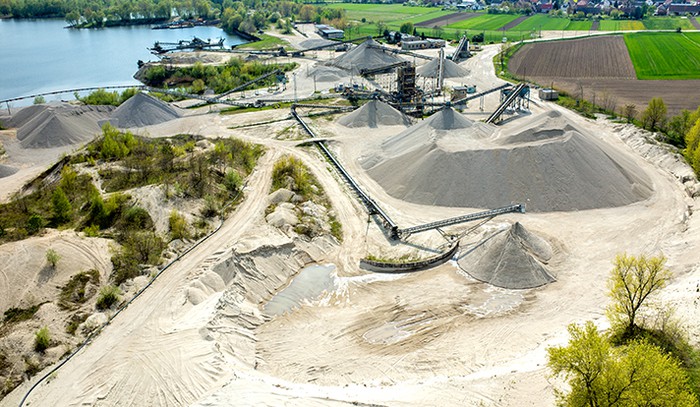
A new study finds that oil sands operations, a major source of oil production in the last several years, emit very high levels of a critical class of air pollutants and pose risks to health and climate. Working with scientists from Canada, a team of researchers in Yale's Department of Chemical & Environmental Engineering found that oil sands operations in Alberta, Canada are among North America's biggest producers of human-caused secondary organic aerosols (SOA). The results are published in the May 25 edition of the journal Nature. "The magnitude of the SOA is significantly larger than the sum of other sources of air pollution in many other major urban areas," said Yale assistant professor Drew Gentner, a co-author of the study, noting that the levels of air pollution from oil sands operations are similar to what's found in densely populated cities such as Houston, Paris, or Los Angeles. SOA is part of a category of air pollution known as PM 2.5 - fine particles 2.5 microns in diameter or smaller, connected to millions of deaths each year. Unlike primary organic aerosols (such as car exhaust), which form during combustion, SOA is a collection of particles that form as a result of oxidation in the air. The significant role they play in air pollution has been known only in the past two decades.
TO READ THIS ARTICLE, CREATE YOUR ACCOUNT
And extend your reading, free of charge and with no commitment.
Your Benefits
- Access to all content
- Receive newsmails for news and jobs
- Post ads