

Environment - Today
UCalgary expedition, with NASA, Canadian and European space agencies, sets out to better understand state of Arctic ice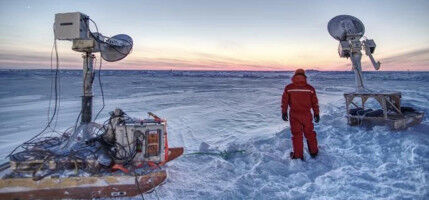
UCalgary expedition, with NASA, Canadian and European space agencies, sets out to better understand state of Arctic ice
Social Sciences - Mar 24
Young people's wellbeing is improving in Greater Manchester, major survey finds
Young people's wellbeing is improving in Greater Manchester, major survey finds

Environment - Mar 24
Australia's environment is improving but climate change is 'accelerating' damage to ecosystems and wildlife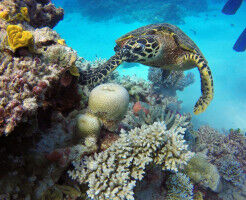
Australia's environment is improving but climate change is 'accelerating' damage to ecosystems and wildlife

Psychology - Mar 23
The grief myth: it doesn't come in stages or follow a checklist - like love, it endures
The grief myth: it doesn't come in stages or follow a checklist - like love, it endures



History & Archeology - Mar 23
The UV has played a part in the discovery of a 3,500-year-old loom that sheds light on key aspects of the Bronze Age textile revolution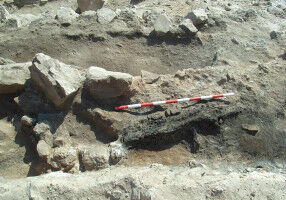
The UV has played a part in the discovery of a 3,500-year-old loom that sheds light on key aspects of the Bronze Age textile revolution
Innovation - Mar 23
The University of Valencia launches ClioViz, an open digital platform for accessing cultural heritage data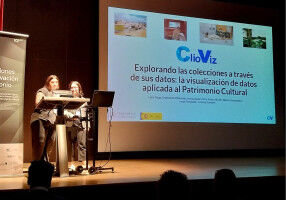
The University of Valencia launches ClioViz, an open digital platform for accessing cultural heritage data

Social Sciences - Mar 23
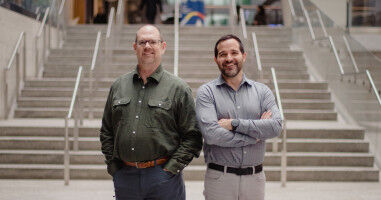
Study links higher concentration of pokie machines to increase in family and domestic violence
Study links higher concentration of pokie machines to increase in family and domestic violence
Health - Mar 23
Screening blitz could achieve cervical cancer elimination among Indigenous communities within a generation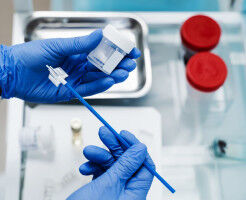
Screening blitz could achieve cervical cancer elimination among Indigenous communities within a generation

Computer Science - Mar 20
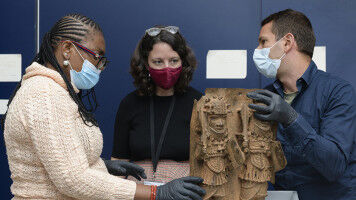
New computer chip material inspired by the human brain could slash AI energy use
New computer chip material inspired by the human brain could slash AI energy use
news
Chemistry
Results 3041 - 3060 of 3956.
Chemistry - Health - 05.11.2014
Chemicals found in everyday fruits could minimise organ damage after heart attack and stroke
Scientists have identified chemicals found in some everyday fruit that could protect vital organs from long-term damage following a heart attack or stroke, according to new research carried out in mice. The researchers now hope the chemicals will provide a starting point for developing new injectable drugs that could be used to prevent some of the long-term damage caused by heart attack and stroke.
Earth Sciences - Chemistry - 05.11.2014
Increase in ozone destroying substances - but Montreal Protocol on track
Research from the University of Leeds and an international team of scientists has shown a recent increase in atmospheric hydrogen chloride (HCl), a substance linked to destruction of the ozone layer. It was anticipated that there would be a decline in HCl under the Montreal Protocol, the international treaty designed to protect the ozone layer by phasing out the production of ozone-depleting substances.
Health - Chemistry - 03.11.2014
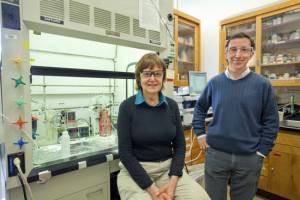
Ever walked into a hotel room and smelled old cigarette smoke? While the last smoker may have left the room hours or even days ago, the lingering odors-resulting from noxious residue that clings to walls, carpets, furniture, or dust particles-are thanks to thirdhand smoke.
Physics - Chemistry - 03.11.2014
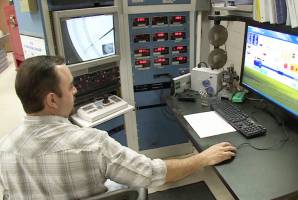
A new video shows how researchers use scientific guns to induce shock waves into explosive materials to study their performance and properties. "As we move forward with our stockpile and as it's aging and as we're replacing components, we want to make sure that we have confidence that those materials perform as intended," said Dana Dattelbaum.
Health - Chemistry - 29.10.2014
Researchers uncover more detail of the molecular triggers behind asthma attacks
A new study has tracked the molecular events that happen during asthma attacks to help explain how a common cold can trigger these attacks. Published in the American Journal of Respiratory and Critical Care Medicine , the research used novel sampling techniques to observe what happens in people's noses and lungs during asthma attacks induced by a cold virus.
Chemistry - Computer Science - 27.10.2014
A GPS from the chemistry set
Scientists teamed up to develop a chemical "processor" which reliably shows the fastest way through a City maze. As the method is basically faster than a satnav system, it could be useful in transport planning and logistics in the future, for instance, as the scientists report. You don't always need GPS, a map or a compass to find the right way.
Chemistry - Health - 23.10.2014
New 'smart’ material improves removal of arsenic from drinking water
Scientists have created a new material that can remove double the amount of arsenic from water than the leading material for water treatment. Arsenic is a toxic element found naturally in groundwater.
Chemistry - Physics - 22.10.2014
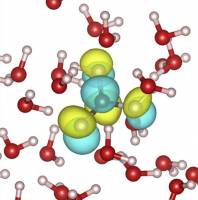
Though it garners few public headlines, carbonic acid, the hydrated form of carbon dioxide, is critical to both the health of the atmosphere and the human body. However, because it exists for only a fraction of a second before changing into a mix of hydrogen and bicarbonate ions, carbonic acid has remained an enigma.
Life Sciences - Chemistry - 17.10.2014
Scientific breakthrough will help design the antibiotics of the future
Press release issued: 17 October 2014 Scientists have used computer simulations to show how bacteria are able to destroy antibiotics - a breakthrough which will help develop drugs which can effectively tackle infections in the future. Researchers at the University of Bristol focused on the role of enzymes in the bacteria, which split the structure of the antibiotic and stop it working, making the bacteria resistant.
Chemistry - Electroengineering - 16.10.2014

New self-assembly method for fabricating graphene nanoribbons brings scientists a step closer to revolutionizing electronics Shaun Mason First characterized in 2004, graphene is a two-dimensional material with extraordinary properties. The thickness of just one carbon atom, and hundreds of times faster at conducting heat and charge than silicon, graphene is expected to revolutionize high-speed transistors in the near future.
Life Sciences - Chemistry - 15.10.2014
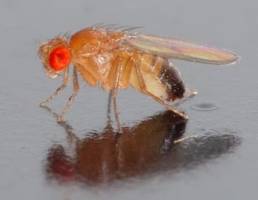
How the fruit fly could help us sniff out drugs and bombs A fly's sense of smell could be used in new technology to detect drugs and bombs, new University of Sussex research has found. Brain scientist Professor Thomas Nowotny was surprised to find that the 'nose' of fruit flies can identify odours from illicit drugs and explosive substances almost as accurately as wine odour, which the insects are naturally attracted to because it smells like their favourite food, fermenting fruit.
Physics - Chemistry - 13.10.2014
Unique catalysts for hydrogen fuel cells synthesized in ordinary kitchen microwave oven
Swedish and Chinese researchers show how a unique nano-alloy composed of palladium nano-islands embedded in tungsten nanoparticles creates a new type of catalysts for highly efficient oxygen reduction, the most important reaction in hydrogen fuel cells. Their results are published in the scientific.
Life Sciences - Chemistry - 09.10.2014
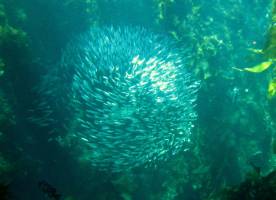
University of Washington The largest migration on the planet is the movement of small animals from the surface of the open ocean, where they feed on plants under cover of darkness, to the sunless depths where they hide from predators during the day. University of Washington researchers have found that this regular migration helps shape our oceans.
Life Sciences - Chemistry - 09.10.2014
Fixing a faulty molecular ’transport hub’ could slow brain degeneration
University of Queensland researchers have gained new insights into how the body sorts and transports protein 'cargo' within our cells, in a finding that could eventually lead to treatments for neurodegenerative diseases such as Alzheimer's and Parkinson's. An international research team co-led by Dr Brett Collins from UQ's Institute for Molecular Bioscience has revealed the structure of a molecular transport hub that sorts, directs and transports protein to correct destinations in the cell.
Physics - Chemistry - 07.10.2014
CHESS X-rays show how to grow crystals from crystals
Way too small to see, nanocrystals - tiny crystals that are at least 1,000 times smaller than the diameter of a human hair - exhibit unprecedented properties that intrigue scientists and engineers. To apply these materials in emerging nanotechnologies, scientists need to better understand their structure, their corresponding functions and how they pack together.
Physics - Chemistry - 07.10.2014
Breakthrough allows researchers to watch molecules "wiggle"
A new crystallographic technique developed at the University of Leeds is set to transform scientists' ability to observe how molecules work. A research paper, published Methods, describes a new way of doing time-resolved crystallography, a method that researchers use to observe changes within the structure of molecules.
Life Sciences - Chemistry - 06.10.2014
No need for water, enzymes are doing it for themselves
Press release issued: 6 October 2014 New research by scientists at the University of Bristol has challenged one of the key axioms in biology - that enzymes need water to function. The breakthrough could eventually lead to the development of new industrial catalysts for processing biodiesel. Enzymes are large biological molecules that catalyse thousands of different chemical reactions that are essential for all life, from converting food into energy, to controlling how our cells replicate DNA.
Life Sciences - Chemistry - 02.10.2014
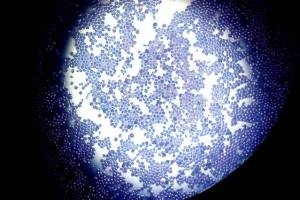
Yeast are commonly used to transform corn and other plant materials into biofuels such as ethanol. However, large concentrations of ethanol can be toxic to yeast, which has limited the production capacity of many yeast strains used in industry. "Toxicity is probably the single most important problem in cost-effective biofuels production," says Gregory Stephanopoulos, the Willard Henry Dow Professor of Chemical Engineering at MIT.
Health - Chemistry - 02.10.2014
Discovery helps to spot what makes a good drug
02 Oct 2014 A new test developed by researchers from the University of Manchester could revolutionise the discovery of new prescription drugs. A new test developed by researchers from the University of Manchester could revolutionise the discovery of new prescription drugs. The test will help determine which drugs are unlikely to work at an early stage, speeding up the time it takes to make safe and effective medicines available.
Health - Chemistry - 02.10.2014
Potential new target to treat asthma attacks brought on by colds
Researchers have identified a molecular mechanism that could explain why the common cold can bring on life-threatening asthma attacks. Published today in Science Translational Medicine , the findings indicate this may be a potential target for new drugs that could be more effective than existing treatments.


Environment - Today
UCalgary expedition, with NASA, Canadian and European space agencies, sets out to better understand state of Arctic ice
UCalgary expedition, with NASA, Canadian and European space agencies, sets out to better understand state of Arctic ice
Social Sciences - Mar 24
Young people's wellbeing is improving in Greater Manchester, major survey finds
Young people's wellbeing is improving in Greater Manchester, major survey finds
Environment - Mar 24
Australia's environment is improving but climate change is 'accelerating' damage to ecosystems and wildlife
Australia's environment is improving but climate change is 'accelerating' damage to ecosystems and wildlife
Psychology - Mar 23
The grief myth: it doesn't come in stages or follow a checklist - like love, it endures
The grief myth: it doesn't come in stages or follow a checklist - like love, it endures
History & Archeology - Mar 23
The UV has played a part in the discovery of a 3,500-year-old loom that sheds light on key aspects of the Bronze Age textile revolution
The UV has played a part in the discovery of a 3,500-year-old loom that sheds light on key aspects of the Bronze Age textile revolution
Innovation - Mar 23
The University of Valencia launches ClioViz, an open digital platform for accessing cultural heritage data
The University of Valencia launches ClioViz, an open digital platform for accessing cultural heritage data
Social Sciences - Mar 23
Study links higher concentration of pokie machines to increase in family and domestic violence
Study links higher concentration of pokie machines to increase in family and domestic violence
Health - Mar 23
Screening blitz could achieve cervical cancer elimination among Indigenous communities within a generation
Screening blitz could achieve cervical cancer elimination among Indigenous communities within a generation
Computer Science - Mar 20
New computer chip material inspired by the human brain could slash AI energy use
New computer chip material inspired by the human brain could slash AI energy use