


Environment - Today
Australia's environment is improving but climate change is 'accelerating' damage to ecosystems and wildlife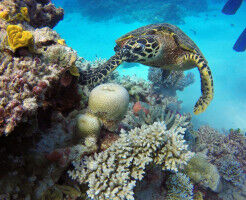
Australia's environment is improving but climate change is 'accelerating' damage to ecosystems and wildlife

Psychology - Mar 23
The grief myth: it doesn't come in stages or follow a checklist - like love, it endures
The grief myth: it doesn't come in stages or follow a checklist - like love, it endures






Social Sciences - Mar 23
Study links higher concentration of pokie machines to increase in family and domestic violence
Study links higher concentration of pokie machines to increase in family and domestic violence
Health - Mar 23
Screening blitz could achieve cervical cancer elimination among Indigenous communities within a generation
Screening blitz could achieve cervical cancer elimination among Indigenous communities within a generation

Computer Science - Mar 20
New computer chip material inspired by the human brain could slash AI energy use
New computer chip material inspired by the human brain could slash AI energy use
Politics - Mar 20
Argentina 50 years on from start of dictatorship - is it forgetting the disappeared?
Argentina 50 years on from start of dictatorship - is it forgetting the disappeared?
Life Sciences - Mar 20
Courting the Competition: Some Male Fruit Flies Serenade Each Other Rather Than Fight
Courting the Competition: Some Male Fruit Flies Serenade Each Other Rather Than Fight

news
Chemistry
Results 3781 - 3800 of 3956.
Physics - Chemistry - 03.12.2010
New theory on the origin of water on Earth
A new theory on the source of terrestrial water has been validated by an international team led by Professor Nora de Leeuw (UCL Chemistry) using computational research. Below Professor de Leeuw describes the implications of the breakthrough. ?The origin of water on our planet is not only of interest for our understanding of the evolution of our own planet and life thereon, but even more so for the increasing exploration of other planets within our solar system and the discovery of potential planetary systems in other galaxies.
Life Sciences - Chemistry - 01.12.2010
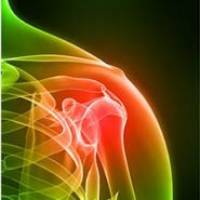
An international team of scientists have found what they believe could be a novel approach to more effective, targeted relief of chronic pain caused by nerve injuries. Previously, scientists have been able to show that a protein molecule known as PKM zeta is required to store memories. In the case of chronic pain, there is a malfunctioning in the neural process that stores those memories, which prevents the brain from adapting the subsequent behavioural response which would ordinarily allow it to cope with the pain.
Physics - Chemistry - 01.12.2010

PASADENA, Calif. A team of astronomers, including two NASA Sagan Fellows, has made the first characterizations of a super-Earth's atmosphere, by using a ground-based telescope. A super-Earth is a planet up to three times the size of Earth and weighing up to 10 times as much. The findings, reported in the Dec.
Physics - Chemistry - 01.12.2010

Cambridge, MA - In December 2009, astronomers announced the discovery of a super-Earth known as GJ 1214b. At the time, they reported signs that the newfound world likely had a thick, gaseous atmosphere. Now, a team led by Jacob Bean (Harvard-Smithsonian Center for Astrophysics) has made the first measurements of GJ 1214b's atmosphere.
Environment - Chemistry - 30.11.2010
Formic acid in the engine
Do ants hold the key to the fuel of the future? Formic acid provides more efficient and safer storage of hydrogen.
Chemistry - Economics - 29.11.2010
Breakthrough in the search for high quality fuels from inexpensive biomass
PA 331/10 Chemical engineering experts at The University of Nottingham have helped a team of international researchers find a way of producing inexpensive renewable liquid fuel out of low grade oils made from renewable products such as farm waste and wood chips. The process, using a unique integrated catalytic process, could open the door to a chemical industry based on renewable biomass feedstock.
Physics - Chemistry - 29.11.2010
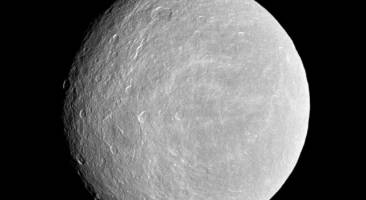
NASA's Cassini spacecraft has detected a very tenuous atmosphere known as an exosphere, infused with oxygen and carbon dioxide around Saturn's icy moon Rhea. This is the first time a spacecraft has directly captured molecules of an oxygen atmosphere - albeit a very thin one - at a world other than Earth.
Physics - Chemistry - 29.11.2010
The secrets of graphene
A team of physicists from the University of Geneva (UNIGE) has measured a giant optical phenomenon in graphene. This material, the discovery of which was awarded the 2010 Nobel Prize in Physics, consists of a single layer of carbon atoms. Its exceptional properties are at the heart of global research in disciplines as diverse as engineering, biology and chemistry, with great potential for future applications.
Physics - Chemistry - 26.11.2010
Cassini reveals oxygen atmosphere of Saturn’s moon Rhea
A fragile atmosphere infused with oxygen and carbon-dioxide has been discovered at Saturn's moon Rhea by the Cassini-Huygens mission - the first time a spacecraft has captured direct evidence of an oxygen atmosphere at a world other than Earth. The NASA-led international mission made the discovery using combined data from Cassini's instruments, which includes a sensor designed and built at UCL's (University College London) Mullard Space Science Laboratory.
Chemistry - Physics - 23.11.2010
World first to provide building blocks for new nano devices
PA 322/10 Scientists at The University of Nottingham have made a major breakthrough that could help shape the future of nanotechnology, by demonstrating for the first time that 3-D molecular structures can be built on a surface. The discovery could prove a significant step forward towards the development of new nano devices such as cutting-edge optical and electronic technologies and even molecular computers.
Physics - Chemistry - 16.11.2010
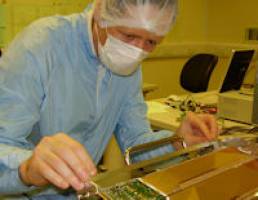
Liverpool, UK - 17 November 2010: Physicists at the Universities of Liverpool and Swansea have succeeded in trapping atoms of antihydrogen to help further understanding of the origins of the Universe. Researchers have trapped and held the atoms, the anti-matter counterpart of hydrogen, using an experiment called ALPHA at CERN in Switzerland.
Chemistry - Health - 11.11.2010

For the first time, scientists have been able to "freeze in time" a mysterious process by which a critical enzyme metabolizes drugs and chemicals in food. By recreating this process in the lab, a team of researchers has solved a 40-year-old puzzle about changes in a family of enzymes produced by the liver that break down common drugs such as Tylenol, caffeine and opiates, as well as nutrients in many foods.
Physics - Chemistry - 10.11.2010

Findings could improve wiring in national electrical grid systems MINNEAPOLIS / ST. PAUL (11/10/2010) —A team of international researchers led by physicists in the University of Minnesota's College of Science and Engineering have made a significant breakthrough in an effort to understand the phenomenon of high-temperature superconductivity in complex copper-oxides—one of the most studied scientific topics in history.
Health - Chemistry - 08.11.2010
MIT IDs new cancer drug target
CAMBRIDGE, Mass. Suppressing cancer cells? ability to replicate damaged DNA could dramatically enhance the effectiveness of chemotherapy drugs such as cisplatin, according to a new pair of papers from MIT biologists. In studies of mice, the researchers found that slowing down a specific system for tolerating DNA damage not only prolonged survival but also prevented relapsed tumors from becoming resistant to chemotherapy, and made tumors much less likely to spread to other parts of the body.
Life Sciences - Chemistry - 08.11.2010

As a light rain swept across campus one October evening, 15 freshmen were tucked around a seminar table immersed in a discussion about nature in another form. With their eyes riveted on their class instructor, Princeton University president and molecular biology professor Shirley M. Tilghman, they grappled with one of the deepest questions in the natural world: What is at the root of the intricate process that makes us all so different?
Chemistry - Physics - 08.11.2010
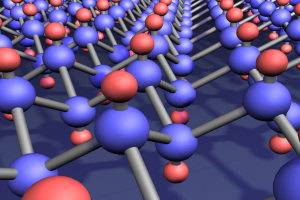
University of Manchester scientists have created a new material which could replace or compete with Teflon in thousands of everyday applications. Professor Andre Geim, who along with his colleague Professor Kostya Novoselov won the 2010 Nobel Prize for graphene - the world's thinnest material, has now modified it to make fluorographene - a one-molecule-thick material chemically similar to Teflon.
Chemistry - Physics - 05.11.2010
New MIT analysis on artificial photosynthesis
CAMBRIDGE, Mass. A new analysis by MIT researchers could make it possible to design more efficient artificial systems that mimic the way plants harvest the energy of sunlight through photosynthesis. The study is the latest in an ongoing series examining the process of photosynthesis and the different variables that determine its efficiency, conducted by Associate Professor of Chemistry Jianshu Cao and his postdocs and colleagues.
Chemistry - Earth Sciences - 28.10.2010

October 28, 2010 PASADENA, Calif. A research team led by NASA's Jet Propulsion Laboratory and the California Institute of Technology (Caltech), both in Pasadena, Calif., has fully characterized a key chemical reaction that affects the formation of pollutants in smoggy air in the world's urban areas.
Chemistry - Earth Sciences - 28.10.2010

Team says current models may underestimate ozone levels; findings made by characterizing rates of key chemical reactions PASADENA, Calif.—A team of scientists led by researchers from the California Institute of Technology (Caltech) and NASA's Jet Propulsion Laboratory (JPL) have fully characterized a key chemical reaction that affects the formation of pollutants in smoggy air.
Physics - Chemistry - 27.10.2010
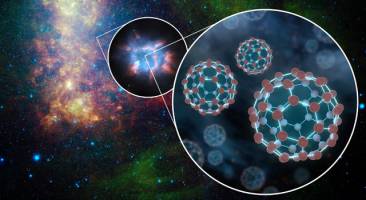
October 27, 2010 PASADENA, Calif. Astronomers have discovered bucket loads of buckyballs in space. They used NASA's Spitzer Space Telescope to find the little carbon spheres throughout our Milky Way galaxy - in the space between stars and around three dying stars. What's more, Spitzer detected buckyballs around a fourth dying star in a nearby galaxy in staggering quantities - the equivalent in mass to about 15 of our moons.


Environment - Today
Australia's environment is improving but climate change is 'accelerating' damage to ecosystems and wildlife
Australia's environment is improving but climate change is 'accelerating' damage to ecosystems and wildlife
Psychology - Mar 23
The grief myth: it doesn't come in stages or follow a checklist - like love, it endures
The grief myth: it doesn't come in stages or follow a checklist - like love, it endures
Social Sciences - Mar 23
Study links higher concentration of pokie machines to increase in family and domestic violence
Study links higher concentration of pokie machines to increase in family and domestic violence
Health - Mar 23
Screening blitz could achieve cervical cancer elimination among Indigenous communities within a generation
Screening blitz could achieve cervical cancer elimination among Indigenous communities within a generation
Computer Science - Mar 20
New computer chip material inspired by the human brain could slash AI energy use
New computer chip material inspired by the human brain could slash AI energy use
Politics - Mar 20
Argentina 50 years on from start of dictatorship - is it forgetting the disappeared?
Argentina 50 years on from start of dictatorship - is it forgetting the disappeared?
Life Sciences - Mar 20
Courting the Competition: Some Male Fruit Flies Serenade Each Other Rather Than Fight
Courting the Competition: Some Male Fruit Flies Serenade Each Other Rather Than Fight