

Pharmacology - Mar 19
GSK, University of Oxford and Imperial College London launch centre to create computer models of lungs, liver, kidneys and cartilage
GSK, University of Oxford and Imperial College London launch centre to create computer models of lungs, liver, kidneys and cartilage
Innovation - Mar 19
India's new wave of Hindu Religious Entrepreneurship is reshaping our interpretation of success
India's new wave of Hindu Religious Entrepreneurship is reshaping our interpretation of success



Veterinary - Mar 19
New RVC study challenges common beliefs on desirable behaviours in designer 'Doodle' crossbreeds
New RVC study challenges common beliefs on desirable behaviours in designer 'Doodle' crossbreeds
Agronomy & Food Science - Mar 19
Bird Flu Risk to Danish Cattle - New Tool Can Warn Farmers Before Infection Spreads
Bird Flu Risk to Danish Cattle - New Tool Can Warn Farmers Before Infection Spreads
Chemistry - Mar 19
Leipzig University and Center for the Transformation of Chemistry conclude collaboration agreement
Leipzig University and Center for the Transformation of Chemistry conclude collaboration agreement
Psychology - Mar 19
Analysis: Trying your best in a second language? Here's why native speakers seem so rude
Analysis: Trying your best in a second language? Here's why native speakers seem so rude

Computer Science - Mar 18
SDU is part of global initiative to bring mathematical certainty to modern computing and artificial intelligence
SDU is part of global initiative to bring mathematical certainty to modern computing and artificial intelligence



news
Swiss Federal Institute of Technology Lausanne, EPFL
Results 1021 - 1040 of 1375.
Life Sciences - Health - 22.01.2018
Feedback enhances brainwave control of a novel hand-exoskeleton
EPFL scientists are developing a lightweight and portable hand exoskeleton that can be controlled with brainwaves. The device enhances performance of brain-machine interfaces and can restore functional grasps for the physically impaired. An extremely lightweight and portable hand exoskeleton may one day help the physically impaired with daily living.
Life Sciences - Chemistry - 18.01.2018
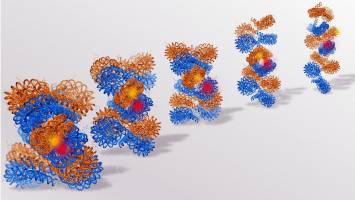
In cells, proteins tightly package the long thread of DNA into pearl necklace-like complexes known as chromatin.
Pharmacology - Life Sciences - 17.01.2018
Bile acids fire up fat-burning
EPFL scientists have discovered a novel role for bile acids: converting energy-storing white fat depots into energy-expending beige fat. The study is published. Obesity arises from an imbalance between energy intake and energy expenditure. As a result, current treatments try to decrease calorie intake and/or increase energy expenditure.
Electroengineering - Innovation - 15.01.2018
Smart buildings that can manage our electricity needs
Researchers at EPFL have developed a system that can be installed in a building to collect data on people's energy usage. The aim is then to send this data directly to a smart electric grid that will allocate resources optimally. A smart grid that decides how best to distribute energy based on availability, cost and customers' needs - that's the energy concept being developed by researchers in the School of Engineering's Electronics Laboratory.
Environment - 08.01.2018
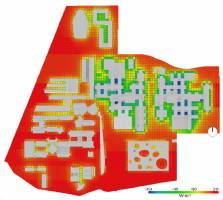
In the year 2100, temperatures at EPFL are expected to be similar to those currently experienced in Perugia, in central Italy.
Environment - Materials Science - 01.01.2018
Standardizing perovskite aging measurements
EPFL scientists have produced a data-driven proposal for standardizing the measurements of perovskite solar cell stability and degradation. Published in Nature Energy , the work aims to create consensus in the field and overcome one of the major hurdles on the way to commercializing perovskite photovoltaics.
Pharmacology - Life Sciences - 26.12.2017
Looking back at 2017 (1/2)
Coral reefs that can survive global warming, an expedition around Antarctica, a booster for genetic research, a personnal virtual heart, a National Center for Data Science. Some of the EPFL's research and milestones that marked the year 2017.
Health - 20.12.2017

OCUVIS, a visualization software developed by a soon-to-be-launched EPFL spin-off, lets architects simulate 3D building models to assess the performance of natural light indoors. After specifying the ambient conditions, architects can view the visual and non-visual characteristics of the resulting natural light in their designs.
Health - Pharmacology - 18.12.2017

EPFL researchers have created nanoparticles that attract viruses and, using the pressure resulting from the binding process, destroy them. This revolutionary approach could lead to the development of broad-spectrum antiviral drugs. HIV, dengue, papillomavirus, herpes and Ebola - these are just some of the many viruses that kill millions of people every year, mostly children in developing countries.
Health - Life Sciences - 14.12.2017

EPFL scientists have discovered that neutrophils, a type of immune cell, can actually help lung tumors grow. The work is published in Cell Reports, and has enormous implications for cancer immunotherapy. Neutrophils inside lung adenocarcinoma tumors. On the left, neutrophils inside a mouse tumor are stained brown; on the right, neutrophils inside a human tumor are stained red (credit: E. Meylan/EPFL).
Materials Science - Environment - 08.12.2017

Incorporating guanidinium into perovskite solar cells stabilizes their efficiency at 19% for 1000 hours under full-sunlight testing conditions. With the power-conversion efficiency of silicon solar cells plateauing around 25%, perovskites are now ideally placed to become the market's next generation of photovoltaics.
Health - Pharmacology - 08.12.2017

Life Sciences - Health - 06.12.2017
Healthy mitochondria could stop Alzheimer's
Using a bioinformatics and experimental approach, scientists at EPFL have found that rendering mitochondria resistant to damage can halt diseases caused by amyloid toxicity, such as Alzheimer's disease. Alzheimer's disease is the most common form of dementia and neurodegeneration worldwide. A major hallmark of the disease is the accumulation of toxic plaques in the brain, formed by the abnormal aggregation of a protein called beta-amyloid inside neurons.
Physics - Electroengineering - 06.12.2017

EPFL researchers have successfully measured some of the quantum properties of electrons in two-dimensional semiconductors. This work in the field of spintronics could one day lead to chips that are not only smaller but that also generate less heat. A group of spintronics researchers at EPFL is using new materials to reveal more of the many capabilities of electrons.
Physics - Innovation - 05.12.2017

Computer Science - Health - 01.12.2017

EPFL researchers have shown how human operators can maintain control over a system comprising several agents that are guided by artificial intelligence. In artificial intelligence (AI), machines carry out specific actions, observe the outcome, adapt their behavior accordingly, observe the new outcome, adapt their behavior once again, and so on, learning from this iterative process.
Life Sciences - Health - 29.11.2017

Researchers from EPFL have developed a novel series of systems genetics tools to identify new links between genes and phenotypes. The work, a hallmark of EPFL's endeavors into the advancement of open science, brings biology to the cloud and sets the stage for the development of precision medicine. The study is published in Cell Systems.
Health - 27.11.2017
Bringing social media to unconnected areas
The number of connected devices may be on the rise, but large swaths of the global population still live in areas without telecom infrastructure or a reliable internet connection.
Environment - Earth Sciences - 24.11.2017

In order to gain insight into how lakes breathe, EPFL scientists have studied oxygen depletion in the depths of Lake Geneva - the first time such research has been carried out. By collecting key data, they were able to enhance their understanding of the lake's ecosystem and how it is likely to evolve over time.
Life Sciences - Health - 22.11.2017
Alzheimer's Tau protein forms toxic complexes with cell membranes
Alzheimer's disease is caused by tangles in the brain made up of malfunctioning aggregated Tau proteins. Scientists at EPFL have discovered a new toxic form of Tau that forms as a result of its interaction with cell membranes. The research is published and provides novel insights into possible mechanisms by which this protein moves in the brain and kills neurons.


Pharmacology - Mar 19
GSK, University of Oxford and Imperial College London launch centre to create computer models of lungs, liver, kidneys and cartilage
GSK, University of Oxford and Imperial College London launch centre to create computer models of lungs, liver, kidneys and cartilage
Innovation - Mar 19
India's new wave of Hindu Religious Entrepreneurship is reshaping our interpretation of success
India's new wave of Hindu Religious Entrepreneurship is reshaping our interpretation of success
Veterinary - Mar 19
New RVC study challenges common beliefs on desirable behaviours in designer 'Doodle' crossbreeds
New RVC study challenges common beliefs on desirable behaviours in designer 'Doodle' crossbreeds
Agronomy & Food Science - Mar 19
Bird Flu Risk to Danish Cattle - New Tool Can Warn Farmers Before Infection Spreads
Bird Flu Risk to Danish Cattle - New Tool Can Warn Farmers Before Infection Spreads
Chemistry - Mar 19
Leipzig University and Center for the Transformation of Chemistry conclude collaboration agreement
Leipzig University and Center for the Transformation of Chemistry conclude collaboration agreement
Psychology - Mar 19
Analysis: Trying your best in a second language? Here's why native speakers seem so rude
Analysis: Trying your best in a second language? Here's why native speakers seem so rude
Computer Science - Mar 18
SDU is part of global initiative to bring mathematical certainty to modern computing and artificial intelligence
SDU is part of global initiative to bring mathematical certainty to modern computing and artificial intelligence