

Pharmacology - Mar 19
GSK, University of Oxford and Imperial College London launch centre to create computer models of lungs, liver, kidneys and cartilage
GSK, University of Oxford and Imperial College London launch centre to create computer models of lungs, liver, kidneys and cartilage
Innovation - Mar 19
India's new wave of Hindu Religious Entrepreneurship is reshaping our interpretation of success
India's new wave of Hindu Religious Entrepreneurship is reshaping our interpretation of success

Veterinary - Mar 19
New RVC study challenges common beliefs on desirable behaviours in designer 'Doodle' crossbreeds
New RVC study challenges common beliefs on desirable behaviours in designer 'Doodle' crossbreeds
Agronomy & Food Science - Mar 19
Bird Flu Risk to Danish Cattle - New Tool Can Warn Farmers Before Infection Spreads
Bird Flu Risk to Danish Cattle - New Tool Can Warn Farmers Before Infection Spreads
Chemistry - Mar 19
Leipzig University and Center for the Transformation of Chemistry conclude collaboration agreement
Leipzig University and Center for the Transformation of Chemistry conclude collaboration agreement
Psychology - Mar 19
Analysis: Trying your best in a second language? Here's why native speakers seem so rude
Analysis: Trying your best in a second language? Here's why native speakers seem so rude
Computer Science - Mar 18
SDU is part of global initiative to bring mathematical certainty to modern computing and artificial intelligence
SDU is part of global initiative to bring mathematical certainty to modern computing and artificial intelligence
news
Swiss Federal Institute of Technology Lausanne, EPFL
Results 1261 - 1280 of 1375.
Health - Life Sciences - 27.10.2015
Intestinal worms "talk" to gut bacteria to boost the immune system
27. EPFL researchers have discovered how intestinal worm infections cross-talk with gut bacteria to help the immune system. Intestinal worms infect over 2 billion people across the world, mostly children, in areas with poor sanitation. But despite causing serious health problems, worms can actually help the immune system of its host as an indirect way of protecting themselves.
Environment - Innovation - 26.10.2015
An innovative response to the challenge of storing renewable energy
26. A system for managing and storing energy, developed by EPFL's Distributed Electrical Systems Laboratory, has been inaugurated on the school's campus.
Health - 23.10.2015
Monitoring critical blood levels in real time in the ICU
23. For patients in intensive care, knowing how much glucose, lactate and other substances are in the blood is a question of life or death. EPFL has developed a miniaturized microfluidic device that will allow medical staff to monitor these levels in real time and react more quickly. It was unveiled yesterday in Atlanta.
Astronomy & Space - Physics - 22.10.2015
Looking at the earliest galaxies
22. An international team of astronomers led by EPFL have discovered over 250 of the universe's earliest galaxies. This sample includes the faintest and smallest of the first-generation dwarf galaxies to be discovered, and offers important clues about the nature of the early universe. Before light travelled across it, the universe was a dark place.
Materials Science - Mechanical Engineering - 22.10.2015
The ductility of magnesium explained
22. Zhaoxuan Wu and William Curtin of the Laboratory for Multiscale Mechanics Modeling (LAMMM) have solved the 40-year-old scientific riddle of the low ductility magnesium. Magnesium is the lightest metal found on earth; it is four times lighter than steel and a third lighter than aluminum. It is also abundantly available, being the eight most common element in the earth's crust.
Life Sciences - Health - 21.10.2015
How the brain triggers action
21. EPFL scientists have identified specific neurons in the striatum that contribute to driving motivated behaviors like movement. The work may help in designing new ways of treating disorders like Parkinson's disease in the long term. Perhaps the brain's most important function is to process sensory information and make behavioral decisions based on it, like moving to grasp an object.
Life Sciences - Environment - 16.10.2015
The future of farming depends on local breeds
16. The dwindling genetic diversity of farm animals is increasingly becoming a threat to livestock production.
Life Sciences - Physics - 14.10.2015
Looking at the brain with a geologist's "eye"
14. Using a geologist's imaging tool, researchers have made unprecedented high-resolution images of how carbon atoms from glucose are integrated into brain cells, providing new insight and opening new doors into the fate of glucose in the brain. Glucose - a form of sugar - fuels the brain. But how it goes from the blood to the brain cells and where it ultimately winds up are not yet well understood.
Life Sciences - Health - 12.10.2015
Genetic variation is key to fighting viruses
12. Using a genome-wide association study, EPFL scientists have identified subtle genetic changes that can cause substantial differences to how we fight viral infections. When infected with a virus, the response of our immune systems varies widely from person to person. This variation is of great concern, as these differences can determine clinical outcome as well as effectiveness of vaccinations.
Life Sciences - Computer Science - 08.10.2015
A major proof of concept for brain simulation
08. An international team led by EPFL scientists have completed a first draft computer reconstruction of a piece of the neocortex. The electrical behavior of the virtual brain tissue was simulated on supercomputers and found to match the behavior observed in a number of experiments on the brain. Further simulations revealed novel insights into the functioning of the neocortex.
Life Sciences - Physics - 01.10.2015
New DNA stain lights up living cells
01. EPFL scientists have developed a new DNA stain that can be used to image living cells. One of the holy grails of bio-imaging is to visualize the inner workings of a cell while it is still alive.
Astronomy & Space - Computer Science - 30.09.2015
An army of tiny robots that tracks galaxies
30. Why is the universe expanding at an increasing rate? Scientists will attempt to gain a better understanding of this phenomenon by mapping the distribution of galaxies in the universe.
Environment - 04.09.2015
Adapting electricity demand to production. Not the other way around
04. Instead of aligning energy production with consumption, wouldn't it be possible to make consumption adapt to the intermittency of renewable energies? François Vuille, director of development at the Energy Center, shares his thoughts.
Computer Science - Innovation - 18.03.2015
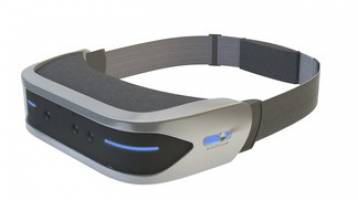
The start-up MindMaze has opened up a new dimension in the world of video games: moving with thoughts through a virtual environment or even directly interacting through certain emotions.
Life Sciences - Pharmacology - 13.03.2015
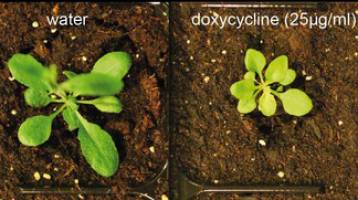
An EPFL study has shown that tetracycline-based antibiotics have an unexpected effect on the development of many organisms. In addition to pointing out the issue of soil pollution by these antibiotics, which are widely administrated to livestock, the scientists call upon colleagues to explore the consequences of using them in experiments that modulate gene expression.
Environment - 09.03.2015
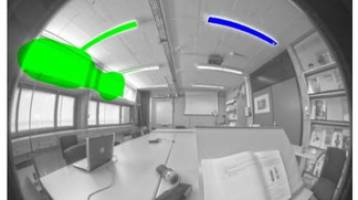
Researchers have developed a camera that sees like the human eye, providing clues about the sensation of visual comfort. The instrument could optimize natural and artificial lighting to constantly adapt to the needs of the user. How can we combine visual comfort with electrical energy savings? Light inside the home is a theme that has interested researchers for over a half century.
Materials Science - Physics - 06.03.2015
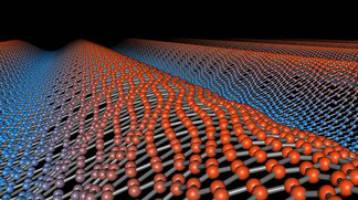
EPFL researchers have shed new light on the fundamental mechanisms of heat dissipation in graphene and other two-dimensional materials. They have shown that heat can propagate as a wave over very long distances. This is key information for engineering the electronics of tomorrow. In the race to miniaturize electronic components, researchers are challenged with a major problem: the smaller or the faster your device, the more challenging it is to cool it down.
Computer Science - Health - 04.03.2015
Kids and robots learn to write together
Who is the teacher: the student or the machine? By showing a robot how to write letters, children improve their writing skills and gain self--confidence.
Physics - 02.03.2015
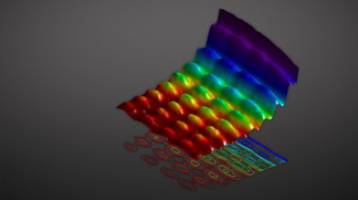
Light behaves both as a particle and as a wave. Since the days of Einstein, scientists have been trying to directly observe both of these aspects of light at the same time. Now, scientists at EPFL have succeeded in capturing the first-ever snapshot of this dual behavior. Quantum mechanics tells us that light can behave simultaneously as a particle or a wave.
Transport - 25.02.2015
Ramp metering and speed limits to prevent traffic jams
Researchers showed that by managing the access to freeway junctions and moderating the speed limit on the express lanes it is possible to reduce delays by over 12% across the highway system. In 30 years, traffic has more than tripled on most Swiss highways. On the A1, it even increased from 20'000 to nearly 90'000 vehicles per day, between Lausanne and Geneva.


Pharmacology - Mar 19
GSK, University of Oxford and Imperial College London launch centre to create computer models of lungs, liver, kidneys and cartilage
GSK, University of Oxford and Imperial College London launch centre to create computer models of lungs, liver, kidneys and cartilage
Innovation - Mar 19
India's new wave of Hindu Religious Entrepreneurship is reshaping our interpretation of success
India's new wave of Hindu Religious Entrepreneurship is reshaping our interpretation of success
Veterinary - Mar 19
New RVC study challenges common beliefs on desirable behaviours in designer 'Doodle' crossbreeds
New RVC study challenges common beliefs on desirable behaviours in designer 'Doodle' crossbreeds
Agronomy & Food Science - Mar 19
Bird Flu Risk to Danish Cattle - New Tool Can Warn Farmers Before Infection Spreads
Bird Flu Risk to Danish Cattle - New Tool Can Warn Farmers Before Infection Spreads
Chemistry - Mar 19
Leipzig University and Center for the Transformation of Chemistry conclude collaboration agreement
Leipzig University and Center for the Transformation of Chemistry conclude collaboration agreement
Psychology - Mar 19
Analysis: Trying your best in a second language? Here's why native speakers seem so rude
Analysis: Trying your best in a second language? Here's why native speakers seem so rude
Computer Science - Mar 18
SDU is part of global initiative to bring mathematical certainty to modern computing and artificial intelligence
SDU is part of global initiative to bring mathematical certainty to modern computing and artificial intelligence