

Pharmacology - Mar 19
GSK, University of Oxford and Imperial College London launch centre to create computer models of lungs, liver, kidneys and cartilage
GSK, University of Oxford and Imperial College London launch centre to create computer models of lungs, liver, kidneys and cartilage
Innovation - Mar 19
India's new wave of Hindu Religious Entrepreneurship is reshaping our interpretation of success
India's new wave of Hindu Religious Entrepreneurship is reshaping our interpretation of success
Veterinary - Mar 19
New RVC study challenges common beliefs on desirable behaviours in designer 'Doodle' crossbreeds
New RVC study challenges common beliefs on desirable behaviours in designer 'Doodle' crossbreeds
Agronomy & Food Science - Mar 19
Bird Flu Risk to Danish Cattle - New Tool Can Warn Farmers Before Infection Spreads
Bird Flu Risk to Danish Cattle - New Tool Can Warn Farmers Before Infection Spreads
Chemistry - Mar 19
Leipzig University and Center for the Transformation of Chemistry conclude collaboration agreement
Leipzig University and Center for the Transformation of Chemistry conclude collaboration agreement
Psychology - Mar 19
Analysis: Trying your best in a second language? Here's why native speakers seem so rude
Analysis: Trying your best in a second language? Here's why native speakers seem so rude
Computer Science - Mar 18
SDU is part of global initiative to bring mathematical certainty to modern computing and artificial intelligence
SDU is part of global initiative to bring mathematical certainty to modern computing and artificial intelligence
news
Swiss Federal Institute of Technology Lausanne, EPFL
Results 1281 - 1300 of 1375.
Astronomy & Space - 20.02.2015
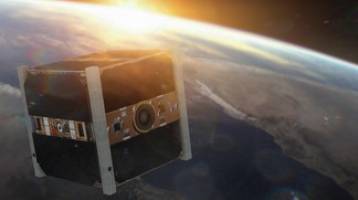
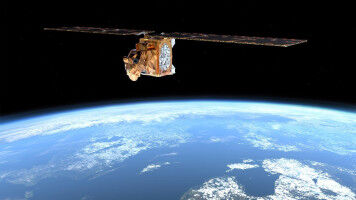
Launched more than five years ago, the small Swiss satellite designed by EPFL and several other Universities of Applied Sciences, will soon have orbited the Earth 30'000 times.
Social Sciences - 19.02.2015
How stress can lead to inequality
How does stress affect our self-confidence when we compete? An EPFL study shows how stress could actually be both a consequence and a cause of social and economic inequality, affecting our ability to compete and make financial decisions. Stress is a staple of our lives today, and we know intuitively that it can influence our confidence in competing with others.
Health - Life Sciences - 13.02.2015
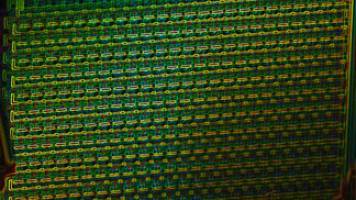
Scientists at EPFL have developed a new lab-on-a-chip technique to analyze single cells from entire population. The new method, which uses beads and microfluidics can change the way we study mixed populations of cells, such as those of tumors. Individual cells in a population, e.g. a tumor, can vary greatly in terms of biochemistry and function.
Environment - Life Sciences - 11.02.2015
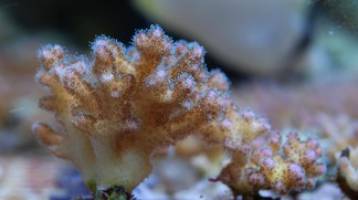
Powering coral reefs: Scientists have revealed how coral-dwelling microalgae harvest nutrients from the surrounding seawater and shuttle them out to their coral hosts, sustaining a fragile ecosystem that is under threat. Coral reefs are the jungles of the oceans, home to some of the planet's most fertile fishing grounds, and hotspots of global tourism.
Physics - 04.02.2015
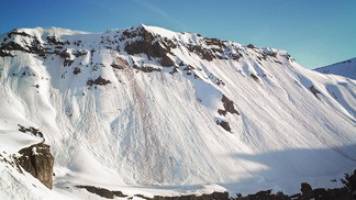
Ski resorts and researchers could potentially rely on statistics to evaluate the long-term avalanche activity on their slopes with a simple webcam, a weather station, and several years' worth of observations. Researchers from EPFL have validated a statistical avalanche model that translates observations into an assessment of the link between snowfall and avalanches.
Materials Science - 02.02.2015
Methane storage targets are too high
Using natural gas for car fuel is a challenge, requiring massive research efforts to find materials that can efficiently store it. However, a Swiss-US study concludes that the best materials have not only been already discovered, but can only meet up to 70% of energy targets set by governments. Because of its low energy density, natural gas has to be compressed or liquefied, which makes it difficult to integrate into vehicles.
Electroengineering - 28.01.2015
Electronic circuits with reconfigurable pathways closer to reality
Multitasking circuits capable of reconfiguring themselves in real time and switching functions as the need arises - this is the promising application stemming from a discovery made at EPFL and published. Other potential uses: miniaturising our electronic devices and developing resilient circuits. Will it be possible one day to reconfigure electronic microchips however we want, even when they are in use? A recent discovery by a team at EPFL suggests as much.
Health - Life Sciences - 26.01.2015
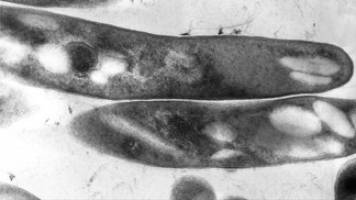
"Living-dead" bacteria exist in limbo: biologically active but not proliferating. Buried in this zombie state, disease-causing bacteria could come back from the dead to re-infect patients. Researchers at EPFL have produced the first evidence of this strange phenomenon in tuberculosis, suggesting new avenues for treatment.
Computer Science - 23.01.2015
Wi-Fi and Neighborhood Conflicts: An Algorithm to Keep the Peace
To overcome the problem of interference between wireless networks, a researcher has developed an algorithm that automatically selects the best frequency band according to the usage of neighboring networks.
Life Sciences - Materials Science - 21.01.2015
Controlling brain cells with light
Scientists have used a cutting-edge method to stimulate neurons with light. They have successfully recorded synaptic transmission between neurons in a live animal for the first time. Neurons, the cells of the nervous system, communicate by transmitting chemical signals to each other through junctions called synapses.
Physics - Materials Science - 19.01.2015
Graphene multiplies the power of light
Could graphene turn light to electricity? Scientists have shown that graphene can convert a single photon into multiple electrons, showing much promise for future photovoltaic devices. Graphene is a material that has gathered tremendous popularity in recent years, due to its extraordinary strength and light weight.
Life Sciences - Astronomy & Space - 13.01.2015
Detecting extraterrestrial life through motion
EPFL scientists have developed an extremely sensitive device that can detect life forms by sensing the slightest motion. The chemistry-free system can be used to rapidly test antibiotics or even to search for life on other planets. Looking for life on other planets is not straightforward. It usually relies on chemical detection, which might be limited or even completely irrelevant to alien biology.
Life Sciences - Health - 05.01.2015
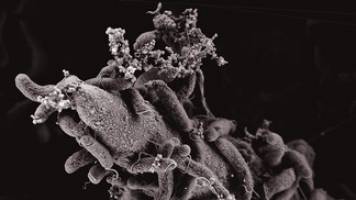
Sscientists have uncovered the unconventional way that the cholera bacterium stabs and kills other bacteria to steal their DNA, making it potentially more virulent. Cholera is caused when the bacterium Vibrio cholerae infects the small intestine. The disease is characterized by acute watery diarrhea resulting in severe dehydration.
Physics - 19.12.2014

How do fireflies produce those mesmerizing light flashes? Using cuttingedge imaging techniques, scientists from Switzerland and Taiwan have unraveled the firefly's intricate light-producing system for the first time. Fireflies used rapid light flashes to communicate. This "bioluminescence" is an intriguing phenomenon that has many potential applications, from drug testing and monitoring water contamination, and even lighting up streets using glow-in-dark trees and plants.
Computer Science - Physics - 05.12.2013

Two EPFL scientists have shown how to achieve a dramatic increase in the capacity of optical fibers.
Pharmacology - Life Sciences - 02.08.2013
New drugs to find the right target to fight Alzheimer's disease
Next-generation drugs designed to fight Alzheimer's disease look very promising. Scientists have unveiled the mechanisms behind two classes of compound currently being tested in clinical trials. They have also identified a likely cause of early-onset hereditary forms of the disease. The future is looking good for drugs designed to combat Alzheimer's disease.
Physics - Chemistry - 22.11.2012

Researchers have elucidated a century-old mystery: how hydrogen destroys steels. A new mathematical model predicts this failure in the presence of the destructive atoms. A veritable gangrene for steels and other structural metals, hydrogen is one of the most important causes of ruptures in industrial parts, such as pipelines.
Environment - Earth Sciences - 20.11.2012

One year after the MIR submersibles dove into the depths of Lake Geneva, the elemo program is delivering its first scientific results. The operation will be extended with a campaign to make observations above the lake surface from a sensor-packed ultralight aircraft. The same experiments are planned above Lake Baikal in Russia.
Computer Science - 19.11.2012
Software Enables Avatar to Reproduce Our Emotions in Real Time
A virtual character produces the same facial expressions as its user. It makes a video game, chat, or an animated film both fun and fast.
Innovation - 16.11.2012

For those familiar with its language, the face reflects much about an individual's identity and emotional state. Scientists are developing a tool that will be able to use facial information to make the cars of the future safer and more comfortable. Today's "intelligent" cars, equipped with multiple sensors and algorithms, can react to emergency situations, regulate speed, assist with parking and respond to voice commands.


Pharmacology - Mar 19
GSK, University of Oxford and Imperial College London launch centre to create computer models of lungs, liver, kidneys and cartilage
GSK, University of Oxford and Imperial College London launch centre to create computer models of lungs, liver, kidneys and cartilage
Innovation - Mar 19
India's new wave of Hindu Religious Entrepreneurship is reshaping our interpretation of success
India's new wave of Hindu Religious Entrepreneurship is reshaping our interpretation of success
Veterinary - Mar 19
New RVC study challenges common beliefs on desirable behaviours in designer 'Doodle' crossbreeds
New RVC study challenges common beliefs on desirable behaviours in designer 'Doodle' crossbreeds
Agronomy & Food Science - Mar 19
Bird Flu Risk to Danish Cattle - New Tool Can Warn Farmers Before Infection Spreads
Bird Flu Risk to Danish Cattle - New Tool Can Warn Farmers Before Infection Spreads
Chemistry - Mar 19
Leipzig University and Center for the Transformation of Chemistry conclude collaboration agreement
Leipzig University and Center for the Transformation of Chemistry conclude collaboration agreement
Psychology - Mar 19
Analysis: Trying your best in a second language? Here's why native speakers seem so rude
Analysis: Trying your best in a second language? Here's why native speakers seem so rude
Computer Science - Mar 18
SDU is part of global initiative to bring mathematical certainty to modern computing and artificial intelligence
SDU is part of global initiative to bring mathematical certainty to modern computing and artificial intelligence