




Health - Today
AI was supposed to ease doctors' workload - instead they spend hours correcting errors
AI was supposed to ease doctors' workload - instead they spend hours correcting errors




Pharmacology - Today
International trial finds rapid diagnostic testing alone does not reduce antibiotic prescribing for respiratory infections
International trial finds rapid diagnostic testing alone does not reduce antibiotic prescribing for respiratory infections

Social Sciences - Today
Social background shapes how hard children work, according to a study by UC3M
Social background shapes how hard children work, according to a study by UC3M
Innovation - Today
With Robotics Innovation Center, CMU and Hazelwood Partners Sustain Community Collaborations
With Robotics Innovation Center, CMU and Hazelwood Partners Sustain Community Collaborations





news
History & Archeology
Results 421 - 440 of 979.
Social Sciences - History & Archeology - 01.09.2020
Radiocarbon dating and CT scans reveal Bronze Age tradition of keeping human remains
Using radiocarbon dating and CT scanning to study ancient bones, researchers have uncovered for the first time a Bronze Age tradition of retaining and curating human remains as relics over several generations. While the findings, led by the University of Bristol and published in the journal Antiquity , may seem eerie or even gruesome by today's convention, they indicate a tangible way of honouring and remembering known individuals between close communities and generations some 4,500 years ago.
History & Archeology - Chemistry - 27.08.2020
Ceramic cooking pots record history of ancient food practices
Analysing three components of ceramic cooking pots - charred remains, inner surface residues and lipids absorbed within the ceramic walls - may help archaeologists uncover detailed timelines of culinary cooking practices used by ancient civilisations. The findings, from a year-long cooking experiment led by the University of California, University of Bristol and the Bernice Pauahi Bishop Museum in Hawaii, are published this week in the journal Scientific Reports .
History & Archeology - Environment - 20.08.2020

This article written by Dr Shimona Kealy and Distinguished Professor Sue O'Connor was originally published by The Conversation. Prehistoric axes and beads found in caves on a remote Indonesian island suggest this was a crucial staging post for seafaring people who lived in this region as the last ice age was coming to an end.
History & Archeology - Health - 13.08.2020

Columbus brought syphilis to Europe - or did he? A recent study conducted at the University of Zurich now indicates that Europeans could already have been infected with this sexually transmitted disease before the 15th century. In addition, researchers have discovered a hitherto unknown pathogen causing a related disease.
History & Archeology - Earth Sciences - 12.08.2020
Step change in our ability to unlock secrets of the past with radiocarbon dates
Radiocarbon dating, a technique widely used in archaeology and geoscience, is set to become more accurate than ever after an international team of scientists have shared much-anticipated new calibration curves based on data from ancient trees, lake and ocean sediments, cave deposits and more.
Environment - History & Archeology - 12.08.2020
Researchers unlock secrets of the past with new carbon dating standard
Radiocarbon dating is set to become more accurate than ever after an international team of scientists improved the technique for assessing the age of historical objects. The team of researchers at the Universities of Belfast, Sheffield, Bristol, Glasgow, Oxford, St Andrews and Historic England, plus international colleagues, used measurements from almost 15,000 samples from objects dating back as far as 60,000 years ago, as part of a seven-year project.
Social Sciences - History & Archeology - 12.08.2020

ANU Archaeologists have found the earliest evidence of Indigenous communities cultivating bananas in Australia. The evidence of cultivation and plant management dates back 2,145 years and was found at Wagadagam on the tiny island of Mabuyag in the western Torres Strait. The site comprised a series of retaining walls associated with gardening activities along with a network of stone arrangements, shell arrangements, rock art and a mound of dugong bones.
History & Archeology - 07.08.2020
Mass graves provide new evidence of violence against women in Franco’s Spain
Women suffered gender-specific violence during the Spanish Civil War and Franco's dictatorship, says archaeologist and forensic anthropologist Laura Muñoz-Encinar in a recent publication. The researcher excavated mass graves to find new evidence about the specific forms of repression that women suffered during this period of the Spanish contemporary history.
Environment - History & Archeology - 23.07.2020

A major international research project led by TU Wien (Vienna) shows for the first time that flooding characteristics in recent decades are unlike those of previous centuries Overflowing rivers can cause enormous problems: Worldwide, the annual damage caused by river floods is estimated at over 100 billion dollars - and it continues to rise.
History & Archeology - Life Sciences - 07.07.2020
Keep calm and carry on cooking: Norman Conquest of 1066 did little to change people’s eating habits
Archaeologists from Cardiff University and the University of Sheffield have combined the latest scientific methods to offer new insights into life during the Norman Conquest of England. Until now, the story of the Conquest has primarily been told from evidence of the elite classes of the time. But little has been known about how it affected everyday people's lives.
History & Archeology - 30.06.2020
Shows iconic golden eagle was once common throughout Wales
A new study has shown that golden and white-tailed eagles were widespread and common throughout historic Wales. Scientists looked at their historical distribution as part of their bid to bring the species, which became regionally extinct in the early-1800s, back to the Welsh countryside. During their research they gained fascinating insights by looking at archaeological, fossil and observational records - and even Welsh place names.
Environment - History & Archeology - 22.06.2020
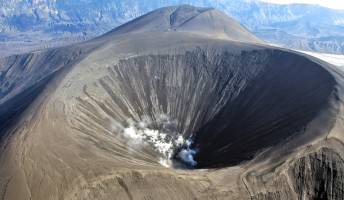
The assassination of Julius Caesar on the Ides of March in 44 B.C.E. triggered a 17-year power struggle that ultimately ended the Roman Republic leading to the rise of the Roman Empire. To the south, Egypt, which Cleopatra was attempting to restore as a major power in the Eastern Mediterranean, was shook by Nile flood failures, famine, and disease.
Social Sciences - History & Archeology - 18.06.2020
Discovery in UNESCO passage tomb points to Neolithic Irish dynasty
Evidence of an elite adult male conceived through a socially sanctioned incestuous relationship during the Neolithic period has been discovered in Ireland's largest passage tomb, finds a new study involving UCL and Trinity College Dublin. The remains were identified in New Grange, a 5,000 year-old passage tomb that sits within the UNESCO monumental site of Brú na Bóinne.
History & Archeology - 16.06.2020
Battlefield archaeology helps veterans with physical and mental recovery
A new report by the charity Waterloo Uncovered reveals how archaeological work on the battlefield of Waterloo is helping Veterans and Serving Military Personnel with recovery from some of the mental and physical impacts of their service.
History & Archeology - 10.06.2020
Archaeologists may have discovered London’s earliest playhouse
The earliest playhouse in London may have been discovered at a site in Whitechapel, by a team of archaeologists from UCL. The elusive remains of what is thought to be the earliest Elizabethan playhouse, known as the Red Lion, were discovered by Archaeology South-East, part of UCL's Institute of Archaeology.
History & Archeology - 09.06.2020
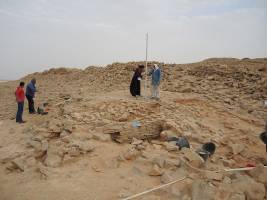
In contrast to the prehistoric remains of the Near East, the megalithic monuments of Arabia remain largely unknown. These monumental structures, made of dry stone walls, still hold many secrets in terms of their construction, function and chronology. An international collaboration 1 of scientists from France, Saudi Arabia and Italy 2 , led by Olivia Munoz, a researcher at the CNRS, have discovered a 35-metre long triangular platform in the oasis of Dûmat al-Jandal (northern Saudi Arabia).
Life Sciences - History & Archeology - 28.05.2020
4000 Years of contact, conflict and cultural change had little genetic impact in Near East
The Near East was a crossroad for the ancient world's greatest civilizations, and invasions over centuries caused enormous changes in cultures, religions and languages. However, a new study of the DNA of ancient skeletons spanning 4,000 years has revealed that most of these changes had no lasting effect on the genetics of the local population of Beirut.
History & Archeology - 22.05.2020
Opinion: Historical films may be decaying much faster than we thought
Writing for The Conversation, PhD student Ida R. Ahmad (UCL Institute for Sustainable Heritage) explains that precious historical documents are under threat from 'vinegar syndrome', which causes film to decompose. A significant chunk of the world's history is facing an existential threat. US government deeds , recordings of Indigenous Australians and photographs of English seaside life spanning three decades are just some of the historical documents recorded on acetate film that are suffering irreversible damage due to what's known as vinegar syndrome.
History & Archeology - Earth Sciences - 05.05.2020
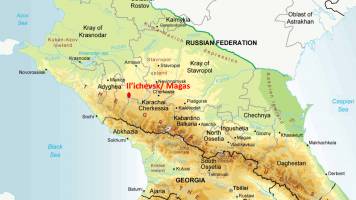
A researcher at Ghent University has identified a lost Silk Road city larger than medieval Ghent, London or Venice. Historians and archaeologists have been searching for nearly 200 years for the city of Magas, capital of the ninth to twelfth century kingdom of Alania. This Kingdom, located in the North Caucasus mountains of modern Russia, controlled a critical section of the Silk Roads: a trade route which connected East Asia and the Mediterranean centuries before the era of European expansion.
History & Archeology - Chemistry - 13.04.2020
Molecular and isotopic evidence for milk, meat, and plants in prehistoric eastern African herder food systems
The development of pastoralism is known to have transformed human diets and societies in grasslands worldwide. Cattle-herding has been (and still is) the dominant way of life across the vast East African grasslands for thousands of years. This is indicated by numerous large and highly fragmentary animal bone assemblages found at archaeological sites across the region, which demonstrate the importance of cattle, sheep and goat to these ancient people.


Health - Today
AI was supposed to ease doctors' workload - instead they spend hours correcting errors
AI was supposed to ease doctors' workload - instead they spend hours correcting errors
Pharmacology - Today
International trial finds rapid diagnostic testing alone does not reduce antibiotic prescribing for respiratory infections
International trial finds rapid diagnostic testing alone does not reduce antibiotic prescribing for respiratory infections
Social Sciences - Today
Social background shapes how hard children work, according to a study by UC3M
Social background shapes how hard children work, according to a study by UC3M
Innovation - Today
With Robotics Innovation Center, CMU and Hazelwood Partners Sustain Community Collaborations
With Robotics Innovation Center, CMU and Hazelwood Partners Sustain Community Collaborations