

Social Sciences - Today
Social background shapes how hard children work, according to a study by UC3M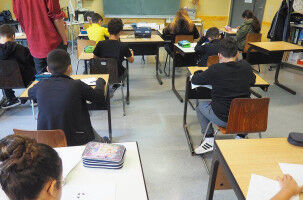
Social background shapes how hard children work, according to a study by UC3M


Art & Design - Today
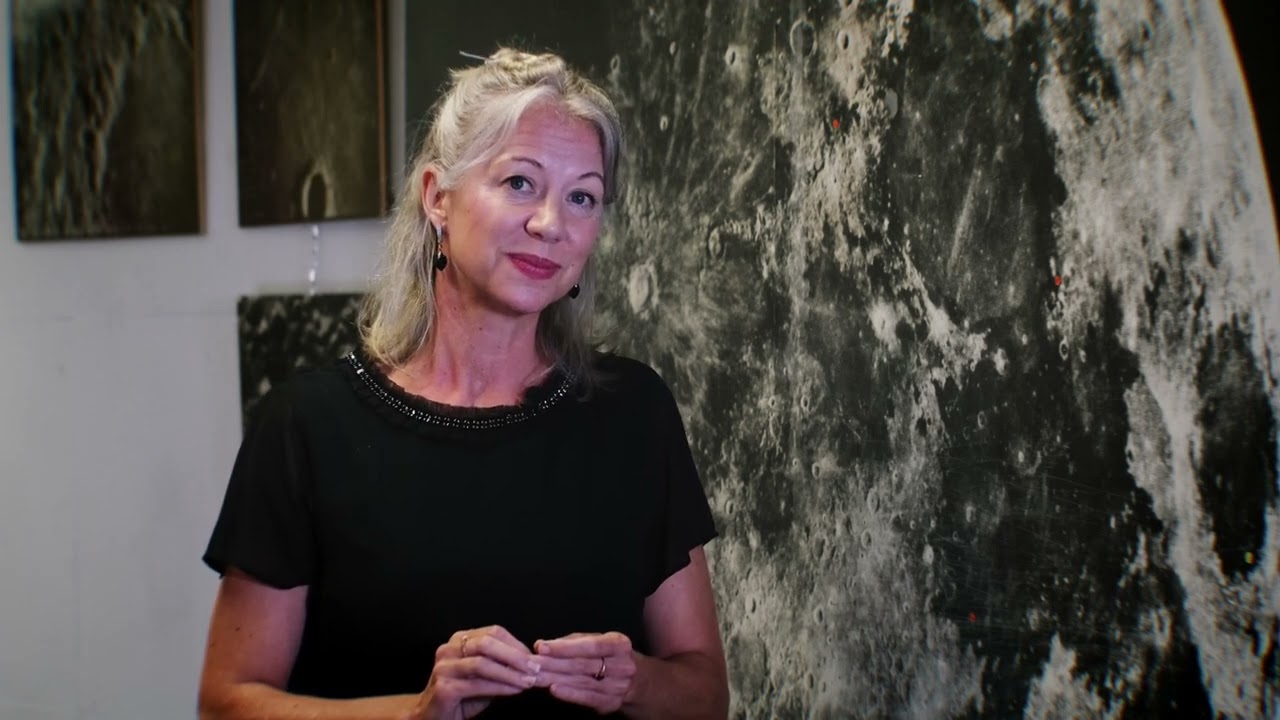
The inheritance of making: Dennis Golding's art honours community and his Redfern roots
The inheritance of making: Dennis Golding's art honours community and his Redfern roots

Environment - Mar 16
UCalgary celebrates World Water Day and emphasizes the importance of equal voices in inclusive and sustainable solutions
UCalgary celebrates World Water Day and emphasizes the importance of equal voices in inclusive and sustainable solutions

Campus - GLASGOW - Mar 16
Evidence from five decades of graduates confirms Humanities skills power careers and lifelong impact
Evidence from five decades of graduates confirms Humanities skills power careers and lifelong impact
news
Mathematics
Results 481 - 500 of 565.
Mathematics - 26.03.2012
Reintegration of work life remains an important issue for Canadian mothers and public policy
Study considers effects of motherhood on employment across generations of Canadian women Both childless women and mothers of an only child have seen their likelihood of re-entering the labour market after a first work interruption increase across generations, according to a new study. However, their rate of return into employment has grown significantly more than that of mothers of two or more children, whose rate has also increased but at a slower pace.
Health - Mathematics - 14.03.2012
Anti-smoking campaigns have saved over 800,000 lives
More than 800,000 lives were saved in the United States between 1975 and 2000 thanks to anti-smoking measures, according to a new study that used a Yale mathematical model to quantify for the first time the impact of anti-smoking measures on lung cancer. The authors also note that 2.5 million people who died from smoking-related lung cancer in this same period might have survived if stricter tobacco control measures had been in effect.
Life Sciences - Mathematics - 22.02.2012
Ant colonies remember rivals’ odour and compete like sports fans
A new study led by the University of Melbourne has shown that weaver ants share a collective memory for the odour of ants in rival nests, and use the information to identify them and compete, similar to how sports fans know each other instantly by their unique colours. The ant colony collective memory gives them an edge in a competitive world by priming all nest mates with information about rivals before they encounter them, said study leader Professor Mark Elgar from the University's Department of Zoology.
Mathematics - 20.02.2012
The beat goes on: the geometry that makes music pleasing
Researchers uncover mathematical formula for rhythm and suggest our brains may be hardwired to respond to it Whether it's Bach or Brubeck, a new study shows that composers repeat rhythmic patterns in their works in such a way that the part is a copy of the larger whole. A research team led by neuroscientists Drs.
Physics - Mathematics - 13.02.2012
Rapunzel, Leonardo and the physics of the ponytail
New research provides the first mathematical understanding of the shape of a ponytail and could have implications for the textile industry, computer animation and personal care products. From Leonardo Da Vinci to the Brothers Grimm, the properties of hair have been of enduring interest in science and art.
Physics - Mathematics - 13.02.2012
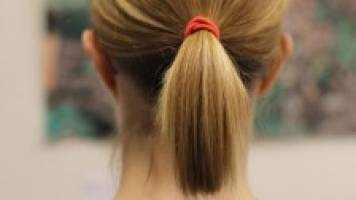
New research provides the first mathematical understanding of the shape of a ponytail and could have implications for the textile industry, computer animation and personal care products. Our findings solve a problem that has puzzled scientists and artists ever since Leonardo da Vinci remarked on the fluid-like streamlines of hair in his notebooks 500 years ago." —Professor Ray Goldstein From Leonardo Da Vinci to the Brothers Grimm, the properties of hair have been of enduring interest in science and art.
Mathematics - Administration - 08.02.2012

An assistant professor at Penn State has created a new statistical model that may enable fingerprint evidence to withstand greater scrutiny in court. Currently, some fingerprints that could be key pieces of evidence in court are not being considered because of shortcomings in the way this evidence is reported.
Mathematics - 07.02.2012
The world can deliver sudden and nasty shocks. Economies can crash, fisheries can collapse, and climate can pass tipping points. Providing ample warning of such transitions presently requires the collection of enormous - and often prohibitive - amounts of data. A new method developed by Thilo Gross , Senior Lecturer in Engineering Mathematic's at the University of Bristol and Steven Lade from the Max-Planck-Institute for the Physics of Complex Systems in Germany promises to change this.
Mathematics - Psychology - 18.01.2012
Poor self-image cannot explain maths gender gap
Studies showing that women's underachievement in maths is due to their own poor self-image are fundamentally flawed, according to psychologists Gijsbert Stoet, from the University of Leeds, and Professor David Geary from the University of Missouri. Their findings suggest that recent strategies aimed at improving girls' performance in maths - which are based on these studies - are misguided and unlikely to work.
Mathematics - 12.01.2012
Bowlers strike with a hot hand, too
Is the so-called "hot hand" phenomenon in sports a reality or just an illusion based on misperception of random sequences? For the second time in recent months, a Yale study supports the notion that it is real. The study appears online in the journal PLoS One. The "hot hand" phenomenon refers to the belief that an athlete is more likely to make successful shots if the previous shots were successful.
Physics - Mathematics - 16.12.2011

Physicists working at the Large Hadron Collider have received an early Christmas present. Using apparatus partly designed in Bristol, the CMS (Compact Muon Solenoid) collaboration has presented the first tentative evidence of the Higgs boson. The discovery of this new particle has been described as the 'holy grail of particle physics' and would confirm our understanding of the fundamental laws of nature.
Mathematics - Mechanical Engineering - 15.12.2011

Contrary to the ideal of a completely engaged electorate, individuals who have the least interest in a specific outcome can actually be vital to achieving a democratic consensus. These individuals dilute the influence of powerful minority factions who would otherwise dominate everyone else, according to new research published in Science.
Mathematics - Physics - 22.11.2011
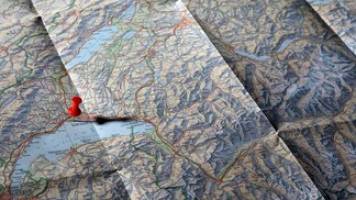
For fifty years, mathematicians have grappled with the so-called "fixed point" theorem. A team has now found an elegant, one-page solution that opens up new perspectives in physics and economics. Take a map of the world. Now put it down on the ground in Central Park, against a rock on Mount Everest, or on your kitchen table; there will always be a point on the map that sits exactly on the actual physical place it represents.
Life Sciences - Mathematics - 14.11.2011

To match pollinators' probing tongues, cells in floral spurs elongate, driving rapid speciation : Caroline Perry , (617) 496-1351 - Columbine flowers are recognizable by the long, trailing nectar spurs that extend from the bases of their petals, tempting the taste buds of their insect pollinators. New research at Harvard and the University of California, Santa Barbara (UCSB), helps to explain how columbines have achieved a rapid radiation of approximately 70 species, with flowers apparently tailored to the length of their pollinators' tongues.
Mathematics - Life Sciences - 20.10.2011
21 October 2011 New device measures viscosity of ketchup and cosmetics A device that can measure and predict how liquids flow under different conditions will ensure consumer products – from make-up to ketchup – are of the right consistency. The technology developed at the University of Sheffield enables engineers to monitor, in real time, how the viscous components (rheology) of liquids change during a production process, making it easier, quicker and cheaper to control the properties of the liquid.
Mathematics - Life Sciences - 17.10.2011
Computers learn to turn biological processes into equations
Computers learn to turn biological processes into equations First it was chess. Then it was Jeopardy. Now computers are at it again, but this time they are trying to automate the scientific process itself. Using a Cornell-developed software called Eureqa, an interdisciplinary team of scientists that includes Cornell's Hod Lipson has demonstrated that a computer can analyze raw experimental data from a biological system and derive the mathematical equations that describe how the system operates.
Life Sciences - Mathematics - 19.09.2011

Researchers have developed new statistical methods based on the complete genome sequences of people alive today to shed light on events at the dawn of human history. They applied their methods to the genomes of individuals of East Asian, European, and western and southern African descent. They analyzed only six genomes, but made use of the fact that these genomes contain traces of genetic material from thousands of human ancestors, which have been assembled into new combinations over the millennia by genetic recombination.
Mathematics - 06.09.2011
Researchers create new Urban Network Analysis toolbox
CAMBRIDGE, Mass. MIT researchers have created a new Urban Network Analysis (UNA) toolbox that enables urban designers and planners to describe the spatial patterns of cities using mathematical network analysis methods. Such tools can support better informed and more resilient urban design and planning in a context of rapid urbanization.
Mathematics - Life Sciences - 09.08.2011
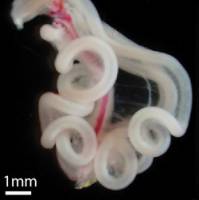
Mathematicians and biologists at Harvard explain why vertebrate intestines are so predictably loopy : Caroline Perry , (617) 496-1351 Between conception and birth, the human gut grows more than two meters long, looping and coiling within the tiny abdomen. Within a given species, the developing vertebrate gut always loops into the same formation'however, until now, it has not been clear why.
Physics - Mathematics - 21.07.2011

A theory linking two 'broken symmetries' in high-temperature superconductors is proposed and verified A theory advanced by a Cornell theoretical physicist to link two "broken symmetries" in a high-temperature superconductor has been verified by experiment, bringing scientists a step closer to understanding and perhaps improving superconducting materials.


Social Sciences - Today
Social background shapes how hard children work, according to a study by UC3M
Social background shapes how hard children work, according to a study by UC3M
Art & Design - Today
The inheritance of making: Dennis Golding's art honours community and his Redfern roots
The inheritance of making: Dennis Golding's art honours community and his Redfern roots
Environment - Mar 16
UCalgary celebrates World Water Day and emphasizes the importance of equal voices in inclusive and sustainable solutions
UCalgary celebrates World Water Day and emphasizes the importance of equal voices in inclusive and sustainable solutions
Campus - GLASGOW - Mar 16
Evidence from five decades of graduates confirms Humanities skills power careers and lifelong impact
Evidence from five decades of graduates confirms Humanities skills power careers and lifelong impact