

Computer Science - Mar 20
New computer chip material inspired by the human brain could slash AI energy use
New computer chip material inspired by the human brain could slash AI energy use
Politics - Mar 20
Argentina 50 years on from start of dictatorship - is it forgetting the disappeared?
Argentina 50 years on from start of dictatorship - is it forgetting the disappeared?
Life Sciences - Mar 20
Courting the Competition: Some Male Fruit Flies Serenade Each Other Rather Than Fight
Courting the Competition: Some Male Fruit Flies Serenade Each Other Rather Than Fight

Social Sciences - Mar 20
Louis Theroux's manosphere documentary shows some of the subtle ways we can undermine online misogyny
Louis Theroux's manosphere documentary shows some of the subtle ways we can undermine online misogyny
Life Sciences - Mar 20
Hidden Helpers: Pittsburgh's Industrial Past Might Hold the Key to a Cleaner Future
Hidden Helpers: Pittsburgh's Industrial Past Might Hold the Key to a Cleaner Future
Pharmacology - Mar 19
GSK, University of Oxford and Imperial College London launch centre to create computer models of lungs, liver, kidneys and cartilage
GSK, University of Oxford and Imperial College London launch centre to create computer models of lungs, liver, kidneys and cartilage
Innovation - Mar 19
India's new wave of Hindu Religious Entrepreneurship is reshaping our interpretation of success
India's new wave of Hindu Religious Entrepreneurship is reshaping our interpretation of success


Pharmacology - Mar 19
Oxford University spinout Dark Blue Therapeutics acquired to advance leukaemia treatment
Oxford University spinout Dark Blue Therapeutics acquired to advance leukaemia treatment

Veterinary - Mar 19
New RVC study challenges common beliefs on desirable behaviours in designer 'Doodle' crossbreeds
New RVC study challenges common beliefs on desirable behaviours in designer 'Doodle' crossbreeds
Agronomy & Food Science - Mar 19
Bird Flu Risk to Danish Cattle - New Tool Can Warn Farmers Before Infection Spreads
Bird Flu Risk to Danish Cattle - New Tool Can Warn Farmers Before Infection Spreads



news
Paleontology
Results 221 - 240 of 323.
Life Sciences - Paleontology - 08.04.2021
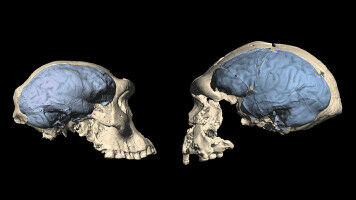
The human brain as we know it today is relatively young. It evolved about 1.7 million years ago when the culture of stone tools in Africa became increasingly complex. A short time later, the new Homo populations spread to Southeast Asia, researchers from the University of Zurich have now shown using computed tomography analyses of fossilized skulls.
Paleontology - Life Sciences - 18.03.2021
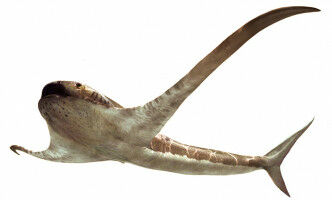
A + A The fossil of an unusual shark specimen reminiscent of manta rays sheds light on morphological diversity in Cretaceous sharks. This plankton feeder was discovered in Mexico and analysed by an international team of palaeontologists led by a CNRS researcher from Géosciences Rennes (CNRS/University of Rennes 1).
Paleontology - Environment - 08.03.2021
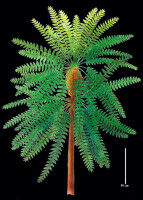
Spectacular fossil plants preserved within a volcanic ash fall in China have shed light on an evolutionary race 300 million years ago, which was eventually won by the seed-bearing plants that dominate so much of the Earth today. New research into fossils found at the 'Pompeii of prehistoric plants', in Wuda, Inner Mongolia, reveals that the plants, called Noeggerathiales, were highly-evolved members of the lineage from which came seed plants.
Paleontology - Life Sciences - 03.03.2021
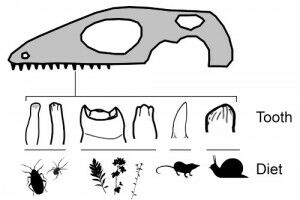
New research has revealed that the diets of early lizards and snakes, which lived alongside dinosaurs around 100 million years ago, were more varied and advanced than previously thought. The study, led by the University of Bristol and published in Royal Society ,showed lizards, snakes, and mosasaurs in the Cretaceous period already had the full spectrum of diet types, including flesh-eating and plant-based, which they have today.
Environment - Paleontology - 26.02.2021
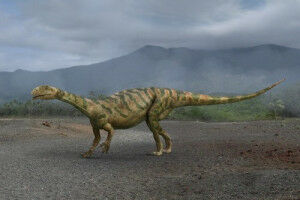
A new study using leading edge technology has shed surprising light on the ancient habitat where some of the first dinosaurs roamed in the UK around 200 million years ago. The research, led by the University of Bristol, examined hundreds of pieces of old and new data including historic literature vividly describing the landscape as a "landscape of limestone islands like the Florida Everglades?
Life Sciences - Paleontology - 27.01.2021
Cell death shines a light on the origins of complex life
Organelles continue to thrive after the cells within which they exist die, a team of University of Bristol scientists have found, overturning previous assumptions that organelles decay too quickly to be fossilised. As described in the journal Sciences Advances today [27 January], researchers from Bristol's School of Earth Sciences were able to document the decay process of eukaryotic algal cells, showing that nuclei, chloroplasts and pyrenoids (organelles found within chloroplasts) can persist for weeks and months after cell death in eukaryote cells, long enough to be preserved as fossils.
Life Sciences - Paleontology - 20.01.2021
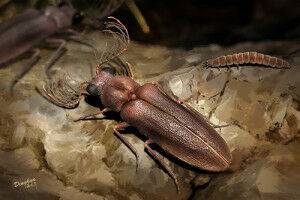
Trapped in amber for 100 million years, an exceptionally well-preserved, light-producing beetle sheds light on the diversification of bioluminescent beetles in the Cretaceous period and provides the missing fossil link between fireflies' living relatives. With over 3,500 described species, light-producing beetles are the most diverse bioluminescent terrestrial animals.
Paleontology - Campus - 19.01.2021
Discovery of new praying mantis species from the time of the dinosaurs
Artist's interpretation of Labradormantis guilbaulti in liftoff among the leaves of a sycamore tree, Labrador, around 100 million years ago. The interpretation is based on fossils (for the wings) and living and extinct relatives (for the rest of the body). Fossilized sycamore leaves have been found in the same deposits as the mantis wings and show that this new insect species would have lived in a lush warm temperate forest during the Cretaceous.
Paleontology - Life Sciences - 18.01.2021
Dinosaur-era sea lizard had teeth like a shark
New study identifies a bizarre new species suggesting that giant marine lizards thrived before the asteroid wiped them out 66 million years ago. Last updated on Monday 18 January 2021 A new species of mosasaur - an ancient sea-going lizard from the age of dinosaurs - has been found with shark-like teeth that gave it a deadly slicing bite.
Paleontology - Life Sciences - 14.01.2021
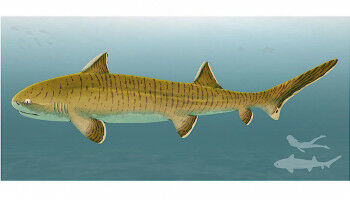
In a new study, an international research team led by Sebastian Stumpf from the University of Vienna describes an exceptionally well-preserved skeleton of the ancient shark Asteracanthus. This extremely rare fossil find comes from the famous Solnhofen limestones in Bavaria, which was formed in a tropical-subtropical lagoon landscape during the Late Jurassic, about 150 million years ago.
Paleontology - Environment - 07.01.2021
Research explains why crocodiles have changed so little since the age of the dinosaurs
New research by scientists at the University of Bristol explains how a 'stop-start' pattern of evolution, governed by environmental change, could explain why crocodiles have changed so little since the age of the dinosaurs. Crocodiles today look very similar to ones from the Jurassic period some 200 million years ago.
Paleontology - Life Sciences - 14.12.2020
Unexpected insights into early dinosaur’s brain, eating habits and agility
A pioneering reconstruction of the brain belonging to one of the earliest dinosaurs to roam the Earth has shed new light on its possible diet and ability to move fast. Research, led by the University of Bristol, used advanced imaging and 3-D modelling techniques to digitally rebuild the brain of Thecodontosaurus , better known as the Bristol dinosaur due to its origins in the UK city.
Paleontology - Life Sciences - 26.11.2020
Ancient bird with sickle-shaped beak offers insights into evolution
A 68 million-year-old fossil of a crow-sized bird discovered in Madagascar offers new insights into the evolution of face and beak shape of modern birds' ancestors, according to a new study involving UCL researchers. The findings are helping scientists to understand convergent evolution of complex anatomy.
Life Sciences - Paleontology - 18.11.2020

Some, if not all, early sharks that lived 300 to 400 million years ago not only dropped their lower jaws downward but rotated them outwards when opening their mouths. This enabled them to make the best of their largest, sharpest and inward-facing teeth when catching prey, paleontologists at the Universities of Zurich and Chicago have now shown using CT scanning and 3D printing.
Paleontology - Life Sciences - 11.11.2020
Unique resin conservation process thanks to feather and fur remains found in amber in Teruel
Amber piece of the site in Ariño with a lock of mammalian hair. This is the oldest finding of hair in amber. Credits: S. Álvarez Parra et al. Scientific Reports Amber piece from the site of San Just with dinosaur feather remains. Credits: S. Álvarez Parra et al. Scientific Reports Four examples studied in the "pull off vestiture" process in ambar pieces from San Just, Ariño, Myanmar and the Baltic, from left to right and top to bottom.
Life Sciences - Paleontology - 06.11.2020
Earliest example of a rapid-fire tongue found in extinct amphibians
Fossils of small armoured amphibians provide the oldest evidence of a slingshot-style tongue, according to a new study co-led by a UCL researcher. The research team analysed 99-million-year-old fossils to find that the animals were sit-and-wait predators that snatched prey with a projectile firing of their tongue, as reported in the journal Science .
Environment - Paleontology - 05.11.2020
Key to predicting future climate: Look back millions of years
An international team of climate scientists, including two from the University of Michigan, suggests that researchers using numerical models to predict future climate change should include simulations of past climates when evaluating model performance. "We urge the climate model developer community to pay attention to the past and actively involve it in predicting the future,” said Jessica Tierney, the paper's lead author and an associate professor in the University of Arizona's Department of Geosciences.
Life Sciences - Paleontology - 02.11.2020
Fossil poop shows fishy lunches from 200 million years ago
A new study of coprolites, fossil poop, shows the detail of food webs in the ancient shallow seas around Bristol in south-west England. One hungry fish ate part of the head of another fish before snipping off the tail of a passing reptile. Marie Cueille, a visiting student at the University of Bristol's School of Earth Sciences , was working on a collection of hundreds of fish poops from the Rhaetian bone bed near Chipping Sodbury in South Gloucestershire, dated at 205 million years ago.
Life Sciences - Paleontology - 02.11.2020

A new study led by paleontologists at the University of Washington and its Burke Museum of Natural History & Culture indicates that the earliest evidence of mammal social behavior goes back to the Age of Dinosaurs. The evidence, published Nov. Ecology & Evolution, lies in the fossil record of a new genus of multituberculate - a small, rodent-like mammal that lived during the Late Cretaceous of the dinosaur era - called Filikomys primaevus , which translates to "youthful, friendly mouse." The fossils are the most complete mammal fossils ever found from the Mesozoic in North America.
Paleontology - 30.10.2020
Plankton turned hunters to survive dinosaur-killing asteroid impact
After the last global mass extinction, 66 million years ago, most of the plankton that survived were those able to capture food to eat, according to a study led by UCL and University of Southampton researchers. The findings, published in Science Advances , support the theory that darkness drove the global extinctions, after an asteroid impact, as plankton and plants would not have been able to use photosynthesis to get their energy from the sun.


Computer Science - Mar 20
New computer chip material inspired by the human brain could slash AI energy use
New computer chip material inspired by the human brain could slash AI energy use
Politics - Mar 20
Argentina 50 years on from start of dictatorship - is it forgetting the disappeared?
Argentina 50 years on from start of dictatorship - is it forgetting the disappeared?
Life Sciences - Mar 20
Courting the Competition: Some Male Fruit Flies Serenade Each Other Rather Than Fight
Courting the Competition: Some Male Fruit Flies Serenade Each Other Rather Than Fight
Social Sciences - Mar 20
Louis Theroux's manosphere documentary shows some of the subtle ways we can undermine online misogyny
Louis Theroux's manosphere documentary shows some of the subtle ways we can undermine online misogyny
Life Sciences - Mar 20
Hidden Helpers: Pittsburgh's Industrial Past Might Hold the Key to a Cleaner Future
Hidden Helpers: Pittsburgh's Industrial Past Might Hold the Key to a Cleaner Future
Pharmacology - Mar 19
GSK, University of Oxford and Imperial College London launch centre to create computer models of lungs, liver, kidneys and cartilage
GSK, University of Oxford and Imperial College London launch centre to create computer models of lungs, liver, kidneys and cartilage
Innovation - Mar 19
India's new wave of Hindu Religious Entrepreneurship is reshaping our interpretation of success
India's new wave of Hindu Religious Entrepreneurship is reshaping our interpretation of success
Pharmacology - Mar 19
Oxford University spinout Dark Blue Therapeutics acquired to advance leukaemia treatment
Oxford University spinout Dark Blue Therapeutics acquired to advance leukaemia treatment
Veterinary - Mar 19
New RVC study challenges common beliefs on desirable behaviours in designer 'Doodle' crossbreeds
New RVC study challenges common beliefs on desirable behaviours in designer 'Doodle' crossbreeds
Agronomy & Food Science - Mar 19
Bird Flu Risk to Danish Cattle - New Tool Can Warn Farmers Before Infection Spreads
Bird Flu Risk to Danish Cattle - New Tool Can Warn Farmers Before Infection Spreads