

Politics - Today
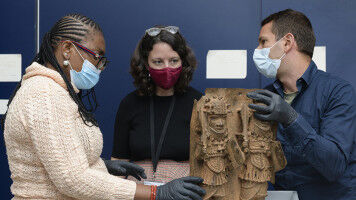
Argentina 50 years on from start of dictatorship - is it forgetting the disappeared?
Argentina 50 years on from start of dictatorship - is it forgetting the disappeared?
Life Sciences - Today
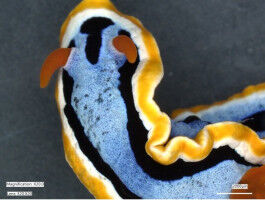
Courting the Competition: Some Male Fruit Flies Serenade Each Other Rather Than Fight
Courting the Competition: Some Male Fruit Flies Serenade Each Other Rather Than Fight
Social Sciences - Today
Louis Theroux's manosphere documentary shows some of the subtle ways we can undermine online misogyny
Louis Theroux's manosphere documentary shows some of the subtle ways we can undermine online misogyny
Pharmacology - Mar 19
GSK, University of Oxford and Imperial College London launch centre to create computer models of lungs, liver, kidneys and cartilage
GSK, University of Oxford and Imperial College London launch centre to create computer models of lungs, liver, kidneys and cartilage
Innovation - Mar 19
India's new wave of Hindu Religious Entrepreneurship is reshaping our interpretation of success
India's new wave of Hindu Religious Entrepreneurship is reshaping our interpretation of success


Pharmacology - Mar 19
Oxford University spinout Dark Blue Therapeutics acquired to advance leukaemia treatment
Oxford University spinout Dark Blue Therapeutics acquired to advance leukaemia treatment

Veterinary - Mar 19
New RVC study challenges common beliefs on desirable behaviours in designer 'Doodle' crossbreeds
New RVC study challenges common beliefs on desirable behaviours in designer 'Doodle' crossbreeds
Agronomy & Food Science - Mar 19
Bird Flu Risk to Danish Cattle - New Tool Can Warn Farmers Before Infection Spreads
Bird Flu Risk to Danish Cattle - New Tool Can Warn Farmers Before Infection Spreads
Chemistry - Mar 19
Leipzig University and Center for the Transformation of Chemistry conclude collaboration agreement
Leipzig University and Center for the Transformation of Chemistry conclude collaboration agreement

news
University College London
Results 2121 - 2140 of 2141.
Life Sciences - Health - 02.12.2009
Balancing protein intake, not cutting calories, may be key to long life
Getting the correct balance of proteins in our diet may be more important for healthy ageing than reducing calories, new research at UCL suggests. The new study may help explain why 'dietary restriction? (also known as calorie restriction) ' reducing food intake whilst maintaining sufficient quantities of vitamins, minerals and other nutrients ' appears to have health benefits.
Health - 08.11.2009
Scientists question memory theory
Press Release Links: The long-held theory that our brains use different mechanisms for forming long-term and short-term memories has been challenged by new research from UCL, published today in PNAS . Neuroscientists formed this theory based on observation of patients with amnesia, a condition that severely disrupts the ability to form long-lasting memories.
Health - Life Sciences - 05.11.2009
Genetic cause of inflammatory bowel disease
Links: UCL researchers were part of the team to discover that mutations in either of two related genes can cause a severe form of inflammatory bowel disease (IBD) in young children. Erik Glocker (UCL Infection & Immunity) said: 'This discovery is a milestone in research on inflammatory bowel disease, and will enable us to gain further insights into the physiology and immunity of the intestine.' Glocker found the first mutation in the protein IL10R2 identified in the study.
Health - 01.11.2009
Dietary patterns linked with depression
People who eat a diet laden with processed and high-fat foods may put themselves at greater risk of depression, according to UCL research published today. The research team, led by Tasnime Akbaraly (UCL Epidemiology and Public Health), also found that eating a 'whole food? diet with plenty of fresh vegetables, fruit and fish could help prevent the onset of depressive symptoms in middle age.
Health - Agronomy & Food Science - 06.10.2009
Mental disorders and increased risk of obesity: possible link
People with common mental disorders are at increased risk of becoming obese, according to new UCL research. Professor Mika Kivimäki of UCL Epidemiology & Public Health led research published today on the website of the British Medical Journal that shows that individuals with chronic or repeat episodes of common mental disorders, such as depression and anxiety, are particularly at risk of becoming obese.
Health - Life Sciences - 30.09.2009
Potential for drugs to treat age-related diseases
UCL scientists have extended the lifespan of mice by up to a fifth and cut the number of age-related diseases the animals suffer. The research which mimics the health benefits of reducing calorie intake and suggests that drug treatments for ageing and age-related diseases are feasible. In the 1930s scientists showed that reducing the calorie intake of laboratory rats while maintaining sufficient vitamins, minerals and other important nutrients in the animals can have health benefits.
Psychology - Economics - 27.09.2009
Subliminal messaging more effective when negative?
A team of UCL researchers say that subliminal messaging is most effective when the message being conveyed is negative. Subliminal images ' in other words, images shown so briefly that the viewer does not consciously 'see' them ' have long been the subject of controversy, particularly in the area of advertising.
Health - 21.09.2009
Flu triggers heart attacks but vaccination may offer protection
Flu can trigger heart attacks and cause cardiovascular death, but the influenza vaccine may offer protection for cardiac patients, according to a review by scientists from the UCL Centre for Infectious Disease Epidemiology published in the October edition of The Lancet Infectious Diseases . The cardiac complications of influenza infection are well known.
Life Sciences - 02.08.2009
UCL podcast: New study provides answer to Asperger’s Syndrome conundrum
'Mindblind Eyes: An Absence of Spontaneous Theory of Mind in Asperger Syndrome?: Science paper A new study co-led by Professor Uta Frith (UCL Institute of Neuroscience) sheds light on how adults with Asperger's Syndrome successfully negotiate social interaction. Highly intelligent adults with Asperger's Syndrome have difficulties with day-to-day social interaction.
Life Sciences - Health - 29.07.2009
Grant for research into new epilepsy treatments
Professor Matthew Walker (UCL Institute of Neurology) and Robin Williams (Department of Biological Sciences at Royal Holloway, University of London) have been awarded £415,234 by the National Centre for Replacement, Refinement and Reduction to fund research into identifying new epilepsy treatments. Epilepsy affects at least 40 million people worldwide, making it the most common serious neurological condition in humans.
Health - 22.07.2009
What we see out of the corner of our eye
Researchers at UCL have found that when it comes to our vision, objects are hard to identify when we look at them using the corner of our eye because our brain tends to assume the world is regular and cannot deliver more than a simplified sketch. Known as 'crowding', this is a problem for millions of people who have lost their central vision through eye disease such as glaucoma and are forced to use the edges of their visual field to perform everyday tasks such as reading or recognising their friends.
Health - 01.07.2009
Lack of sleep could be more dangerous for women than men
Women who get less than the recommended eight hours? sleep a night are at higher risk of heart disease and heart-related problems than men with the same sleeping patterns, according to a UCL research published today in the journal SLEEP . The study, which was conducted with the Sleep Medicine Unit at the University of Warwick, showed that women who reported sleeping eight hours had significantly lower levels of a marker related to coronary heart disease (Interleukin-6) than those who reported sleeping seven hours per night.
Veterinary - Life Sciences - 30.06.2009
Researchers use unique machine to deepen understanding of how brain processes sound
A team of researchers at UCL's Ear Institute is using a unique machine to deepen our understanding of how the brain responds to sound. The Ear Institute's new small-animal magnetoencephalograph, or MEG for short, is the most advanced machine of its type in the world. Its installation is a result of a collaboration between UCL, the Kanazawa Institute of Technology (KIT) in Japan and the Centre National de la Recherche Scientifique (CNRS) in Paris, France.
Life Sciences - 04.05.2009
Genes influence economic decision-making
A team led by Jonathan Roiser (UCL Institute of Cognitive Neuroscience) has today published research which shows that our genes affect the decisions we make, and that these decisions are influenced by the positive or negative framing of the options on offer. This phenomenon is known as the 'framing effect'.
Health - Life Sciences - 14.04.2009
Potential therapeutic target for Alzheimer s
Research led by Professor Mark Pepys FRS (Director of the UCL Centre for Amyloidosis and Acute Phase Proteins) has identified a protein known as serum amyloid P component (SAP) as a possible therapeutic target in Alzheimer's disease. In collaboration with pharmaceutical group Roche, Professor Pepys developed a new small molecule drug, CPHPC, which specifically targets SAP and removes it from the blood.
Life Sciences - Psychology - 25.03.2009
Brain activity predicts our choices
A study led by UCL's Tali Sharot published today in the Journal of Neuroscience has found that your brain may know what you prefer before you do. Sharot, a British Academy postdoctoral fellow at the Wellcome Trust Centre for Neuroimaging at UCL, has showed that when people rate options similarly, they will choose the one that causes more activation in the caudate nucleus, a brain region involved in anticipating reward.The study also demonstrated that after a decision is made, caudate nucleus activity increases for the selected option and decreases for the rejected one.
Health - Psychology - 25.03.2009
Therapists still offer treatment for homosexuality
Report: 'The response of mental health professionals to clients seeking help to change or redirect same-sex sexual orientation' Researchers from UCL and St George's, University of London have published a report which indicates that a significant minority of psychiatrists and therapists still attempt to help lesbian, gay and bisexual clients become heterosexual, despite a lack of evidence that such treatment is effective or even safe.
Health - 10.03.2009
Ovarian cancer: UCL screening tests show promising results for early detection
Preliminary results of a UCL-led investigation suggest that testing women for ovarian cancers may become a reality. Following the largest randomised trial of ovarian cancer screening to date, Professor Ian Jacobs (Dean of UCL Health Sciences Research and Director of the UCL Institute for Women's Health), and Usha Menon (Head of the UCL Gynaecological Cancer Research Centre), have published their findings online in The Lancet Oncology today.
Chemistry - Computer Science - 04.03.2009
UCL’s Sophia magazine publishes second issue
'Sophia' has just published its second issue, featuring articles on subjects as diverse as deep-space chemistry, fibromyalgia in 'The Princess and the Pea' and the measurement of global happiness, as well as images produced in the course of research. The new issue also includes an article by Professor Donald Gillies (UCL Science & Technology Studies) on how peer-review based assessment exercises such as the RAE 'risk ending the careers of truly talented researchers yet to be recognised by the academic community at large'.
Health - Life Sciences - 01.03.2009
Genetic finding provides new insight into female infertility
A research collaboration co-funded by the Wellcome Trust has identified a new genetic cause for primary ovarian insufficiency, a condition which can lead to infertility in women - a finding which could lead to the development of a possible diagnostic test. Primary ovarian insufficiency, also known as premature ovarian failure, is characterised by the loss of normal function of the ovaries before the age of 40 years.


Politics - Today
Argentina 50 years on from start of dictatorship - is it forgetting the disappeared?
Argentina 50 years on from start of dictatorship - is it forgetting the disappeared?
Life Sciences - Today
Courting the Competition: Some Male Fruit Flies Serenade Each Other Rather Than Fight
Courting the Competition: Some Male Fruit Flies Serenade Each Other Rather Than Fight
Social Sciences - Today
Louis Theroux's manosphere documentary shows some of the subtle ways we can undermine online misogyny
Louis Theroux's manosphere documentary shows some of the subtle ways we can undermine online misogyny
Pharmacology - Mar 19
GSK, University of Oxford and Imperial College London launch centre to create computer models of lungs, liver, kidneys and cartilage
GSK, University of Oxford and Imperial College London launch centre to create computer models of lungs, liver, kidneys and cartilage
Innovation - Mar 19
India's new wave of Hindu Religious Entrepreneurship is reshaping our interpretation of success
India's new wave of Hindu Religious Entrepreneurship is reshaping our interpretation of success
Pharmacology - Mar 19
Oxford University spinout Dark Blue Therapeutics acquired to advance leukaemia treatment
Oxford University spinout Dark Blue Therapeutics acquired to advance leukaemia treatment
Veterinary - Mar 19
New RVC study challenges common beliefs on desirable behaviours in designer 'Doodle' crossbreeds
New RVC study challenges common beliefs on desirable behaviours in designer 'Doodle' crossbreeds
Agronomy & Food Science - Mar 19
Bird Flu Risk to Danish Cattle - New Tool Can Warn Farmers Before Infection Spreads
Bird Flu Risk to Danish Cattle - New Tool Can Warn Farmers Before Infection Spreads
Chemistry - Mar 19
Leipzig University and Center for the Transformation of Chemistry conclude collaboration agreement
Leipzig University and Center for the Transformation of Chemistry conclude collaboration agreement