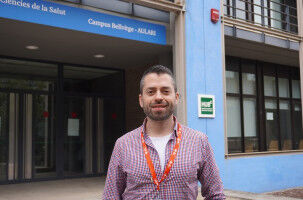
Andrew Pruszynski is helping break new ground in motor neuroscience (Mac Lai/Schulich School of Medicine & Dentistry)
Andrew Pruszynski is helping break new ground in motor neuroscience (Mac Lai/Schulich School of Medicine & Dentistry) Azrieli Foundation support to enable Canada-wide use of electrodes co-developed by Western researcher A $5.1 million donation made by the Azrieli Foundation ($3.48 million to Western and $1.62 million to Emory University) is taking an open-science concept to the next level, by enabling researchers across Canada to access and utilize electrodes developed and tested by Andrew Pruszynski at Schulich School of Medicine & Dentistry , and Sam Sober at Emory. The researchers' goal is to accelerate motor neuroscience research on a national scale, uncovering new findings in neurological conditions that affect the body's movement, including Parkinson's disease and ALS, as well as in neurodevelopmental disorders like autism - which impact the body's motor control, such as reflexes and motor development. Pruszynski's "open-hardware" concept is to create a consortium of neuroscientists whose research - whether it is on motor control or motor learning - would benefit from using these electrodes, and in turn gain feedback from the researchers to refine their hardware. "I know the complexity and breadth of the healthcare issues faced by neurodivergent people, and this knowledge guides our commitment and our mission," said Naomi Azrieli, chair and CEO of the Azrieli Foundation. "This is why I am thrilled that the Foundation has forged this innovative partnership with Western and Emory to break new ground in motor neuroscience." Pruszynski's own research is focused on understanding how the signals from the body, specifically from the skin and muscles, contribute to making accurate, precise movements of the hands and arms.
TO READ THIS ARTICLE, CREATE YOUR ACCOUNT
And extend your reading, free of charge and with no commitment.