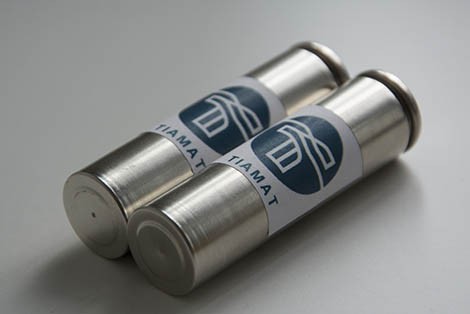
Two years after the first battery prototype using sodium ions
1 in a standard industrial format was designed, the start-up Tiamat has been created to design, develop and produce this promising technology. This could counter some of the limits of the lithium-ion batteries that dominate the market today, such as recharge rate, lifetime and production cost. Specifically, sodium-ion batteries might allow mass storage of intermittent renewable energies (wind or solar) or equip electric vehicles. Located in Amiens, this company came out of the French network for electrochemical energy storage (RS2E
2) supported by CNRS. Today it has several tens of functional prototypes, and hopes to launch larger scale production by 2020. In November 2015, researchers who were part of RS2E, mainly from CNRS, CEA and several French universities
3, designed the first sodium-ion battery prototype in the 18650 format. That format is very widespread in industry, in particular for lithium-ion batteries.
TO READ THIS ARTICLE, CREATE YOUR ACCOUNT
And extend your reading, free of charge and with no commitment.
Your Benefits
- Access to all content
- Receive newsmails for news and jobs
- Post ads