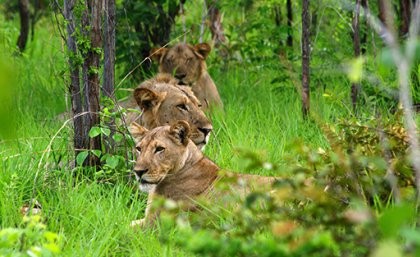
Lions during the wet season. Photo by Jean-Baptiste Deffontaines
One of Africa's last remaining wilderness areas is in good shape and could potentially support 50,000 elephants and 1000 lions, a University of Queensland-led study has found. Niassa National Reserve is Mozambique's largest protected area and has large populations of threatened species, but it's one of the least biologically explored places on Earth. UQ's School of Earth and Environmental Sciences James Allan said the study looked at patterns of forest loss and found the reserve had lost 108 square kilometres between 2001 and 2014 due to agriculture and human settlement. "While this loss was substantial, it's much lower than in surrounding regions which lost several thousand kilometres of forest during the same time," Mr Allan said. "The findings for Niassa National Reserve are particularly encouraging in the African context because deforestation rates on the continent are five times higher than the global average, and many protected areas in Africa are losing a lot more forest." Mr Allan said the study found that Niassa's protected area status had helped save it from large-scale land clearing that had occurred in Mozambique. "With proper investment Niassa could once again support large assemblages of megafauna like elephants and lions which have been decimated by rampant poaching for meat and ivory," he said. The research found Niassa could provide substantial benefits to biodiversity conservation, and investing in the effective management of the reserve should be a global priority.
TO READ THIS ARTICLE, CREATE YOUR ACCOUNT
And extend your reading, free of charge and with no commitment.