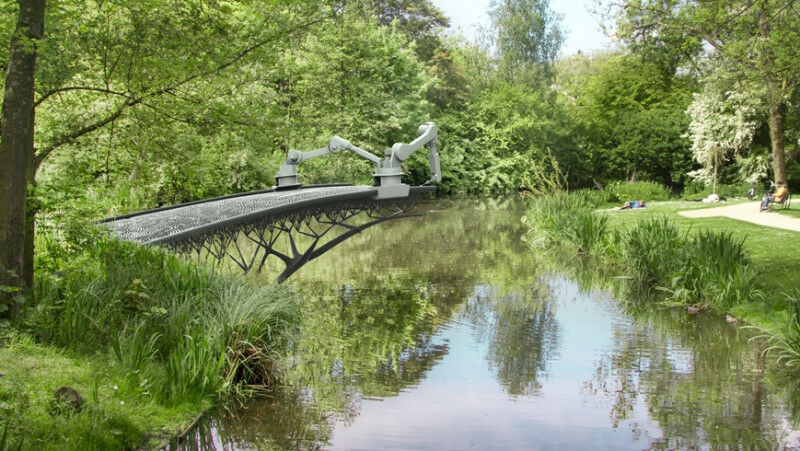
Building bridges: The goal is a harmonious collaboration and coexistence between humanity and AI. Image: MX3D and Joris Laarman Lab
Building bridges: The goal is a harmonious collaboration and coexistence between humanity and AI. Image: MX3D and Joris Laarman Lab Artificial intelligence - AI - is not just all'over the media, but is also making its way into our work environments, from industrial manufacturing to research. But how can we best exploit potential synergies of man and machine, and what must we consider? Here are some thoughts from Pierangelo Gröning, until recently a member of Empa's Directorate. Computers and the Internet are core technological pillars of our increasingly digitized society, enabling data to be accessed, processed and exchanged at speeds far beyond human capabilities. And when it comes to physical work in the real world, robots have revolutionized industrial manufacturing processes by performing these tasks faster, more reliably and with greater endurance and precision than is possible for us humans. With the increasing spread of artificial intelligence (AI), these technologies are likely to evolve from mere aids and "vicarious agents" to (more or less) equal partners in human endeavors in the not too distant future. They will not only perform assigned tasks accurately and highly efficiently, as they have in the past, but they will also devise, suggest and, if necessary, perform them independently.
TO READ THIS ARTICLE, CREATE YOUR ACCOUNT
And extend your reading, free of charge and with no commitment.