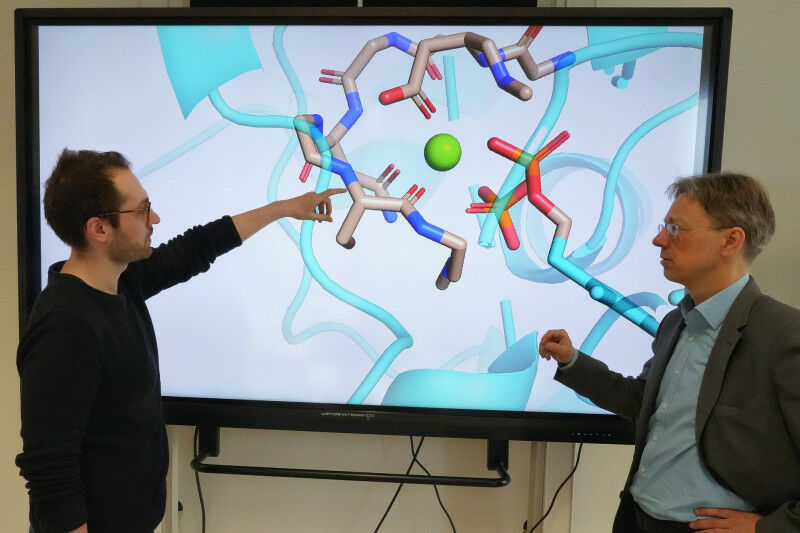
Artificial photosynthesis for environmentally friendly food production, from left: PhD candidate Vivian Willers und Volker Sieber
Artificial photosynthesis for environmentally friendly food production, from left: PhD candidate Vivian Willers und Volker Sieber Reading time 2 min. Agriculture 2. TUM researchers produce important amino acid from greenhouse gas CO2. Ensuring the supply of food to the constantly growing world population and protecting the environment at the same time are often conflicting objectives. Now researchers at the Technical University of Munich (TUM) have successfully developed a method for the synthetic manufacture of nutritional protein using a type of artificial photosynthesis. The animal feed industry is the primary driver of high demand for large volumes of nutritional protein, which is also suitable for use in meat substitute products. A group led by Prof. Volker Sieber at the TUM Campus Straubing for Biotechnology and Sustainability (TUMCS) has succeeded in producing the amino acid L'alanine, an essential building block in proteins, from the environmentally harmful gas CO2.
TO READ THIS ARTICLE, CREATE YOUR ACCOUNT
And extend your reading, free of charge and with no commitment.