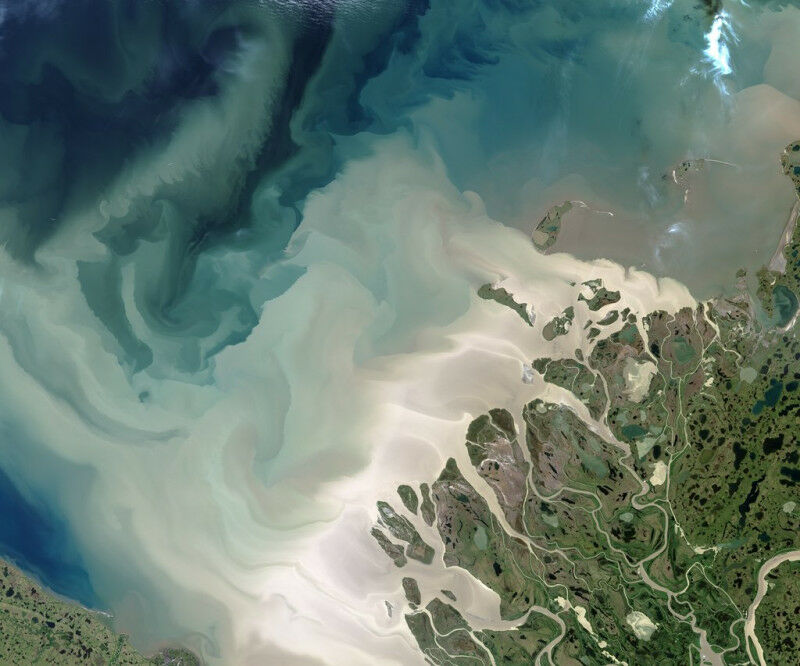
Sediment from Canada’s Mackenzie River empties into the Beaufort Sea in milky swirls in this 2017 satellite image. Scientists are studying how river discharge drives carbon dioxide emissions in this part of the Arctic Ocean.
Sediment from Canada's Mackenzie River empties into the Beaufort Sea in milky swirls in this 2017 satellite image. Scientists are studying how river discharge drives carbon dioxide emissions in this part of the Arctic Ocean. Sediment from Canada's Mackenzie River empties into the Beaufort Sea in milky swirls in this 2017 satellite image. Scientists are studying how river discharge drives carbon dioxide emissions in this part of the Arctic Ocean. Credit: NASA Earth Observatory image by Jesse Allen using Landsat data from USGS" Runoff from one of North America's largest rivers is driving intense carbon dioxide emissions in the Arctic Ocean. When it comes to influencing climate change, the world's smallest ocean punches above its weight. It's been estimated that the cold waters of the Arctic absorb as much as 180 million metric tons of carbon per year - more than three times what New York City emits annually - making it one of Earth's critical carbon sinks.
TO READ THIS ARTICLE, CREATE YOUR ACCOUNT
And extend your reading, free of charge and with no commitment.