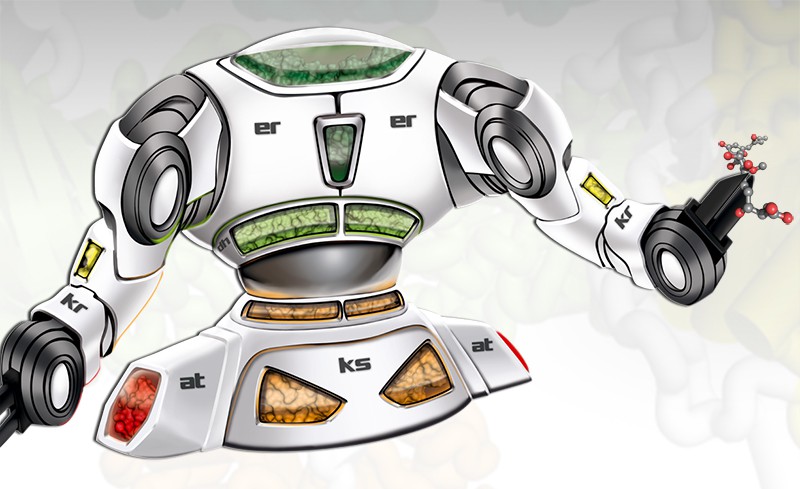
 Polyketide synthases resemble versatile machines: They integrate distinct functional protein regions (KS, AT, DH, ER, KR) into a flexible overall framework and use a carrier protein domain for transferring substrates between functional regions
Natural products from bacteria and fungi are an important source of current and novel drugs, such as antibiotics. They are produced in the microorganisms by giant protein complexes that resemble industrial assembly lines. Researchers at the Biozentrum of the University of Basel have published the precise blueprint of one of these proteins in the current issue of "Nature". In the future, engineered assembly line proteins may help to produce a variety of drug candidates. In an assembly line every step of work must be carried out precisely, each station has its specific position and task. This effective form of labor distribution is also employed by nature. Fungi and bacteria synthesize complex bioactive compounds using molecular assembly lines, the so-called polyketide synthases (PKSs).
TO READ THIS ARTICLE, CREATE YOUR ACCOUNT
And extend your reading, free of charge and with no commitment.
Your Benefits
- Access to all content
- Receive newsmails for news and jobs
- Post ads