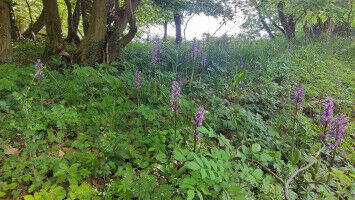
Biodiversity in the Agricultural Landscape
How does ecological farming influence plant biodiversity in the agricultural landscape? Are there positive effects on the landscape level if, for instance, ecological varieties are raised and fields cultivated sustainably? What is the impact of a fluid transition from conventional to ecological farming? These questions are the focus of the AgroBioDiv research project, which combines the respective expertise of Heidelberg University researchers in biology and political science. In addition to exploring biodiversity, the Heidelberg scientists also strive to investigate how policy and public management can support preserving biological diversity in agriculture. The four-year research project headed by Marcus Koch and Jale Tosun has approximately 400,000 euros in funding from the State of Baden-Württemberg. "With the progressive loss of biological diversity in traditional agricultural landscapes, so-called agrobiodiversity is a cornerstone in the ecological fabric of a landscape that has a wide variety of plants, animals, and especially insects," states Prof. Koch. "Ecological farming generally has a positive effect on biodiversity. By expanding such farmland, the potential for preserving biological diversity is considerable, especially when managed cohesively." Against this backdrop, the Heidelberg researchers will study the interrelationship of cultivated seed and plant material, crop type and varietal diversity, along with the diversity of wild vegetation. They hope their findings will point to how agriculture could be oriented in the transformation from conventional to ecological farming.