The study showed how the production of consumer goods affected biodiversity around the world.
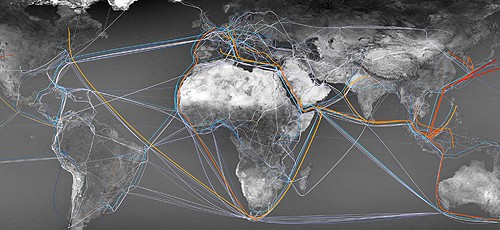
Thirty percent of threatened species are at risk because of consumption in the developed world according to University of Sydney research. The study mapped the world economy to trace the global trade of goods implicated in biodiversity loss such as coffee, cocoa, and lumber. "Our findings can be used to improve the regulation and product labelling of thousands of internationally traded products," said Professor Manfred Lenzen , lead author of Professor Lenzen is from the Integrated Sustainability Analysis group at the University's School of Physics. The study evaluated over five billion supply chains connecting consumers to over 15,000 commodities produced in 187 countries. This was cross-referenced with a global register of 25,000 endangered and vulnerable species. "Until now these relationships have only been poorly understood. Our extraordinary number crunching, which took years of data collection and thousands of hours on a supercomputer to process, lets us see these global supply chains in amazing detail for the first time," Professor Lenzen said.
TO READ THIS ARTICLE, CREATE YOUR ACCOUNT
And extend your reading, free of charge and with no commitment.