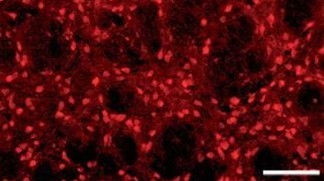
Sustained expression of PGC-1α in the rat nigrostriatal system selectively impairs dopaminergic function. Mitochondrial dysfunction and oxidative stress have been implicated in the etiology of Parkinson's disease. Therefore, pathways controlling mitochondrial activity rapidly emerge as potential therapeutic targets. Here, the group of Patrick Aebischer (LEN - Neurodegenerative Studies Laboratory ) explore the neuronal response to prolonged overexpression of peroxisome proliferator-activated receptor gamma coactivator-1 alpha (PGC-1α), a transcriptional regulator of mitochondrial function, both in vitro and in vivo. Overall, they find that lasting overexpression of PGC-1α leads to major alterations in the metabolic activity of neuronal cells which dramatically impair dopaminergic function in vivo. These results highlight the central role of PGC-1α in the function and survival of dopaminergic neurons and the critical need for maintaining physiological levels of PGC-1α activity. C. Ciron et al.
TO READ THIS ARTICLE, CREATE YOUR ACCOUNT
And extend your reading, free of charge and with no commitment.
Your Benefits
- Access to all content
- Receive newsmails for news and jobs
- Post ads