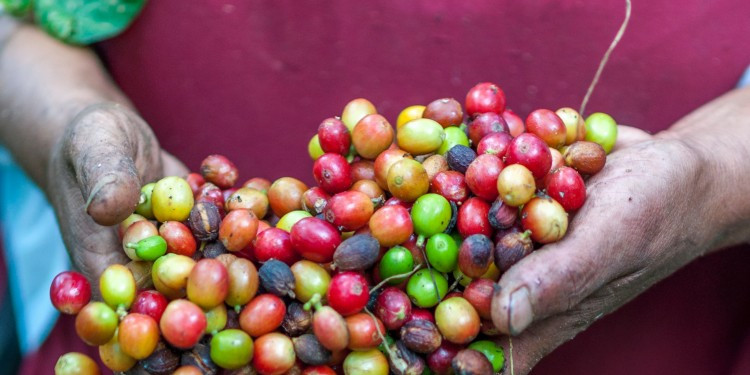
 Fair prices for coffee beans could alleviate poverty for many people - but unfortunately things are very different in reality.
Fair prices for coffee beans could alleviate poverty for many people - but unfortunately things are very different in reality. Rodrigo Flores/Unsplash Coffee - Germany's most popular drink - is grown by around 20 million small-scale farmers worldwide, who often live below the poverty line. Private sustainability standards, for example Rainforest Alliance or Nespresso AAA, promise consumers a fairly traded and ecologically sustainable product. Many of these standards, however, are not systematically observed - as Dr Janina Grabs reveals in her thesis at the Graduate School of Politics at the University of Münster's Institute of Political Science. "The rapid upscaling of sustainability standards means strong market growth for certified coffee products - both among producers and in the shops," says Grabs. "This, in turn, often leads to a more flexible definition of sustainability, a drop in prices and an incomplete implementation of sustainable production practices among the coffee farmers themselves. Sustainability standards therefore need clearer rules," she says.
TO READ THIS ARTICLE, CREATE YOUR ACCOUNT
And extend your reading, free of charge and with no commitment.
Your Benefits
- Access to all content
- Receive newsmails for news and jobs
- Post ads