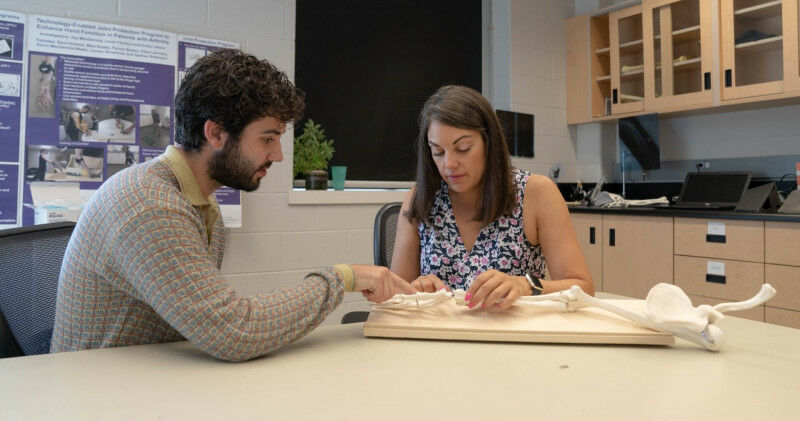
Western Engineering Emily Lalone (right), graduate student Max Campbell (left) and their collaborators are developing a tool to improve wrist position during X-rays, increasing a health-care provider’s ability to diagnose these common injuries. (Photo by Antwayne Stewart)
Western Engineering Emily Lalone ( right ), graduate student Max Campbell ( left ) and their collaborators are developing a tool to improve wrist position during X-rays, increasing a health-care provider's ability to diagnose these common injuries. (Photo by Antwayne Stewart) How to do more with less. This simple solution - some would say mantra - is the driving force behind frugal innovation. As Western engineers and biomedical faculty move further into this space with exciting new devices and technologies, the next generation of students will be well equipped to introduce real-and affordable-change in the world. Western's Frugal Biomedical Innovations program, a multi-disciplinary initiative with Western Engineering and the Schulich School of Medicine & Dentistry joining forces, supports projects seeking to design, develop and deploy innovative medical technologies that improve health-care access for patients in remote and low-resource communities for a fraction of the cost of existing commercial methods, more importantly without compromising quality. These medical prototype devices are field tested and co-developed in partnership with the Africa Institute , BioNext Incubator and collaborators and health-care providers in remote areas of Canada and under-resourced regions of Africa. The field tests not only accelerate development but also provide the foundation for implementation and commercialization.
TO READ THIS ARTICLE, CREATE YOUR ACCOUNT
And extend your reading, free of charge and with no commitment.