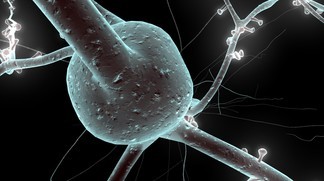
Researchers at the EPFL have discovered rules that relate the genes that a neuron switches on and off, to the shape of that neuron, its electrical properties and its location in the brain. The discovery, using state-of-the-art informatics tools, increases the likelihood that it will be possible to predict much of the fundamental structure and function of the brain without having to measure every aspect of it. That in turn makes the Holy Grail of modelling the brain in silico —the goal of the proposed Human Brain Project—a more realistic, less Herculean, prospect. "It is the door that opens to a world of predictive biology," says Henry Markram, the senior author on the study, which is published this week in PLoS ONE. Within a cortical column, the basic processing unit of the mammalian brain, there are roughly 300 different neuronal types. These types are defined both by their anatomical structure and by their electrical properties, and their electrical properties are in turn defined by the combination of ion channels they present—the tiny pores in their cell membranes through which electrical current passes, which make communication between neurons possible. Scientists would like to be able to predict, based on a minimal set of experimental data, which combination of ion channels a neuron presents.
TO READ THIS ARTICLE, CREATE YOUR ACCOUNT
And extend your reading, free of charge and with no commitment.
Your Benefits
- Access to all content
- Receive newsmails for news and jobs
- Post ads