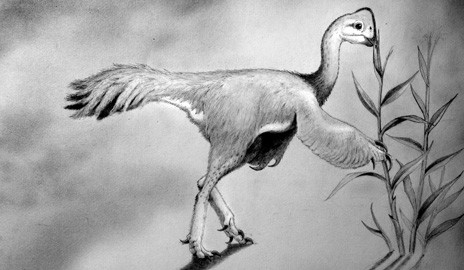
Scientists have named a newly identified turkey-sized, plant-eating dinosaur found deep in West Texas Leptorhynchos ("little jaw") gaddisi. The species belongs to a broader group of bird-like dinosaurs characterized by toothless beaks and long, slender claws. (Image by Nicholas R. Longrich/Yale)
A recently identified feathered dinosaur found deep in West Texas reinforces an emerging view that creatures like it were more diverse and widespread in North America than previously thought, according to a new study. The species - a turkey-sized herbivore called Leptorhynchos gaddisi - belongs to a broader group of bird-like dinosaurs characterized by toothless beaks and long, slender claws, said researchers, who analyzed fossils found near Big Bend National Park at a site dating to about 75 million years ago. The broader group to which Leptorhynchos ("little jaw") belongs - the bird-like caenagnathids - was previously known from fossils found in Asia, western Canada, and Utah. The Texas fossils represent the southernmost evidence of caenagnathids in North America, expanding their known range and variety. Unlike their carnivorous cousin Velociraptor, caenagnathids had parrot-like beaks specialized for shearing tough food, suggesting a diet of plants. "We have a pretty good understanding of what the larger dinosaurs looked like," said Nicholas R. Longrich, a postdoctoral researcher at Yale University and lead author of the paper, published April 26 in the Bulletin of the Peabody Museum of Natural History. "We have a much poorer picture of small dinosaurs.
TO READ THIS ARTICLE, CREATE YOUR ACCOUNT
And extend your reading, free of charge and with no commitment.