Digitizing and replicating the world of materials
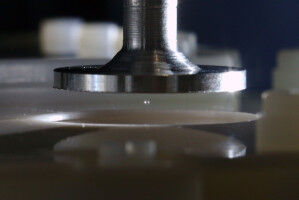
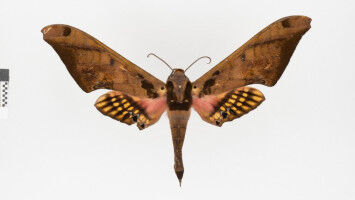
A team of EPFL researchers has set itself the lofty goal of building the biggest-ever database that digitizes the visual appearance of all natural and synthetic materials in the world. Is it possible to digitally replicate the way light shines off silk, the kaleidoscope of colors on butterfly wings, or the structure of fabrics, plastics, and stones' A team of researchers at EPFL's Realistic Graphics Lab, headed by Wenzel Jakob, is developing computer models to do just that. Their process begins by meticulously digitizing any material they can lay their hands on, using a sophisticated machine called a gonio-photometer. Imagine taking a photo of a car on a sunny day: the picture will only capture its appearance for that specific viewpoint and illumination, but it cannot tell us how the same car would look from another viewpoint later in the evening. In contrast to a camera, a gonio-photometer measures the light reflected by a material at different angles, capturing the essence of what gives the car's painted surface its particular look: shiny, pearlescent, metallic, faded, etc. The resulting data is much richer than a single photograph and can be used to generate photorealistic computer images of objects made from those same materials within arbitrary virtual scenes. The team at EPFL, led by Prof. Wenzel Jakob, studies the way in which light interacts with various materials so that this process can be reproduced in a software simulation.