

Health - Mar 30
Minister Rianne Letschert visits Twente: education and science as drivers of the hospital of the future
Minister Rianne Letschert visits Twente: education and science as drivers of the hospital of the future
Social Sciences - Mar 30
New Research Project on African American Thought and the German Colonial Imagination
New Research Project on African American Thought and the German Colonial Imagination
Politics - Mar 30
Researcher Carolina Moreno calls for official science communication to counter disinformation in critical periods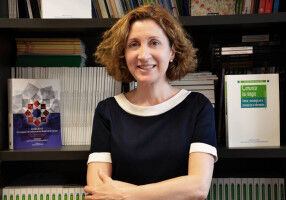
Researcher Carolina Moreno calls for official science communication to counter disinformation in critical periods

Health - Mar 30
Simple screening blood test could help identify undiagnosed heart failure in people living with diabetes
Simple screening blood test could help identify undiagnosed heart failure in people living with diabetes

Economics - Mar 30
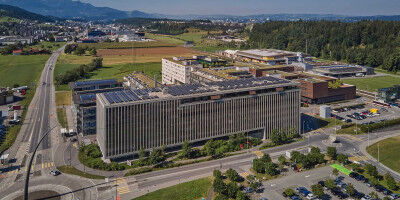
University of Glasgow and Lloyds Banking Group announce groundbreaking agentic AI research programme
University of Glasgow and Lloyds Banking Group announce groundbreaking agentic AI research programme
Astronomy & Space - Mar 30
ANU lends its expertise in laser communications to support NASA's Artemis II crewed moon mission
ANU lends its expertise in laser communications to support NASA's Artemis II crewed moon mission

Life Sciences - Mar 27
Understanding the Brain - TU Ilmenau's EU EMBRACE Project Nominated for European Excellence Award
Understanding the Brain - TU Ilmenau's EU EMBRACE Project Nominated for European Excellence Award
Social Sciences - Mar 27
A manual addresses, for the first time in Spain, child and adolescent sexual exploitation
A manual addresses, for the first time in Spain, child and adolescent sexual exploitation

science wire
Earth Sciences
Results 2151 - 2200 of 3882.
Health - Earth Sciences - 19.05.2015
Philips establishes alliance with MIT
Philips has announced an alliance with MIT, for an initial term of five years and $25 million, that will ultimately support MIT research in the company's core areas of health care and lighting solutions technology, which will be conducted in collaboration with Philips Research. The new MIT-Philips alliance was formalized today with a signing ceremony attended by Global Head Henk van Houten of Philips Research, and MIT Provost Martin Schmidt and Associate Provost Karen Gleason.
Earth Sciences - Career - 13.05.2015
Strong showing at national conference showcases breadth of geography research
Undergraduate student Emerson Samoy presents his poster on Climate Impacts of the 1991 Mount Pinatubo Eruption on the United States.
Environment - Earth Sciences - 12.05.2015
Research2Reality: understanding the ground-breaking work supported by your taxes
When University of Toronto physicist Dick Peltier began researching the interaction between the Earth's land, atmosphere, water and biosphere, he created mathematical models depicting how climate evolved over 750 million years and how it will change in the future.
Earth Sciences - 12.05.2015
Housing market strong, affordability issues linger in first quarter of 2015
Washington state's housing market was strong in the first quarter of 2015, with both sales and new building permits up compared with a year ago and the market remaining largely affordable, according to the Runstad Center for Real Estate Studies at the University of Washington. The statewide median sales price for a single family home rose to $270,600 in the first quarter, 8.5 percent higher than the same time in 2014, though still significantly lower than the all-time high of $316,700 in the second quarter of 2007.
Earth Sciences - Environment - 12.05.2015
Did dinosaur-killing asteroid trigger largest lava flows on Earth?
The asteroid that slammed into the ocean off Mexico 66 million years ago and killed off the dinosaurs probably rang the Earth like a bell, triggering volcanic eruptions around the globe, according to a multi-disciplinary team of scientists.
Environment - Earth Sciences - 12.05.2015
Expert Comment- El Nino
Dr Grant Allen looks at predictions that a substantial El Nino event could occur this year, made by the Australian Bureau of Meteorology, and assess the possible impact on the UK and rest of the world.
Environment - Earth Sciences - 11.05.2015
Solving corrosive ocean mystery reveals future climate
UNIVERSITY PARK, Pa. Around 55 million years ago, an abrupt global warming event triggered a highly corrosive deep-water current through the North Atlantic Ocean. The current's origin puzzled scientists for a decade, but an international team of researchers has now discovered how it formed and the findings may have implications for the carbon dioxide emission sensitivity of today's climate.
Earth Sciences - 08.05.2015
Hot seats reaction: who have been the winners and losers in the key marginals?
Charles Pattie, Professor of Electoral Geography and a director of the Sheffield Methods Institute at the University of Sheffield, discusses the result of the General Election in Nick Clegg's Sheffield Hallam constituency.
Environment - Earth Sciences - 08.05.2015
Baby it’s hot outside!: art to reveal the future of climate change
As part of the ART+CLIMATE=CHANGE Festival, David Karoly, Professor of Atmospheric Science at the University of Melbourne, and Ruth Fincher AM, Professor of Geography at the University of Melbourne,
Environment - Earth Sciences - 07.05.2015
Human security at risk as depletion of soil accelerates, scientists warn
Steadily and alarmingly, humans have been depleting Earth's soil resources faster than the nutrients can be replenished.
Earth Sciences - 06.05.2015
Mapping rivers and preserving livelihoods
River scientists and marine geophysicists from the US and UK have teamed up for a unique collaboration that could help protect the lives of thousands of people who live close to the banks of some of South Asia's biggest rivers.
Astronomy & Space - Earth Sciences - 06.05.2015
TEMPO Pollution Monitoring Instrument Passes Critical NASA Review
The Tropospheric Emissions: Monitoring of Pollution (TEMPO) instrument passed a major milestone April 10, 2015 by successfully completing a critical NASA confirmation review. It has been confirmed by NASA's Science Mission Directorate to continue into the Phase C part of the project, in which the team completes the design that meets the science and measurement requirements, fabricates the instrument, and develops the ground system.
Life Sciences - Earth Sciences - 06.05.2015
Compiling a ’dentist’s handbook’ for penis worms
A new study of teeth belonging to a particularly phallic-looking creature has led to the compilation of a prehistoric 'dentist's handbook' which may aid in the identification of previously unrecognised specimens from the Cambrian period, 500 million years ago. Penis worms were fearsome beasts, and extremely successful ones at that Martin Smith It sounds like something out of a horror movie: a penis-shaped worm which was able to turn its mouth inside out and drag itself around by its tooth-lined throat, which resembled a cheese grater.
Earth Sciences - Environment - 06.05.2015

From above, parts of California's Southern Coast Ranges appear startlingly uniform: The landscape is composed of ridges and valleys that form a pattern of parallel lines as evenly spaced as teeth on a comb.
Administration - Earth Sciences - 05.05.2015
Subjects Taught at Freie Universität Berlin Ranked High in Latest CHE University Ranking
Physics - Earth Sciences - 05.05.2015
State-of-the-art carbon-14 dating facility coming to Penn State
An accelerator mass spectrometer measures the amounts of different isotopes within a sample. For carbon dating, the process starts in an ionizing chamber, where the atoms within a sample of pure carbon are given a negative charge.
Earth Sciences - Health - 05.05.2015
University of Melbourne geologist awarded prestigious Royal Society fellowship
Media Advisor Jane Gardner 03 8344 0181 A University of Melbourne geology professor has joined the ranks of the world's finest scientific minds after being awarded the prestigious Royal Society Fellowship at the weekend.
Earth Sciences - 04.05.2015
Media Advisory: Instruments begin monitoring tremors on San Andreas Fault
ATTENTION: Reporters covering science WHAT: The first of four borehole seismometers will be installed underground in Central California to monitor faint tremors beneath the San Andreas Fault, part of the University of California, Berkeley's TremorScope project to determine the link between tremors and earthquakes.
Earth Sciences - 04.05.2015
Media Advisory: UC Berkeley begins monitoring tremors on San Andreas Fault
ATTENTION: Reporters covering science WHAT: The first of four borehole seismometers will be installed underground in Central California to monitor faint tremors beneath the San Andreas Fault, part of the University of California, Berkeley's TremorScope project to determine the link between tremors and earthquakes.
History & Archeology - Earth Sciences - 04.05.2015
As the river rises: Cahokia’s emergence and decline linked to Mississippi River flooding
A painting of Cahokia Mounds State Historic site by William R. Iseminger. Horseshoe Lake, where core sediments give a timeline of flooding from the Mississippi River, can be seen in the upper left. Courtesy of William R. Iseminger As with rivers, civilizations across the world rise and fall.
Earth Sciences - Physics - 04.05.2015
India drift
In the history of continental drift, India has been a mysterious record-holder. More than 140 million years ago, India was part of an immense supercontinent called Gondwana, which covered much of the Southern Hemisphere. Around 120 million years ago, what is now India broke off and started slowly migrating north, at about 5 centimeters per year.
Earth Sciences - Environment - 04.05.2015
Work begins to establish a baseline carbon budget for U.S. coastlines
UNIVERSITY PARK, Pa. Determining whether estuaries and tidal wetlands are net emitters or absorbers of carbon dioxide is the object of a NASA-funded study by a national team of researchers.
Earth Sciences - 30.04.2015

If a volcano erupts at the bottom of the sea, does anybody see it? If that volcano is Axial Seamount, about 300 miles offshore and 1 mile deep the answer is now: Yes.
Earth Sciences - Environment - 30.04.2015
Stanford identifies its preferred approach for the future of Searsville Dam and Reservoir
Searsville Dam, which is located in the university's Jasper Ridge Biological Preserve, was built between 1888 and 1892 by the Spring Valley Water Co.
Earth Sciences - Social Sciences - 30.04.2015
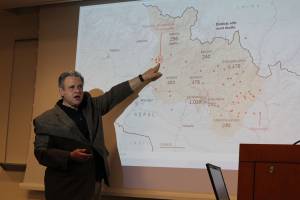
After surviving the massive earthquake, researchers and staff of the University of Michigan in Nepal are providing tents, food and other aid to hard-to-reach communities near the epicenter.
Earth Sciences - Astronomy & Space - 30.04.2015
Did dinosaur-killing asteroid trigger largest lava flows on Earth?
The asteroid that slammed into the ocean off Mexico 66 million years ago and killed off the dinosaurs probably rang the Earth like a bell, triggering volcanic eruptions around the globe that may have contributed to the devastation, according to a team of UC Berkeley geophysicists.
Earth Sciences - 30.04.2015
Land shifts in Nepal
ESA Space in Images Title Nepal earthquake displacement Released 30/04/2015 1:45 pm Copyright DLR/EOC Description Based on data from the Sentinel-1A satellite, this image shows how and where the land uplifted and sank from the 7.8-magnitute earthquake that struck Nepal on 25 April 2015.
Earth Sciences - 30.04.2015
Most of Britain’s national parks don’t have the “right rocks” for fracking
We use cookies to ensure that we give you the best experience on our website. You can change your cookie settings at any time.
Earth Sciences - Astronomy & Space - 29.04.2015
Nepal earthquake on the radar
On 25 April, a 7.8-magnitude earthquake struck Nepal, claiming over 5000 lives and affecting millions of people. Satellite images are being used to support emergency aid organisations, while geo-scientists are using satellite measurements to analyse the effects of the earthquake on the land. Radar imagery from the Sentinel-1A satellite shows that the maximum land deformation is only 17 km from Nepal's capital, Kathmandu, which explains the extremely high damage experienced in this area.
Earth Sciences - Life Sciences - 29.04.2015
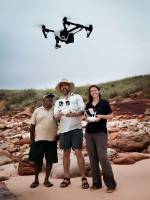
University of Queensland palaeontologists are using the latest scientific technology to capture new information that will help bring a 130-million-year-old dinosaur landscape back to life.
Earth Sciences - 28.04.2015
Perspectives on the Nepal earthquake
As the death toll continues to rise in Nepal, Senior Lecturer Dr Ian Willis, and PhD student Evan Miles, from the Scott Polar Research Institute contemplate the fate of people in a remote part of the country, where they have been doing research for the past two years.
Earth Sciences - 28.04.2015

ANN ARBOR-The threat of landslides and mudslides remains high across much of Nepal's high country, and the risk is likely to increase when the monsoon rains arrive this summer, according to a University of Michigan researcher.
Earth Sciences - Life Sciences - 27.04.2015
Bizarre ’platypus’ dinosaur discovered
Although closely related to the notorious carnivore Tyrannosaurus rex , a new lineage of dinosaur discovered in Chile is proving to be an evolutionary jigsaw puzzle, as it preferred to graze upon plants. Palaeontologists are referring to Chilesaurus diegosuarezi as a 'platypus' dinosaur because of its bizarre combination of characters that resemble different dinosaur groups.
Health - Earth Sciences - 27.04.2015
Comment: Nepal quake: the challenges facing disaster response
Dr Andrew Lee from the University of Sheffield's School of Health and Related Research (ScHARR) discusses why the Nepal earthquake was a disaster waiting to happen and what challenges the response te
Earth Sciences - 27.04.2015
Nepal shows its vulnerability after devastating earthquake
Following the devastating earthquake that struck Nepal this weekend, Simon Redfern, Professor in Earth Sciences at University of Cambridge, explains in The Conversation how a combination of factors has come together with fatal consequences.
Earth Sciences - Life Sciences - 27.04.2015

Stegosaurus plates provide first solid evidence that male, female dinosaurs looked different Posted April 27, 2015; 09:30 a.m. by Morgan Kelly, Office of The discovery of a single anatomical difference between males and females of a species of Stegosaurus provides some of the most conclusive evidence that some dinosaurs looked different based on sex, according to new research.
Earth Sciences - 27.04.2015

Unknown to most people, the Pacific Northwest experiences a magnitude-6.6 earthquake about once a year. The reason nobody notices is that the movement happens slowly and deep underground, in a part of the fault whose behavior, known as slow-slip, was only recently discovered. A University of Washington seismologist who studies slow-slip quakes has looked at how they respond to tidal forces from celestial bodies and used the result to make a first direct calculation of friction deep on the fault.
Earth Sciences - Environment - 22.04.2015

ANN ARBOR-At just a bit over crop duster height, University of Michigan researchers are flying through a 50-square-mile hotspot of the greenhouse gas methane over the U.S. Southwest. For the rest of this month, they're part of a broad "air campaign" involving five planes and four institutions.
Economics - Earth Sciences - 20.04.2015
Comment: Hong Kong-based property buyers look to northern England as London overheats
Professor Rowland Atkinson, Chair in Inclusive Society at the University of Sheffield, and Hang Kei Ho, Postdoctoral Fellow, Department of Social and Economic Geography at Uppsala University, discuss how Hong Kong property investors are buying in the north of England.
Environment - Earth Sciences - 16.04.2015
U-M professor will serve as interim SNRE dean
ANN ARBOR-Professor Daniel G. Brown will serve as the interim dean at the University of Michigan's School of Natural Resources and Environment beginning June 1.
Earth Sciences - 15.04.2015
Reassessing China’s dinosaur ‘Pompeii’
New geological fieldwork in China has changed our understanding of a famous dinosaur fossil site. Up to now, the site at Lujiatun, in Liaoning Province, northeast China, was called the 'Chinese Pompeii' because it was assumed the animals had been killed by volcanic gases and buried at the same time under clouds of ash from erupting volcanoes.
Physics - Earth Sciences - 14.04.2015
Bury nuclear waste down a very deep hole, say Sheffield scientists
Technologies that will enable nuclear waste to be sealed 5km below the Earth's surface could provide a safer, cheaper and more viable alternative for disposing of the UK's high level nuclear waste.
Astronomy & Space - Earth Sciences - 13.04.2015
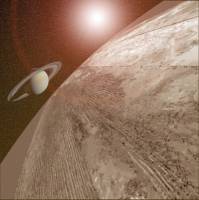
With its thick, hazy atmosphere and surface rivers, mountains, lakes and dunes, Titan , Saturn's largest moon, is one of the most Earthlike places in the solar system. As the Cassini-Huygens spacecraft examines Titan over many years, its discoveries bring new mysteries. One of those involves the seemingly wind-created sand dunes spotted by Cassini near the moon's equator, and the contrary winds just above.
Earth Sciences - Physics - 13.04.2015
Return of the Brontosaurus: Q&A with the Peabody's Jacques Gauthier
The dinosaur with an identity crisis is standing on its own four legs again. The venerable Brontosaurus excelsus , that gargantuan, long-necked sauropod that roamed the earth 150 million years ago, has reclaimed a distinct spot in the fossil record.
Environment - Earth Sciences - 13.04.2015
Laboratory in Flight
MIAMI - April 13, 2015 -The University of Miami (UM) Rosenstiel School of Marine and Atmospheric Science unveiled today its one-of-a-kind flying scientific laboratory.
Earth Sciences - Electroengineering - 10.04.2015
An Earthquake Warning System in Our Pockets?
While you are checking your email, scrolling through social-media feeds, or just going about your daily life with your trusty smartphone in your pocket, the sensors in that little computer could also be contributing to an earthquake early warning system. So says a new study led by researchers at Caltech and the United States Geological Survey (USGS).
Earth Sciences - Life Sciences - 10.04.2015
A new beginning for baby mosasaurs, thanks to Yale research
They weren't in the delivery room, but researchers at Yale University and the University of Toronto have discovered a new birth story for a gigantic marine lizard that once roamed the oceans. Thanks to recently identified specimens at the Yale Peabody Museum of Natural History, paleontologists now believe that mighty mosasaurs - which could grow to 50 feet long - gave birth to their young in the open ocean, not on or near shore.
Environment - Earth Sciences - 10.04.2015
Environmental Solutions Initiative awards seed grants to advance collaborative progress on environmental challenges
How can sustainable consumption in U.S. cities be fostered? Can the ocean floor be mined in an ecologically benign way? What are the health risks associated with the mining of rare meta
Earth Sciences - Environment - 09.04.2015

The one common element in recent weather has been oddness. The West Coast has been warm and parched; the East Coast has been cold and snowed under.
Earth Sciences - 06.04.2015

AUSTIN, Texas - An international research team is formalizing plans to drill nearly 5,000 feet below the seabed to take core samples from the crater of the asteroid that wiped out the dinosaurs. The group met this week in Merida, Mexico, a city within the nearly 125-mile-wide impact site, to explain the research plans and put out a call for scientists to join the expedition planned for spring 2016.


Health - Mar 30
Minister Rianne Letschert visits Twente: education and science as drivers of the hospital of the future
Minister Rianne Letschert visits Twente: education and science as drivers of the hospital of the future
Social Sciences - Mar 30
New Research Project on African American Thought and the German Colonial Imagination
New Research Project on African American Thought and the German Colonial Imagination
Politics - Mar 30
Researcher Carolina Moreno calls for official science communication to counter disinformation in critical periods
Researcher Carolina Moreno calls for official science communication to counter disinformation in critical periods
Health - Mar 30
Simple screening blood test could help identify undiagnosed heart failure in people living with diabetes
Simple screening blood test could help identify undiagnosed heart failure in people living with diabetes
Economics - Mar 30
University of Glasgow and Lloyds Banking Group announce groundbreaking agentic AI research programme
University of Glasgow and Lloyds Banking Group announce groundbreaking agentic AI research programme
Astronomy & Space - Mar 30
ANU lends its expertise in laser communications to support NASA's Artemis II crewed moon mission
ANU lends its expertise in laser communications to support NASA's Artemis II crewed moon mission
Life Sciences - Mar 27
Understanding the Brain - TU Ilmenau's EU EMBRACE Project Nominated for European Excellence Award
Understanding the Brain - TU Ilmenau's EU EMBRACE Project Nominated for European Excellence Award
Social Sciences - Mar 27
A manual addresses, for the first time in Spain, child and adolescent sexual exploitation
A manual addresses, for the first time in Spain, child and adolescent sexual exploitation