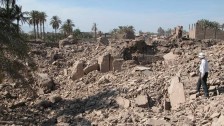
Bam, southeastern Iran, after the 2003 earthquake Credit: James Jackson
Understanding the threat posed by unanticipated earthquakes in continental interiors is the focus of a new study led by the University of Cambridge. Large urban populations are now concentrated in vulnerable places, which is why so many recent earthquakes look like bull's eye targeting of cities." - —Professor James Jackson A new five-year study is to target a relatively neglected area of earthquake research - the ten million square kilometres of the Alpine-Himalayan belt stretching from Italy, Greece and Turkey, across the Middle East, Iran and central Asia, to China. Earthquakes in continental interiors such as these lead to significantly more deaths than on the better-studied oceanic plate boundaries because they often take place on unknown faults. The £3.5 million 'Earthquakes without frontiers' project will not only pinpoint faults in the Earth's crust but also understand the vulnerabilities of communities at risk, and communicate this new knowledge to policy makers. Led by the University of Cambridge, the study involves physical and social scientists from six UK universities and four institutes and organisations, together with collaborators in some of the most earthquake-prone regions of the world. An important feature of the work is to build multinational collaborations that span entire regions and connect scientists working in affected areas with a larger international community of scientists. "To approach the levels of resilience that are achievable in well-prepared countries," said Professor James Jackson, from the Department of Earth Sciences and the project's leader, "societies in these regions need to be able to make appropriate decisions about where to concentrate resources if we are to avoid the scale of recent catastrophes.
TO READ THIS ARTICLE, CREATE YOUR ACCOUNT
And extend your reading, free of charge and with no commitment.