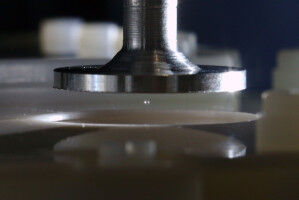
MIT researchers modified a multi-material 3D printer so it could produce three-dimensional solenoids in one step by layering ultrathin coils of three different materials. It prints a U.S. quarter-sized solenoid as a spiral by layering material around the soft magnetic core, with thicker conductive layers separated by thin insulating layers. Credits : Image: Courtesy of the researchers
MIT researchers modified a multi-material 3D printer so it could produce three-dimensional solenoids in one step by layering ultrathin coils of three different materials. It prints a U.S. quarter-sized solenoid as a spiral by layering material around the soft magnetic core, with thicker conductive layers separated by thin insulating layers. Credits : Image: Courtesy of the researchers The printed solenoids could enable electronics that cost less and are easier to manufacture - on Earth or in space. Imagine being able to build an entire dialysis machine using nothing more than a 3D printer. This could not only reduce costs and eliminate manufacturing waste, but since this machine could be produced outside a factory, people with limited resources or those who live in remote areas may be able to access this medical device more easily. While multiple hurdles must be overcome to develop electronic devices that are entirely 3D printed, a team at MIT has taken an important step in this direction by demonstrating fully 3D-printed, three-dimensional solenoids. Solenoids, electromagnets formed by a coil of wire wrapped around a magnetic core, are a fundamental building block of many electronics, from dialysis machines and respirators to washing machines and dishwashers.
TO READ THIS ARTICLE, CREATE YOUR ACCOUNT
And extend your reading, free of charge and with no commitment.