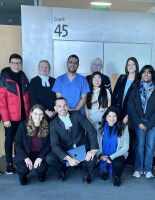
Dr Joshua Chu-Tan (left) and Associate Riccardo Natoli from Clear Vision Research at The Australian National University (ANU). Photo: Tracey Nearmy/ANU
Dr Joshua Chu-Tan ( left ) and Associate Riccardo Natoli from Clear Vision Research at The Australian National University (ANU). Photo: Tracey Nearmy/ANU - Researchers from The Australian National University (ANU) have identified unique molecular signals in the body that could hold the key to developing a supplement capable of administering the health benefits of exercise to patients incapable of physical activity. The molecular messages are sent to our brain and potentially our eyes immediately after we exercise. The ANU team is conducting research to better understand what impact these molecular messages have on retinal health, but also the central nervous system and eye diseases such as age-related macular degeneration (AMD). Associate Professor Riccardo Natoli, Head of Clear Vision Research at ANU, says the molecules could potentially be hijacked, recoded and "bottled up" in a pill and taken like a vitamin. "The beneficial messages being sent to the central nervous system during exercise are packaged up in what are known as lipid particles. We are essentially prescribing the molecular message of exercise to those who physically aren't able to," he said. "We think that as you age, the ability to communicate between the muscles and the retina starts to be lost.
TO READ THIS ARTICLE, CREATE YOUR ACCOUNT
And extend your reading, free of charge and with no commitment.