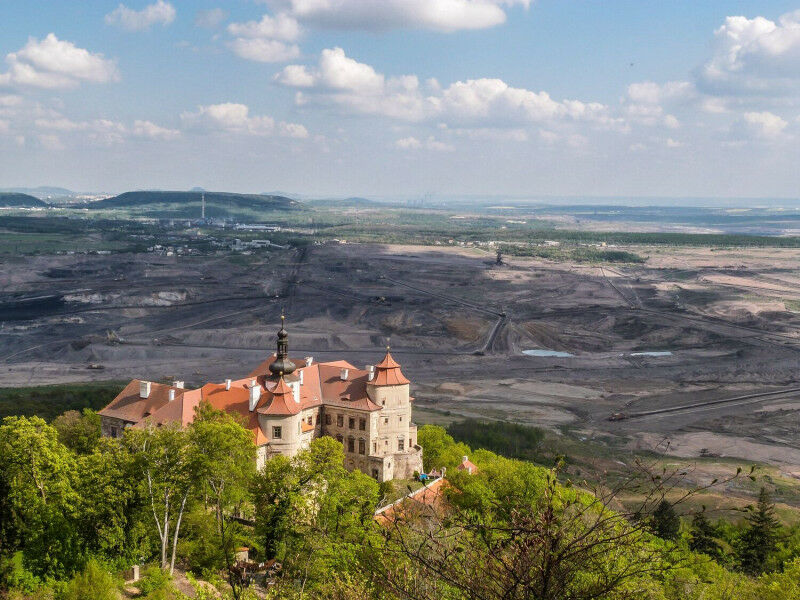
Jezerí Castle in the Czech Republic is a cultural heritage site located on the outskirts of a coal mine, saved from demolition due to mining. Its preservation is an important part of the regional transition away from mining. Photo: Kamila Svobodova
Jezerí Castle in the Czech Republic is a cultural heritage site located on the outskirts of a coal mine, saved from demolition due to mining. Its preservation is an important part of the regional transition away from mining. Photo: Kamila Svobodova Researcher from Göttingen University advises on overcoming the difficulties faced by mining communities in transition Mining brings huge social and environmental change to communities: landscapes, livelihoods and the social fabric evolve alongside the industry. But what happens when the mines close? What problems face communities that lose their main employer and the very core of their identity and social networks? A research fellow at the University of Göttingen provides recommendations for governments to successfully navigate mining communities through their transition toward non-mining economies. Based on past experiences with industrial transitions, she suggests that a three-step approach centred around stakeholder collaboration could be the most effective way forward. This approach combines early planning, local-based solutions, and targeted investments aimed at fostering economic and workforce transformation. This comment article was published in Nature Energy .
TO READ THIS ARTICLE, CREATE YOUR ACCOUNT
And extend your reading, free of charge and with no commitment.