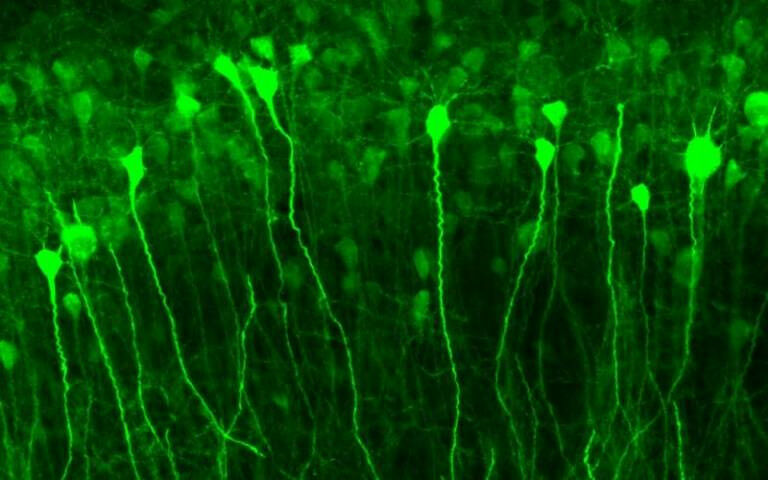
Cfos-GFP hippocampal neurons activated by an epileptic seizures’. Credit: Benito Maffei - cfos-GFP hippocampal neurons activated by an epileptic seizures. Credit: Benito Maffei
Cfos-GFP hippocampal neurons activated by an epileptic seizures'. Credit: Benito Maffei - cfos-GFP hippocampal neurons activated by an epileptic seizures. Credit: Benito Maffei - A new treatment for neurological and psychiatric diseases, that works by reducing the excitability of overactive brain cells, has been developed by UCL researchers. Many brain diseases, such as epilepsy, are caused by excessive activity of a small number of brain cells. These conditions often don't respond well to drug treatment, mainly because drugs affect the whole brain. Whilst genetic therapies could be a promising way to treat these conditions, current methods do not distinguish between overactive and normal brain cells. However, the new treatment, outlined in Science and tested in mice , uses a technique that only alters overactive cells and spares those that are acting normally.
TO READ THIS ARTICLE, CREATE YOUR ACCOUNT
And extend your reading, free of charge and with no commitment.