Jessica Petersen
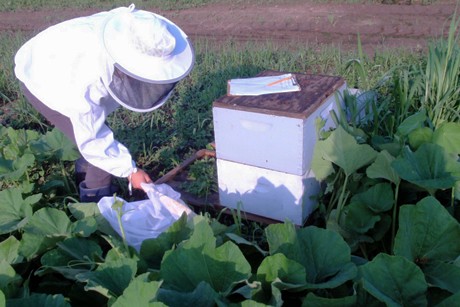
It's a question that has perplexed pumpkin producers for years: Why aren't patches supplemented with beehives to aid pollination producing more pumpkins?. Aspiring Cornell entomologist Alexandra Gresov '14 may have found the answer, after spending her summer catching hundreds of bees on their way back to their hives and determining their foraging fidelity by examining the pollen they had collected. She discovered the bees were commuting outside the pumpkin patch for pollen; in fact, quantities of pumpkin pollen were actually lower than any other pollen type for both honeybees and bumblebees. Corn was most common on honeybees, and pea-type plants (such as beans, clover and trefoil) were most common on the bumblebees. Gresov, a biology major and president of the Cornell Beekeeping Club who worked with entomology professor Brian Nault and postdoctoral research associate Jessica Petersen, managed to get stung only three times. She said the project is just the first step in figuring out what drives pollination behavior and what is trumping proximity. She was one of 28 students selected from top universities around the country to participate in the summer scholars program at Cornell's New York State Agricultural Experiment Station in Geneva (NYSAES).
TO READ THIS ARTICLE, CREATE YOUR ACCOUNT
And extend your reading, free of charge and with no commitment.