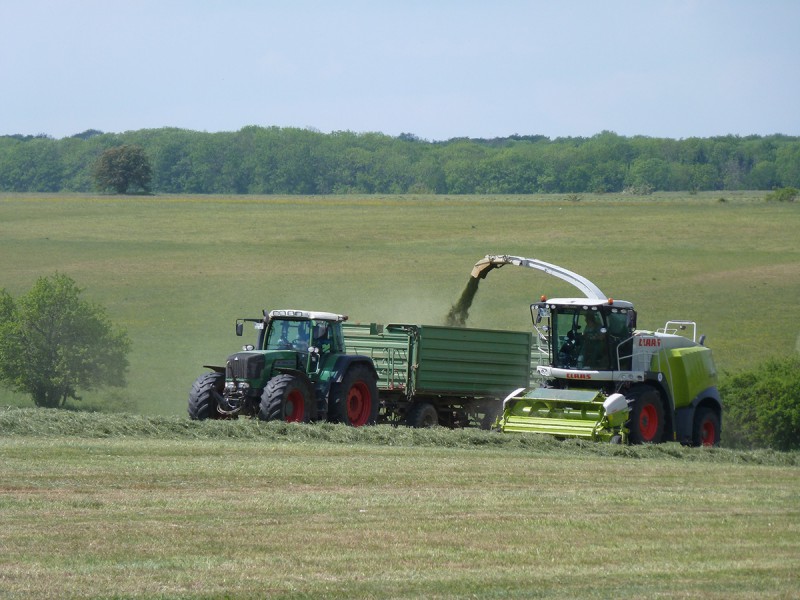
 A meadow in Thuringia: one of the 150 grasslands where research was carried out. Alongside grass for silage and hay these grasslands provide us with many other important ecosystem services. A high diversity of plants and many other organisms helps to sustain these services.
Media releases, information for representatives of the media Media Relations (E) The more it swarms, crawls and flies the better for humans, who benefit from the varied services provided for free by nature. This is the finding of a study by more than 60 researchers from a number of universities, including the Institute of Plant Sciences at the University of Bern and the Senckenberg Biodiversity and Climate Research Centre, in Germany. A diverse ecosystem populated by many species from all levels of the food chain provides higher levels of ecosystem services, the team reports today in 'Nature'. Even rather unpopular insects and invisible soil-dwelling organisms are important in maintaining a wide range of ecosystem services. The results underline the necessity of maintaining species-rich ecosystems for the good of humanity. Grasslands full of flowers are not only beautiful they also provide many important services for humans. These include food production, alongside supporting services such as soil development, regulating services such as pest control and climate regulation and cultural services such as the use of the grassland for recreation.
TO READ THIS ARTICLE, CREATE YOUR ACCOUNT
And extend your reading, free of charge and with no commitment.
Your Benefits
- Access to all content
- Receive newsmails for news and jobs
- Post ads