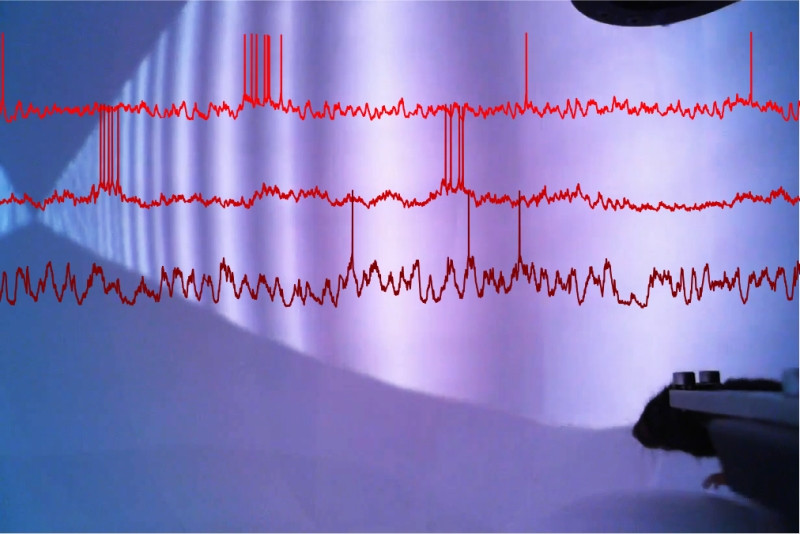
Neuronal activity of the mouse is measured while it is running down a virtual corridor
Neuronal activity of the mouse is measured while it is running down a virtual corridor - The Keller group had previously shown that the coupling of sensory and motor experience was critical for normal sensorimotor processing. The researchers have now identified the particular subset of cortical neurons responsible for computing mismatches between what we expect to see based on movement and what we actually see, and are likely essential for helping us distinguish between self-generated and externally generated sensations. When we move our head to the right, the visual scene shifts to the left. But we do not perceive the world to be moving; our brain has learnt to differentiate between sensory information caused by our own actions (we moved our eyes) or the external world (a car drove by). It is still unclear, however, how the brain tells the difference between self-generated and externally generated sensations. The neurobiologists in the Keller group had previously shown that the primary visual cortex uses information about movement to predict the resulting visual feedback. It compares this prediction with the actual visual feedback that occurs to detect any mismatches.
TO READ THIS ARTICLE, CREATE YOUR ACCOUNT
And extend your reading, free of charge and with no commitment.