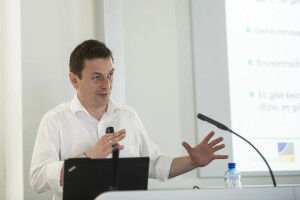
Is Reliable Artificial Intelligence Possible?
In the quest for reliable artificial intelligence, EPFL scientist Marcel Salathé argues that AI technology should be openly available. He will be discussing the topic at this year's edition of South by South West on March 14th in Austin, Texas. Will artificial intelligence (AI) change the nature of work? For EPFL theoretical biologist Marcel Salathé, the answer is invariably yes. To him, a more fundamental question that needs to be addressed is who owns that artificial intelligence - 'We have to hold AI accountable, and the only way to do this is to verify it for biases and make sure there is no deliberate misinformation,' says Salathé. 'This is not possible if the AI is privatized.' AI is both the algorithm and the data So what exactly is AI? It is generally regarded as 'intelligence exhibited by machines'. Today, it is highly task specific, specially designed to beat humans at strategic games like Chess and Go, or diagnose skin disease on par with doctors' skills. On a practical level, AI is implemented through what scientists call 'machine learning', which means using a computer to run specifically designed software that can be 'trained', i.e. process data with the help of algorithms and to correctly identify certain features from that data set.