Image: Alex Maisey (co-author)
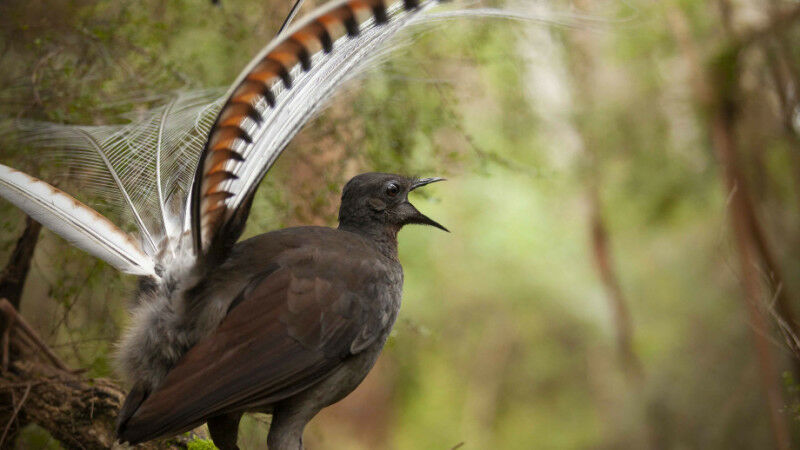
Image: Alex Maisey (co-author) - Male lyrebirds use clever mimicry to increase their chances of sexual success, according to a new study involving researchers from The Australian National University. Lyrebirds are famous for their ability to mimic complex sounds of other species, including "human" sounds like chainsaws. Now biologists think they've discovered what drives this skill. According to study co-author, ANU Professor Robert Magrath, wild males have two main types of mimicry. "They are famous for mimicking the songs of other birds, delivered loudly in breathtaking recitals," Professr Magrath said. "But we found they use a different type of mimicry at their display mounds, where females visit for sex. They use this mimicry when a female tries to leave without mating, and during the act itself - to create the illusion of a nearby threat." Lead author Dr Anastasia Dalziell, a Visiting Fellow at ANU, says this suggests it's a deceptive part of male lyrebirds' sexual strategy. "They mimic what's known as mobbing - a common anti-predator ploy. It involves a loud alarm call to attract other birds to harass a predator, eventually forming a noisy flock," Dr Dalziell said. "The male lyrebirds not only imitate the alarm calls of several species of songbird, they pattern the calls to create the illusion of many birds calling at the same time, even including the sound of wingbeats.
TO READ THIS ARTICLE, CREATE YOUR ACCOUNT
And extend your reading, free of charge and with no commitment.